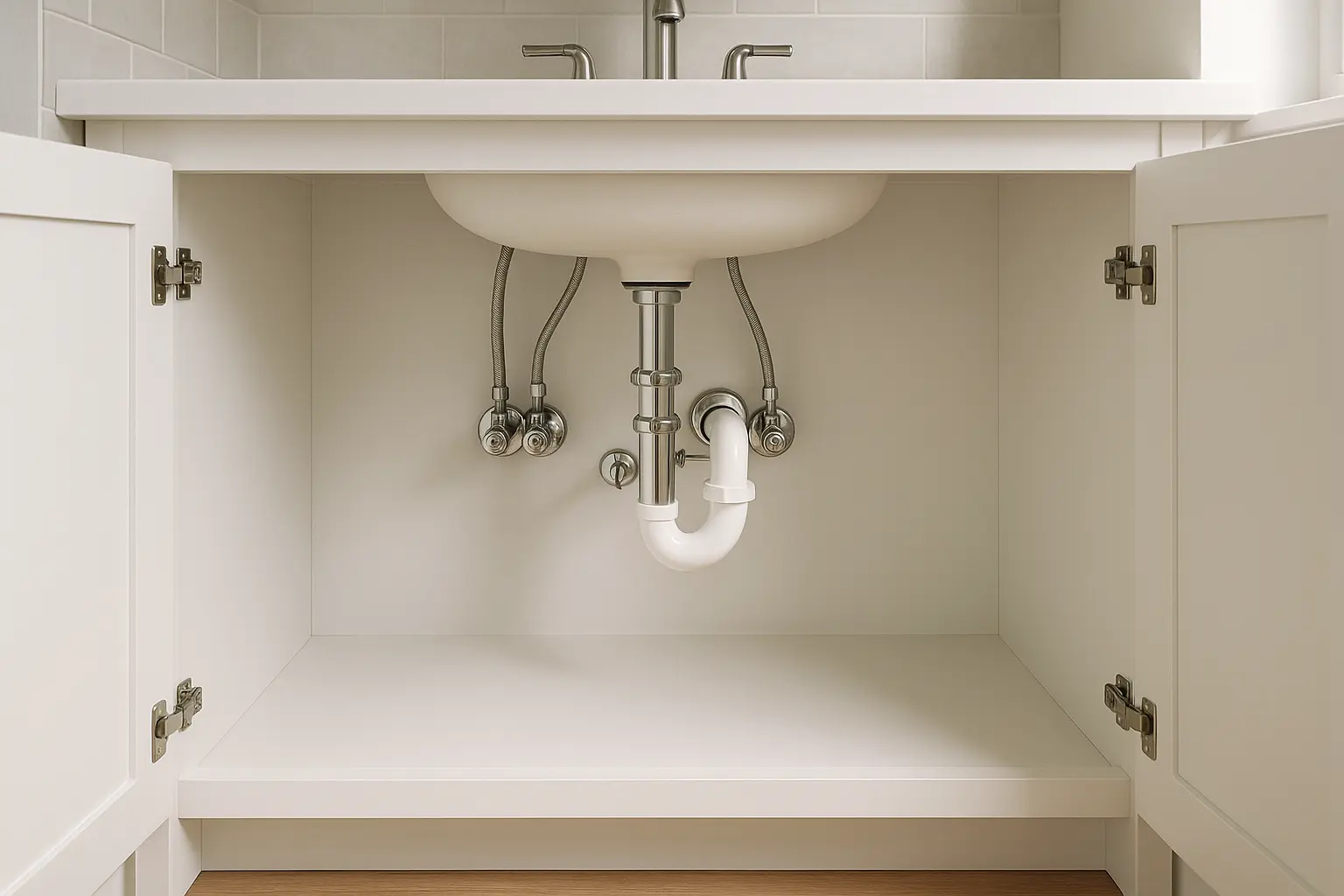
Open the cabinet under any bathroom sink and you'll find a small, busy system of pipes, valves, and fittings. Most of the time it sits quietly and does its job. But the moment you spot a drip or hear a gurgle from the drain, that hidden system suddenly matters. Knowing what each part does — and what trouble looks like — can save you time, money, and a soggy stack of toiletries.
This guide walks through what's happening under your sink, the parts worth knowing, the problems homeowners spot first, and the point where it makes more sense to call in experienced plumbing professionals.
What's Actually Under Your Bathroom Sink?
The plumbing under a bathroom sink does two jobs: bringing clean water in and carrying wastewater out. Once you can identify those two systems, the rest makes sense.
The Water Supply Side
Two thin lines run from the wall up to the bottom of your faucet — one hot, one cold. Each has its own shut-off valve, so you can cut water to that sink without affecting the rest of the house.
- Shut-off valves: Also called angle stops. Turn clockwise to close.
- Supply lines: Flexible braided tubes connecting the valves to the faucet.
- Faucet tailpieces: Threaded stubs sticking down from the faucet body.
The Drain Side
Used water flows down through a short pipe, curves through a U-shaped bend, then disappears into the wall. That curve isn't decorative — it holds water that blocks sewer gas from rising.
- Sink tailpiece: The straight pipe hanging from the basin.
- P-trap: The U-shaped bend. The water inside keeps sewer odors out.
- Trap arm: The horizontal pipe between the trap and the wall stub.
- Pop-up assembly: The drain stopper mechanism, linked by a pivot rod to the lift rod on the faucet.
Behind the scenes, a vent pipe in the wall lets air into the system so water drains smoothly. If a sink drains in a sluggish, stop-and-start pattern, the vent is often the answer — not the drain itself.
Common Problems Homeowners Spot First
Slow or Standing Drain
The culprit is almost always hair, soap scum, or toothpaste residue tangled around the pop-up stopper. Pull the stopper out, wipe the buildup off, and run hot water. If that doesn't work, the clog is deeper — possibly in the trap arm. Understanding what causes recurring drain clogs helps you decide whether to clear it yourself or call for help.
A Puddle Under the Cabinet
Water on the cabinet floor is usually a loose slip nut on the P-trap, a worn washer at a supply line connection, or a slow leak where the drain meets the basin. Dry everything, run the water briefly, then watch for the first drop.
Sewer Smell From the Sink
If a sink hasn't been used in a while, water in the P-trap can evaporate and let gas drift up. Run water for thirty seconds and the smell should disappear. If it doesn't, the trap may be cracked or the vent blocked.
Tools Worth Keeping Under the Sink
- Adjustable wrench or channel-lock pliers
- Bucket to catch trap water
- Old towel and a flashlight
- Plumber's tape for threaded connections
- Replacement slip-joint washers
With those five items, most homeowners can tighten a leaking P-trap, swap a washer, or clean out a stopper without calling anyone.
When to Stop and Call a Professional
DIY has its limits, especially with older pipes or in-wall connections. Step back if you see:
- A shut-off valve that won't turn, drips, or strips when tightened
- Corrosion, green or white crust, or pitting on metal fittings
- A drain that keeps clogging no matter how often you clear it
- Water staining inside the cabinet that returns after you dry it
- Any leak coming from inside the wall
A burst supply line turns into an emergency fast. When water is moving where it shouldn't, shut off the main water valve and call for fast emergency response. Standing water can damage cabinets and subfloor in hours.
For homeowners who'd rather stay ahead of problems, a habit of seasonal plumbing maintenance is one of the cheapest forms of insurance you can buy.
Simple Habits That Prevent Most Headaches
- Pull and rinse the pop-up stopper every few weeks
- Run hot water for thirty seconds after shaving or brushing
- Skip chemical drain cleaners — they corrode older traps
- Once a year, check inside the cabinet for staining or moisture
- Exercise the shut-off valves so they don't seize up
If a recurring slow drain has you reaching for chemicals again, it's usually cheaper to schedule professional drain cleaning and clear the line properly. For a deeper walk-through of how a bathroom sink system functions, the FKRIV blog covers it. Planning a **bathroom remodel** is also the right time to replace aging valves while the cabinet is out.
Final Thoughts
The plumbing under a bathroom sink isn't complicated once you know what you're looking at. Two supply lines bring water in, a P-trap and drain assembly carry it back out, and a few small valves and washers keep everything sealed. Understanding the system helps you spot issues early and recognize when calling a pro saves you from a bigger repair bill.
Homeowners across Yardley, Willow Grove, and Levittown rely on the trusted local plumbing team at FKRIV Plumbing & Heating Inc. for everything from a stubborn drain to a full bathroom rough-in. Reach out to schedule a visit and keep your plumbing running the way it should.