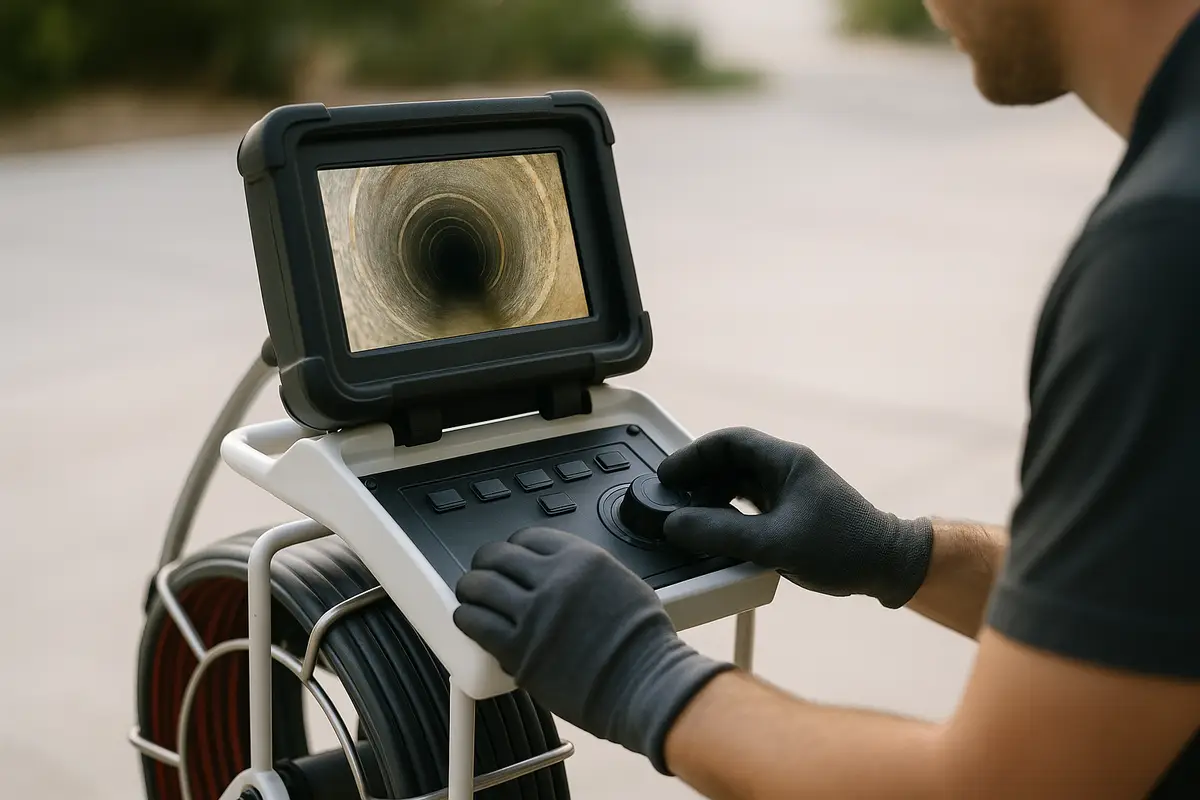
Most of the plumbing in your home stays out of sight, and the sewer line is the most hidden piece of all. Buried several feet underground, it carries everything that leaves your sinks, showers, and toilets away from the house. Because you can't see it, problems down there tend to build quietly until they show up in ways that are hard to ignore. A sewer line video inspection takes the guesswork out of the equation by sending a small, waterproof camera through the pipe so a technician can see exactly what's happening.
The tricky part is knowing when an inspection is actually worth it. You don't need a camera in your pipes every time a drain runs a little slow. But there are clear warning signs that point to trouble underground, and catching them early can save you from a far more expensive repair down the road. Here's how to tell when it's time to take a closer look.
Why a Camera Inspection Matters
In the past, finding a sewer problem meant digging up the yard and hoping you started in the right place. A video inspection changed that. The camera feeds live footage to a screen, showing cracks, blockages, root intrusions, and pipe damage in real time. This means a plumber can pinpoint the exact location and nature of an issue without tearing up your lawn or guessing.
It also gives you a clear picture before you commit to any work. Instead of trusting a vague diagnosis, you can see the problem for yourself and understand why a particular repair is being recommended. For older homes especially, that kind of clarity is invaluable.
Warning Signs Something Is Wrong
Your home usually drops hints long before a sewer line fails completely. Pay attention if you notice any of the following.
Frequent or Multiple Slow Drains
One sluggish sink might just mean a local clog. But when several drains throughout the house slow down at the same time, the problem is often deeper in the main line. If plunging and over-the-counter cleaners stop making a difference, the blockage may be well beyond the reach of those quick fixes.
Gurgling Sounds and Bad Odors
Strange gurgling from your toilet or drains usually means air is trapped where water should be flowing freely. Pair that with a persistent sewage smell inside or around your home, and you likely have a partial obstruction or a break somewhere in the line. These are signals worth investigating quickly, since they often come right before a backup.
Recurring Backups
A drain that backs up once is annoying. A drain that keeps backing up no matter how often you clear it is telling you the real cause hasn't been found. Repeated backups are one of the most reliable indicators that something structural is going on underground, and a camera can reveal whether it's roots, grease buildup, or a collapsed section of pipe.
Soggy Patches or Lush Spots in the Yard
- Unexplained wet or sunken areas in the lawn, even when it hasn't rained.
- A patch of grass that's suddenly greener and growing faster than everything around it.
- A foul smell lingering over the yard near where the sewer line runs.
These signs point to a leak feeding waste water into the soil. Wastewater acts like fertilizer, which is why a hidden break often creates one oddly healthy stretch of grass.
Older Pipes and Mature Trees
If your home was built several decades ago, your sewer line may be made of clay or cast iron, materials that crack and corrode over time. Add large trees nearby and you have a recipe for root intrusion, where roots seek out moisture and slowly invade the pipe through tiny gaps. An inspection is smart preventive maintenance in these situations, even without dramatic symptoms.
Buying a Home? Look Before You Sign
A sewer line inspection is one of the most overlooked steps in buying a property, and one of the most valuable. Standard home inspections rarely include the sewer line, yet replacing one can cost thousands of dollars. Spending a little upfront to confirm the line is sound can protect you from inheriting an expensive surprise.
If you're already lining up trustworthy professional plumbing help for your property, adding a camera inspection to the checklist is an easy decision.
What Happens During an Inspection
The process is straightforward and far less disruptive than people expect. A technician locates an access point, often a cleanout near the home, and feeds a flexible cable with a camera on the end into the line. As it travels, the camera transmits footage that the plumber reviews with you on a monitor.
If a problem turns up, the visual evidence makes the next steps clear. Minor blockages may only need a thorough cleaning, while cracked or collapsed pipes call for dependable line restoration work. Either way, you'll know exactly what you're paying for and why.
When Not to Wait
Some situations call for prompt action rather than wait-and-see. If raw sewage backs up into the house, several fixtures stop draining at once, or a sewage odor fills your home, treat it as urgent. These are the moments when fast after-hours plumbing response matters most, because a contained problem can quickly become a costly cleanup.
Schedule Your Inspection Today
Catching a sewer line problem early is the difference between a simple cleaning and a major excavation. If your drains are acting up, your yard is sending odd signals, or you simply want confidence in your plumbing, a video inspection delivers answers you can trust. FKRIV Plumbing & Heating Inc. proudly provides reliable sewer camera inspection and plumbing services to homeowners in Horsham, Bristol, Doylestown, Fairless Hills, Richboro, and Warminster, helping local families protect their homes from costly underground surprises.