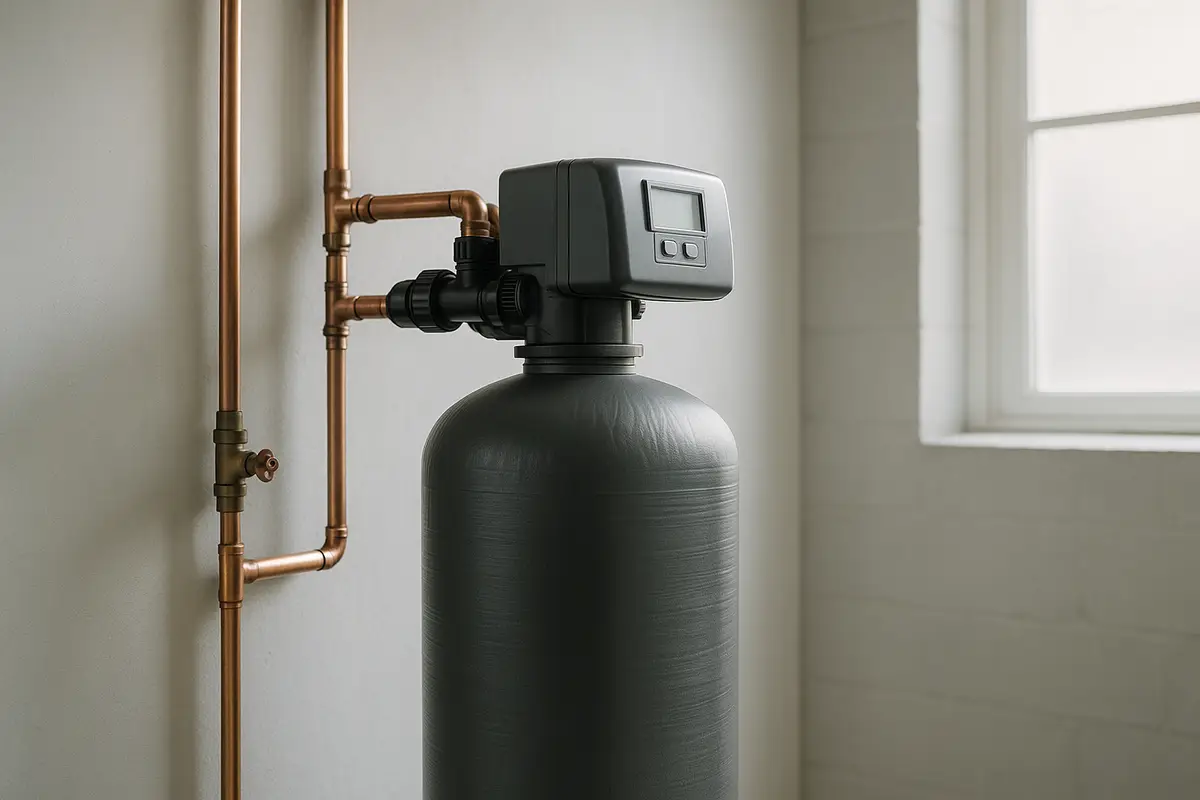
Hard water can cause white spots on faucets, cloudy dishes, dry skin, and mineral buildup inside your plumbing and appliances. A water softener reduces hardness minerals such as calcium and magnesium, helping protect your pipes, fixtures, water heater, and appliances. If your home shows signs of hard water, a water softener may be a worthwhile investment for better water quality and less mineral buildup.
A water softener can help reduce these minerals and make everyday water use easier. But is a water softener really worth the investment? Understanding how it works and what benefits it can provide can help you decide if it is right for your home.
What Is Hard Water?
Hard water contains minerals such as calcium and magnesium. These minerals naturally enter the water as it moves through soil and rock.
Hard water is not usually a health concern, but it can create problems around your home. Mineral deposits can collect on faucets, showerheads, plumbing fixtures, and appliances. Over time, this buildup can affect how well some plumbing components and water using appliances work.
Common signs of hard water include white deposits around faucets, spots on dishes, dry skin, rough feeling hair, and soap that does not lather easily.
What Does a Water Softener Do?
A water softener is designed to reduce calcium and magnesium from your home's water supply. Most traditional systems use an ion exchange process to remove these hardness minerals.
Inside the system is a tank containing resin beads. These beads attract calcium and magnesium from the water. When the resin becomes full, the system goes through a regeneration process to clean the resin so it can continue working.
The result is softer water flowing through the home's plumbing system.
Benefits of Installing a Water Softener
1. Helps Reduce Mineral Buildup in Pipes
One of the biggest benefits of a water softener is reducing scale buildup caused by hard water.
Over time, calcium and magnesium can collect inside pipes and restrict the space available for water to flow. Mineral buildup can also affect faucets, valves, and other plumbing fixtures.
Reducing these deposits can help keep your plumbing system cleaner and may reduce problems caused by excessive scale.
2. Helps Protect Plumbing Fixtures
Hard water can leave mineral deposits around faucets, showerheads, valves, and other fixtures. These deposits can make fixtures look dirty even after cleaning.
Softened water can reduce the amount of mineral residue that collects on these surfaces. This can make regular cleaning easier and help keep your plumbing fixtures looking better.
3. Supports Better Water Heater Performance
Water heaters can also be affected by hard water. Minerals can settle inside a tank or collect around heating components.
This buildup can make it harder for the system to heat water efficiently. Reducing mineral buildup can help protect the water heater and support better performance over time.
If you are already experiencing water heater problems, it is important to address the water heater itself rather than relying on a water softener to fix an existing issue.
4. Helps Extend Appliance Life
Many household appliances use water every day. Dishwashers, washing machines, coffee makers, and refrigerators with water dispensers can all be exposed to hard water minerals.
Over time, mineral deposits can collect inside water using appliances and affect their performance.
Using softened water can help reduce this buildup and may help protect appliances from unnecessary mineral related wear.
5. Cleaner Looking Dishes
Hard water can leave white spots and cloudy residue on glasses, plates, and silverware.
Softened water allows soap and detergent to work more effectively, which can help reduce mineral residue after washing. This can make dishes look cleaner and reduce the need to wash them again because of water spots.
6. Softer Skin and Hair
Hard water can leave mineral residue on your skin and hair after bathing. Some people notice that their skin feels dry or their hair feels rough after regular showers.
Softened water can make soap and shampoo easier to rinse away. Many homeowners also prefer how their skin and hair feel when using softened water.
7. Less Soap and Detergent Use
Hard water can make it harder for soap to lather properly. As a result, you may use more soap, shampoo, detergent, or cleaning products than you normally would.
Soft water works better with many cleaning products, which may allow you to use less while still getting good results.
Over time, this can help reduce how much you spend on everyday cleaning products.
8. Helps Reduce Scale on Fixtures and Surfaces
Mineral deposits can build up around sinks, faucets, shower doors, and other surfaces where water regularly dries.
A water softener can reduce the minerals responsible for much of this buildup. This means less time spent removing hard water stains and scale from surfaces around your home.
Can a Water Softener Help With Plumbing Problems?
A water softener can help reduce mineral buildup, but it is not a solution for every plumbing problem.
For example, if a pipe already has serious damage, a softener will not repair it. Likewise, an existing drain clog still needs to be properly cleared.
The main purpose of a water softener is to reduce hardness minerals before they can continue building up throughout the home's water system.
Is a Water Softener Worth the Investment?
For homes with moderate or high water hardness, a water softener can be a worthwhile investment.
The benefits are not limited to softer water. Reducing mineral buildup can help protect plumbing fixtures, water heaters, appliances, and other water using equipment.
You may also spend less time cleaning mineral deposits and may use less soap and detergent.
The value of a water softener depends on your home's water hardness, household water usage, plumbing system, and the type of system you choose. Testing your water first can help you determine whether installing a softener makes sense.
Signs Your Home May Need a Water Softener
You may want to consider a water softener if you regularly notice:
- White or chalky buildup around faucets
- Spots on glasses and dishes
- Dry skin after showering
- Hair that feels rough or dull
- Soap that does not lather well
- Mineral deposits on showerheads
- Scale buildup around plumbing fixtures
- Appliances developing mineral deposits
- Reduced water flow caused by scale buildup
If you notice several of these signs, a water hardness test can help confirm whether hard water is the problem.
How to Maintain a Water Softener
A water softener needs regular care to keep working properly.
Check the Salt Level
Most traditional water softeners need salt added regularly. How often you need to add salt depends on your water usage and the hardness of your water.
Keep the Brine Tank Clean
The brine tank should be checked and cleaned when needed. Regular cleaning can help prevent buildup and keep the system working properly.
Check the System Regularly
Pay attention to changes in water quality, salt usage, or system performance. If the softener is not working as expected, professional service can help identify the problem.
Follow the Manufacturer's Maintenance Instructions
Different water softeners have different maintenance requirements. Following the manufacturer's recommendations can help protect the system and extend its useful life.
Water Softener vs. Water Filter
A water softener and a water filter are not the same thing.
A water softener is mainly designed to reduce hardness minerals such as calcium and magnesium. A water filter is designed to reduce specific contaminants depending on the type of filter being used.
The right system depends on what is actually present in your water. In some homes, a softener and a water filter may be used together because they address different water quality concerns.
Water Softeners for Commercial Properties
Water softeners can also benefit certain commercial properties. Restaurants, laundromats, medical facilities, and other businesses that use a large amount of water may experience problems caused by mineral buildup.
Scale can affect commercial plumbing fixtures, water heaters, kitchen equipment, and other water using systems.
A properly selected water softener can help reduce mineral buildup and support the performance of equipment that depends on a reliable water supply. The existing blog also identifies commercial kitchens anwaterd other businesses as areas where water softening can help manage scale related equipment problems.
How Long Does a Water Softener Last?
The lifespan of a water softener depends on the system, water quality, household usage, and maintenance.
Regular salt replacement, proper cleaning, and routine inspections can help keep the system working properly.
If your water softener is becoming less effective or requiring frequent service, a professional can determine whether it needs maintenance, repair, or replacement.
What Does a Water Softener Cost?
The cost of a water softener depends on the type and size of the system, your home's plumbing setup, and installation requirements.
Instead of choosing a system based only on price, consider your home's water hardness and daily water usage. A system that is properly sized for your home can provide better long term value.
A professional water assessment can help you understand what type of system is appropriate before you invest in one.
Final Thoughts
Hard water may seem like a minor inconvenience, but mineral buildup can affect your plumbing fixtures, appliances, water heater, cleaning routine, and everyday water use.
A water softener can help reduce calcium and magnesium in your water and may provide long term benefits for your home. If you regularly deal with white deposits, water spots, dry skin, or scale buildup, testing your water is a good place to start. If your water heater is already affected by mineral buildup or needs replacement, professional water heater installation can help ensure your new system is properly installed and ready to provide reliable hot water.
If your home has hard water, FKRIV Plumbing & Heating Inc. can help you understand your water treatment options and determine whether a water softener is a good fit for your needs.
Frequently Asked Questions
Is a water softener worth it?
A water softener can be worth the investment if your home has moderate or high water hardness. It can help reduce mineral buildup and protect plumbing fixtures, appliances, and water heating equipment.
What are the main benefits of a water softener?
The main benefits include reducing scale buildup, protecting plumbing fixtures and appliances, supporting water heater performance, making cleaning easier, and helping soap and detergent work more effectively.
Does a water softener remove all contaminants?
No. A water softener is mainly designed to reduce hardness minerals such as calcium and magnesium. It is not a complete water purification system.
How do I know if I have hard water?
Common signs include white buildup around faucets, spots on dishes, dry skin, rough hair, and soap that does not lather easily. A water hardness test can confirm the condition of your water.
How often does a water softener need maintenance?
Maintenance depends on the system and your household water usage. Regularly checking the salt level and following the manufacturer's maintenance recommendations can help keep the system working properly.
Can a water softener protect my water heater?
A water softener can help reduce mineral buildup that may collect inside a water heater. This can help reduce scale related problems and support better system performance over time.