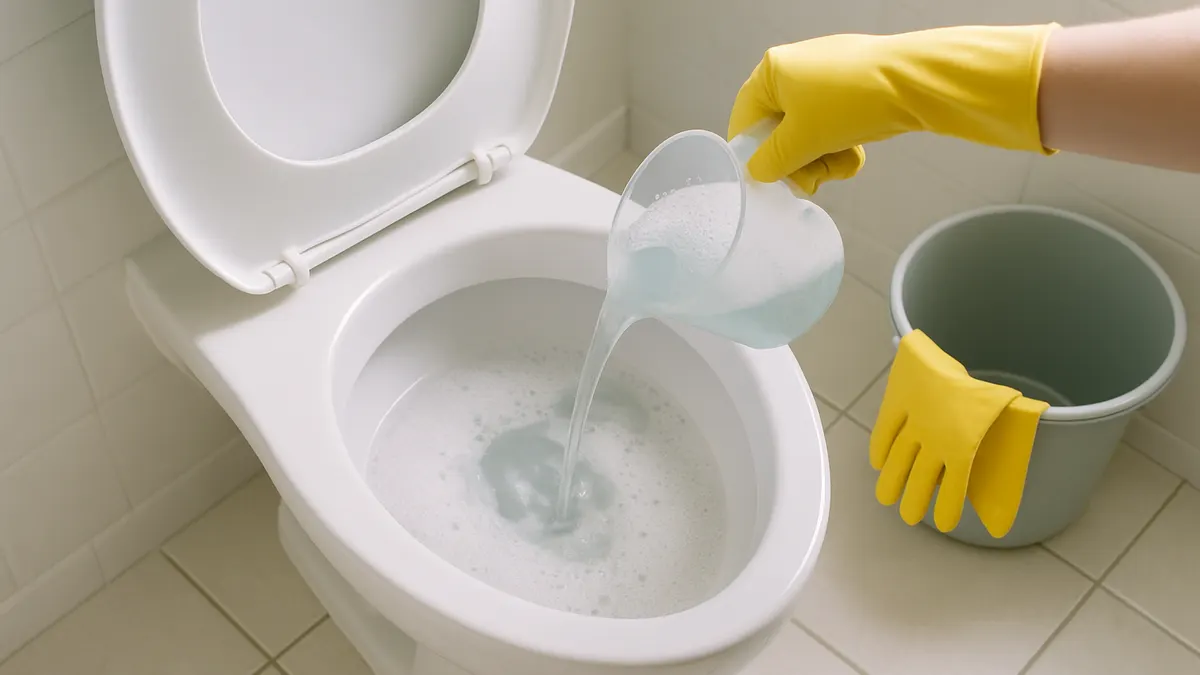
A clogged toilet feels like an emergency, but you don’t always need a plunger or a service call to fix it. If you’re wondering how to unclog a toilet with what you already have at home, a few safe methods can clear a minor toilet clog in minutes. This guide covers those methods, the popular tricks that rarely work, and the signs that mean it’s time to call a professional plumber. First, though, stop flushing so the bowl doesn’t overflow.
What to Do First When Your Toilet Is Clogged
A few quick steps prevent a bigger mess before you try any fix.
- Stop flushing. Every flush sends more water toward a blocked drain, and the bowl can spill onto the floor.
- Stop the water if the bowl is rising. Lift the tank lid and press the rubber flapper down, or turn the shut-off valve behind the toilet clockwise.
- Give it a few minutes. The water level often drops slowly as the clog shifts.
- Protect the floor. Lay old towels around the base.
- Think about the cause. A pile of toilet paper is usually a soft clog you can handle. A toy, a wipe, or another object needs more care.
Repeated flushing is the most common way a small blockage turns into a toilet overflow.
How to Unclog a Toilet Without a Plunger
These three methods work best on a minor clog caused by too much toilet paper. Try them in order.
Try Dish Soap and Warm Water
Dish soap lubricates the blockage so it can slide through the toilet drain.
- Squeeze about a quarter cup of dish soap into the bowl, aiming near the drain.
- Fill a bucket with warm water that feels hot to the touch, like a bath, but is never boiling.
- Pour it in from about waist height, stopping an inch below the rim.
- Wait 15 to 20 minutes.
- Flush once. If the water rises, stop and do not flush again.
Liquid hand soap works if you have no dish soap.
Use a Toilet Brush Carefully
If the blockage is soft, a toilet brush can help. Push the bristles into the drain opening and use short, gentle motions to break up the paper. Don’t jam it down hard. You could push the clog deeper, scratch the porcelain, or snap the brush inside the drain.
Use a Toilet Auger for a Stubborn Clog
A toilet auger is a flexible metal cable inside a rigid tube, with a hand crank on top. A protective sleeve keeps the metal from scratching the porcelain, which makes it safer than a coat hanger or other improvised tool. Most hardware stores sell one.
- Place the curved tip in the bowl drain.
- Turn the handle slowly while pushing gently, so the cable feeds into the drain.
- When you feel resistance, keep cranking to break up or hook the clog.
- Pull the cable back slowly and rinse it.
- Flush once to test.
Stop if the cable won’t move, you feel something hard, or the toilet is still blocked after two or three tries. Forcing it can damage the toilet or lodge an object deeper.
Can Baking Soda and Vinegar Unclog a Toilet?
Only a very light clog, and not reliably. People recommend it because the mixture fizzes, and the bubbling looks powerful. The fizz is just carbon dioxide gas, and it doesn’t dissolve toilet paper or move a solid blockage. Dish soap and warm water do the same job with less hassle, so don’t count on baking soda and vinegar for anything serious.
Chemical products are a worse idea. They can damage pipes, and if the clog stays, you’re left with harsh liquid in the bowl that is unsafe to plunge or auger. This comparison of chemical drain cleaners and professional cleaning explains the risks.
What Not to Do When Your Toilet Is Clogged
- Flushing again and again. It can push water over the rim.
- Pouring boiling water. Sudden heat can crack the porcelain bowl.
- Using strong chemical cleaners. They can harm pipes, and the water becomes hazardous.
- Using sharp or improvised tools. Wire hangers and knives scratch the porcelain, and scratches collect more waste.
- Forcing an object down. Pushing a toy or brush deeper makes it harder to remove.
- Ignoring repeated backups. Frequent clogs usually point to a bigger problem.
How to Tell What Is Causing the Toilet Clog
The cause helps you decide what to do next.
- Too much toilet paper. The most common cause, and usually the easiest to clear.
- Wipes and unsuitable items. Even wipes labeled flushable don’t break down like paper.
- Foreign objects. Toys, cotton swabs, and hygiene products often cause a sudden clog with no paper to blame.
- Low-flow toilet issues. Older or low-flow toilets with a weak flush struggle with heavy loads.
- A blockage farther down. If other drains are also slow, the problem isn’t in the toilet.
- Sewer line problems. Gurgling, odors, and backups can mean roots or buildup in the main line.
When Should You Call a Plumber for a Clogged Toilet?
A minor clog clears after one or two attempts. A serious plumbing problem keeps returning or affects more than one drain. Call a professional plumber if:
- DIY methods don’t clear the clog after a couple of tries.
- The toilet keeps clogging repeatedly.
- Water backs up into the tub or shower.
- Several drains are slow or gurgling.
- Sewage comes back up through the toilet.
- You think a foreign object is stuck inside.
- The toilet overflows more than once.
- You suspect a drain blockage or sewer line problem.
- You aren’t sure how to remove the blockage safely.
A one-time clog sits in the toilet’s own trap, which an auger can reach. When the trouble spreads to other fixtures, the blockage is deeper in the line, and no household tool will reach it. A camera drain inspection shows exactly where the problem is.
How to Prevent Future Toilet Clogs
- Flush only toilet paper and human waste.
- Skip wipes, even the ones labeled flushable.
- Keep small objects, such as toys and cotton swabs, away from the toilet.
- Use a modest amount of toilet paper at a time.
- Deal with slow flushing early, before it becomes a full blockage.
- Have recurring blockages inspected by a professional.
When DIY Isn’t Enough: Professional Drain Cleaning
If a toilet clog keeps coming back or seems tied to a larger drain problem, professional drain cleaning is usually the better fix. Plumbers use equipment that clears the whole blockage instead of poking a hole through it, and they can spot roots, cracks, or buildup behind repeat backups.
If that sounds like your situation, FKRIV Plumbing & Heating Inc offers drain blockage removal for homes across Bucks and Montgomery counties, including Doylestown, Newtown, Horsham, Warrington, and Bensalem. Call us at (215) 874-0592 and we’ll get your toilet and drains flowing again.
Frequently Asked Questions About Unclogging a Toilet
How do you unclog a toilet without a plunger?
Add dish soap and warm water to the bowl, wait 15 to 20 minutes, then flush once. If that fails, use a toilet auger. Never flush repeatedly while the bowl is blocked.
Can dish soap unclog a toilet?
Yes, for minor clogs. Dish soap lubricates toilet paper or soft waste so it slides through the drain. Pour it in, add warm water, and let it sit before flushing once.
Can hot water unclog a toilet?
Warm or hot tap water can loosen a soft clog, but boiling water is unsafe. Sudden heat can crack the porcelain bowl, so use water that is hot to the touch, not boiling.
Does baking soda and vinegar unclog a toilet?
Rarely. The fizzing reaction is too weak to break up a solid blockage. It may help a very light clog, but dish soap and warm water, or an auger, work better.
When should you call a plumber for a clogged toilet?
Call a plumber if the clog survives a couple of DIY attempts, keeps returning, or water backs up into a tub or shower. Sewage backups and stuck objects also need professional help.
Why does my toilet keep getting clogged?
Common causes include too much toilet paper, flushed wipes, a weak flush, or a deeper drain blockage. If clogs repeat, a plumber should inspect the drain line.