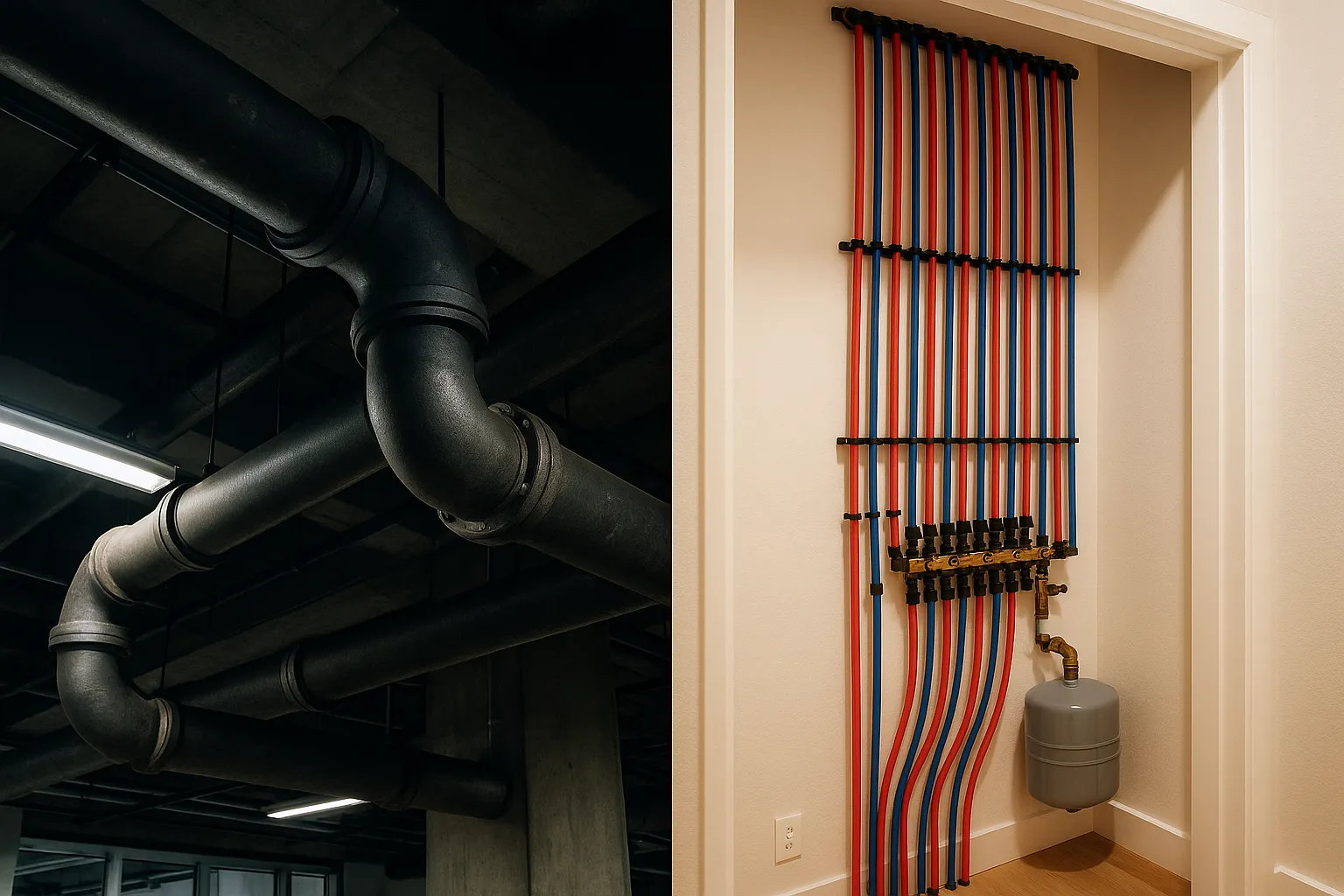
Commercial plumbing and residential plumbing differ in scale, water pressure, code requirements, and repair urgency. Residential systems serve homes with a handful of fixtures on smaller pipes, while commercial systems handle far higher water volume, stricter regulations, and equipment like grease traps and backflow preventers.
Anyone who has worked on a busy restaurant kitchen one day and a three-bedroom home the next will tell you the two worlds are very different. If you own a business, manage a property, or are simply comparing the two, understanding these differences can save you money, prevent downtime, and help you hire the right plumbing professional for the job.
What Is Residential Plumbing?
Residential plumbing refers to the water supply, drainage, and gas piping inside single-family homes, townhouses, and small multi-unit dwellings. These systems serve a predictable number of people using a limited set of fixtures — a few bathrooms, a kitchen, a laundry hookup, and maybe an outdoor spigot.
Because the scope is smaller, residential systems run on smaller-diameter pipes, operate at lower pressure, and can usually be accessed through walls, basements, or crawl spaces without much trouble. A qualified home plumbing contractor can diagnose most problems in a single visit, whether it is a dripping faucet, slow drain, or failing water heater.
What Is Commercial Plumbing?
Commercial plumbing covers office buildings, restaurants, hotels, retail centers, schools, medical facilities, and industrial sites. These systems handle a much higher volume of water, serve far more people, and often include specialty equipment — grease traps, industrial dishwashers, multi-story water distribution, large-capacity heating, and fire suppression lines.
Commercial jobs also come with tighter regulatory oversight. Health department rules, ADA requirements, and building codes add layers of complexity that do not apply in a typical house. That is why commercial buildings rely on heavy-duty equipment such as commercial boiler systems and certified backflow prevention devices to keep operations running safely.
Key Differences Between Commercial and Residential Plumbing
| Factor | Residential Plumbing | Commercial Plumbing |
|---|---|---|
| Pipe Size & Material | Smaller-diameter pipes; typically copper, PEX, or PVC | Larger-diameter pipes; often cast iron or specialty alloys for higher flow and chemical exposure |
| Water Pressure | Fairly consistent, low-to-moderate demand | Engineered for peak-hour swings and much higher overall volume |
| Code & Compliance | Standard local plumbing code | ADA compliance, health department rules, backflow prevention testing, documented inspection schedules |
| Fixtures & Equipment | Standard toilets, sinks, faucets for moderate daily use | Flushometer toilets, sensor faucets, high-capacity water heaters, grease traps, fire suppression lines |
| Repair Urgency | Inconvenient, rarely revenue-affecting | Often needs 24/7 response — downtime can mean lost revenue or health code violations |
| Maintenance Needs | Annual check-up usually sufficient | Scheduled preventive inspections recommended to avoid costly downtime |
1. Scale and Complexity
A home might have two bathrooms and one kitchen. A mid-sized office building might have dozens of restrooms across multiple floors, break rooms on every level, and a rooftop HVAC system tied into the water supply. Commercial plumbing has to move much more water, much more reliably, with almost zero tolerance for downtime.
2. Pipe Size and Materials
Residential systems typically use copper, PEX, or PVC in small diameters. Commercial buildings need larger-diameter pipes, cast iron, or specialty alloys to handle higher flow rates, chemical exposure, or extreme temperatures. Material choice directly affects installation time, cost, and the tools required on site.
3. Water Pressure and Usage Patterns
Home water pressure stays fairly consistent. Commercial properties see dramatic swings — a restaurant at 7 p.m. on Saturday uses water very differently than the same space at 10 a.m. on Tuesday. Systems must be engineered for peak demand without starving upper floors or damaging equipment.
4. Code Compliance and Inspections
Commercial plumbing is held to stricter standards. Depending on the business type, a property may need grease interceptors, backflow preventers, ADA-compliant fixtures, and documented inspection schedules. Many municipalities require annual testing on protection devices, which is why working with a licensed backflow prevention specialist is non-negotiable for most commercial properties.
5. Repair Urgency and Downtime Costs
A burst pipe at home is a stressful day. A burst pipe in a restaurant during dinner service is thousands in lost revenue plus potential health code issues. Commercial clients often need 24/7 response, which is where fast-dispatch around-the-clock plumbing repair becomes essential.
6. Fixtures and Equipment
Homes use standard toilets, sinks, and faucets built for moderate use. Commercial fixtures are built like tanks — flushometer toilets, sensor-operated faucets, high-capacity water heaters, and heavy-duty disposals. They cost more upfront but hold up under constant use. Heating scales up too, with many businesses depending on commercial-grade heating units rather than smaller residential equivalents.
Why the Distinction Matters When You Hire
Not every plumber handles both worlds. A technician who specializes in houses may not have experience reading commercial blueprints, pulling permits for multi-story buildings, or coordinating with general contractors. A strictly commercial crew may not be the right fit for your kitchen remodel either.
Before hiring, ask these questions:
- Are you licensed, bonded, and insured for commercial work in my area?
- Do you handle permits and code inspections, or is that my responsibility?
- Can you provide references from similar projects?
- What is your response time for emergency calls?
- Do you offer maintenance plans to catch problems early?
Maintenance: The Overlooked Factor
Commercial properties benefit enormously from scheduled maintenance. Preventive inspections catch slow leaks, corrosion, and pressure problems before they become emergencies. For homeowners, an annual check-up can extend the life of a water heater or identify hidden leaks. For a deeper dive, our upcoming Annual Plumbing Maintenance Checklist for Businesses and Homeowners covers everything worth inspecting each year.
Serving Businesses Across Bucks County
Whether you manage a restaurant, office, or multi-unit property, having a plumber who understands commercial systems makes all the difference. FKRIV Plumbing & Heating Inc. offers dedicated commercial plumbing services built for the scale and urgency businesses need, including in Willow Grove and Bristol. If your property needs an inspection or a repair that can't wait, call us at (215) 874-0592 — we're ready to help.
FAQs
What is the main difference between commercial and residential plumbing?
Commercial plumbing handles higher water volume, larger pipes, and stricter codes for buildings like offices and restaurants. Residential plumbing serves homes with simpler, smaller-scale systems.
Do commercial plumbers need special licensing?
Yes. Commercial work typically requires backflow prevention certification and knowledge of ADA and health department codes, beyond a standard residential license. Always confirm this before hiring.
Can a residential plumber work on a commercial building?
Not reliably. Commercial buildings need experience with larger pipe sizing, multi-story systems, and permit requirements that most residential plumbers don't handle regularly.
Why is commercial plumbing more expensive than residential?
Commercial jobs involve larger materials, stricter code compliance, and heavy-duty equipment built for constant use. After-hours scheduling to avoid business disruption also adds to the cost.
How often should a commercial building's plumbing be inspected?
At least once a year, with more frequent checks on backflow preventers and grease traps depending on local code. Regular inspections prevent costly downtime.
What plumbing codes apply only to commercial properties?
ADA accessibility, health department food-service rules, backflow prevention testing, and fire suppression standards all apply to commercial properties but not to homes.