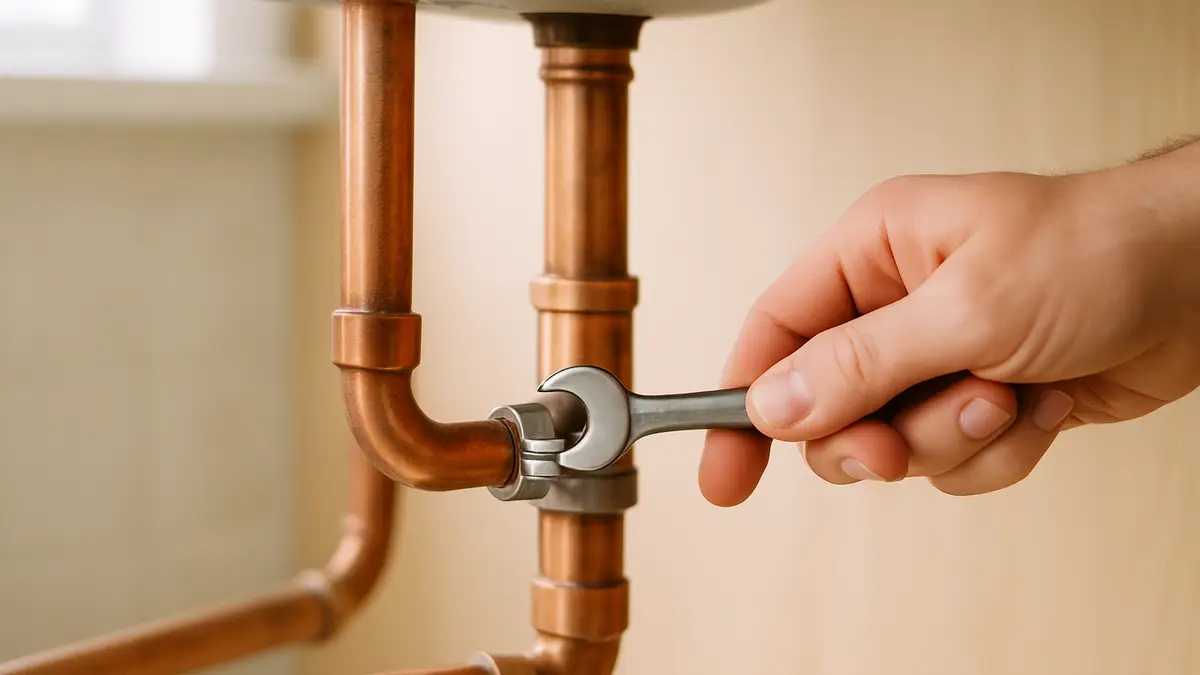
If your pipes have started talking to you — banging, whistling, ticking, or groaning at odd hours — you're not imagining things, and you're not alone. Pipe noise is one of the most common calls we get, and most causes are simple to explain and reasonably simple to fix.
most pipe noise comes down to one of five things — water hammer, high water pressure, pipes that aren't secured properly, sediment inside your water heater, or normal expansion and contraction as pipes heat and cool. Let's walk through each one, what it sounds like, and what actually fixes it.
What Your Pipe Noise Is Trying to Tell You
Before we get into the details, here's a quick cheat sheet. Match the sound to the likely cause, then jump to that section below.
| What You Hear | When It Happens | Likely Cause |
| A single loud bang or thud | Right after a faucet, washer, or dishwasher shuts off | Water hammer |
| A hiss, whistle, or steady rattle | Whenever water is running | High water pressure |
| Ticking or tapping inside walls | As pipes heat up or cool down | Thermal expansion, loose straps |
| Rattling or banging against joists | Water running through the pipe | Unsecured or loose pipes |
| Popping, cracking, or rumbling | Water heater is heating up | Sediment buildup in the tank |
| Gurgling from drains | After flushing a toilet or running a sink | Venting or drain-line issue |
Water Hammer: The Bang You Hear When a Faucet Shuts Off
This is the noise most people call about first. You turn off the kitchen faucet, the washing machine finishes its fill cycle, or the icemaker shuts its valve — and somewhere in the wall, you hear a hard, single knock, almost like someone hit a pipe with a hammer. That's exactly where the name comes from.
Here's what's actually happening: water moving through your pipes has momentum. When a valve closes suddenly, that moving column of water has nowhere to go, so it slams to a stop and sends a pressure shockwave back through the plumbing. That shockwave is the bang you hear.
Water hammer shows up most often around quick-closing valves — washing machines, dishwashers, icemakers — and it's also common near a sump pump discharge line, especially if the check valve is snapping shut hard against a full column of water.
How to fix it:
- Install water hammer arrestors near the noisy fixture (small air-cushioned devices that absorb the shock).
- Check for waterlogged air chambers — older homes used vertical air-filled pipe stubs for this purpose, and they can fill with water over time and stop working.
- Make sure pipes are properly strapped so they can't shift when the shockwave hits.
- If the noise is near your sump system, have the check valve and discharge line inspected; a correctly sized sump pump installation often resolves it for good.
A single arrestor is a fairly quick fix, but if you've got water hammer at multiple fixtures, it usually points to something bigger — often high pressure, which we'll get to next.
High Water Pressure: The Whistle, Hiss, or Rattle
If the noise happens the whole time water is running, rather than just when it stops, pressure is the more likely culprit. Most homes should sit somewhere between 45 and 60 psi at the meter. Once you're pushing past 80 psi, pipes, fittings, and fixtures all take a beating and often announce it with a whistle, hiss, or steady rattle.
High pressure doesn't just make noise — it shortens the life of your water heater, washing machine hoses, and supply lines, and it's a common reason for surprise leaks in homes that otherwise seem fine. A plumber can confirm high water pressure with a simple gauge test at an outdoor spigot, and it's often one of the first things checked as part of routine plumbing services.
How to fix it:
- Install or replace a pressure-reducing valve (PRV) if your home doesn't have one, or if the existing one has started to fail.
- Have your municipal supply pressure tested — some neighborhoods simply run high, especially at night when demand drops.
- Add an expansion tank near the water heater if you don't already have one; it gives pressure spikes somewhere to go.
Worth noting: pressure problems can swing the other direction too, showing up as weak flow instead of noise. If your pressure seems to change on its own, our post on why your home water pressure suddenly drops walks through the most common reasons and how a plumber tracks down the cause.
Loose or Unsecured Pipes: The Rattling Behind Your Walls
Sometimes the fix really is that simple: the pipe just isn't held in place well enough. Copper and PEX both expand slightly as hot water runs through them and contract as they cool, and if the strap or hanger has loosened — or was never quite snug to begin with — that movement turns into a tap, tick, or rattle against a stud or joist every time you run hot water. Run the hot water and listen along exposed pipe runs in the basement or crawlspace; you'll usually find the spot where the pipe is knocking against wood framing.
How to fix it:
- Add or tighten pipe straps and isolation clamps, especially at bends and near appliances.
- Use plastic or rubber-lined clamps rather than bare metal, which can itself create noise as it flexes.
- Where a pipe passes through a stud or joist with no clearance, a little extra room (and sometimes foam pipe insulation) stops the contact entirely.
This is one of the more DIY-friendly fixes on this list, as long as the pipe is accessible. If it's buried in a finished wall, it's usually more practical to have a plumber take a look before opening drywall.
Sediment in the Water Heater: Popping, Cracking, and Rumbling
If the noise is coming specifically from around your water heater, and it sounds more like popping or cracking than banging, sediment is almost always the cause. Minerals in your water — especially with well water or hard water — settle to the bottom of the tank over time. As the burner or element heats water trapped under that layer, it creates small steam pockets that pop as they escape, which is the popping and rumbling you're hearing. This isn't just annoying — sediment buildup makes your water heater work harder and shortens its lifespan.
How to fix it:
- Flush the tank annually (more often with hard water) by draining several gallons through the drain valve until the water runs clear.
- If flushing doesn't quiet things down, the sediment layer may be too thick to clear on its own, and a professional flush or tank inspection is worth scheduling.
- Consider a water softener if hard water is a recurring issue in your home; it slows sediment buildup significantly going forward.
Gurgling Drains: A Different Kind of Noise Entirely
Not all pipe noise is about supply lines. If you hear gurgling from a drain, tub, or toilet after running water elsewhere in the house, that's a venting issue, not water hammer or pressure. Your drain system relies on vent pipes to let air in behind the water as it flows out; when a vent is blocked (bird's nests and debris are common culprits) or a trap runs dry, air gets pulled through the water in the trap instead, and you get that gurgling sound.
Occasional gurgling after a big flush is normal. Frequent or worsening gurgling, especially paired with slow drains in multiple fixtures, is worth having looked at, since it can also be an early sign of a partial blockage.
When Pipe Noise Means Something Bigger
Most pipe noise is a minor annoyance with a straightforward fix. But a few situations are worth taking more seriously:
- Noise that's gotten louder or more frequent over a few weeks. This often points to worsening pressure problems or a fitting that's starting to fail.
- Banging paired with reduced water pressure. This combination can mean sediment or mineral buildup is narrowing the pipe itself.
- Noise from pipes you know are old galvanized steel. These pipes corrode from the inside out, and noise can be one of the earlier warning signs before a leak develops.
- Any noise paired with visible moisture, staining, or a spike in your water bill. That's no longer just a noise issue.
If any of these sound familiar, it's worth having a plumber take a look before a minor rattle turns into a repair job. A banging or rumbling water heater, in particular, is one of the warning signs we flag in our year-round plumbing maintenance guide as worth acting on early.
DIY Fixes Worth Trying This Weekend
If you want to take a first pass yourself before calling anyone, here's where to start:
- Locate your main shutoff and confirm you know how to use it — useful for any plumbing project, not just this one.
- Check your water pressure at an outdoor spigot with an inexpensive gauge (under $15 at most hardware stores).
- Walk exposed pipe runs while water is running and listen for contact points against framing.
- Flush your water heater if it's been more than a year.
- Install a water hammer arrestor on your washing machine supply lines — it's a common source of noise and one of the easiest fixes on this list.
When to Call a Professional
Some causes — like a loose strap you can see — are genuinely DIY-friendly. Others, like a failing pressure-reducing valve, pipes hidden inside finished walls, or noise that keeps coming back after you've addressed the obvious causes, are worth handing off. Chasing noisy pipes through walls and ceilings without the right tools can turn a small fix into a bigger repair, and a plumber with an acoustic leak detector can usually find the source in far less time than a weekend of guesswork.
If you're local to the area, our team at FKRIV Plumbing & Heating handles this kind of diagnostic work regularly and can usually tell you over the phone whether it sounds like something urgent or something that can wait for a scheduled visit.
Frequently Asked Questions
Why do my pipes bang when I turn off the water?
That's classic water hammer — a pressure shockwave created when a fast-closing valve stops a moving column of water abruptly. A water hammer arrestor near the fixture usually solves it.
Is it dangerous if my pipes are banging?
Occasional banging is more annoying than dangerous, but repeated water hammer stresses joints and fittings over time and can eventually cause a leak, so it's worth addressing rather than ignoring.
Why do my pipes make noise only when the water heater is running?
This is almost always sediment buildup inside the tank. Flushing the water heater typically clears up the popping and rumbling.
Can high water pressure damage my pipes?
Yes. Pressure consistently above 80 psi accelerates wear on pipes, fittings, and appliance hoses, and it's a common cause of both noise and unexpected leaks.
What's the normal water pressure for a house?
Most homes run well between 45 and 60 psi. Anything above 80 psi is considered high and worth having tested.
Why do my pipes make a ticking noise as they heat up?
That's usually thermal expansion — the pipe expanding slightly with hot water and contracting as it cools, then knocking against a loose strap or nearby framing.
Should I be worried about gurgling drains?
Occasional gurgling after a big flush is normal. Frequent gurgling usually points to a venting issue or partial blockage and is worth having checked.
How much does it cost to fix noisy pipes?
It depends entirely on the cause. A water hammer arrestor or pipe strap is a minor, inexpensive fix, while pressure regulator replacement or repiping sections of galvanized pipe is a larger job. A diagnostic visit is the best way to get an accurate number for your situation.