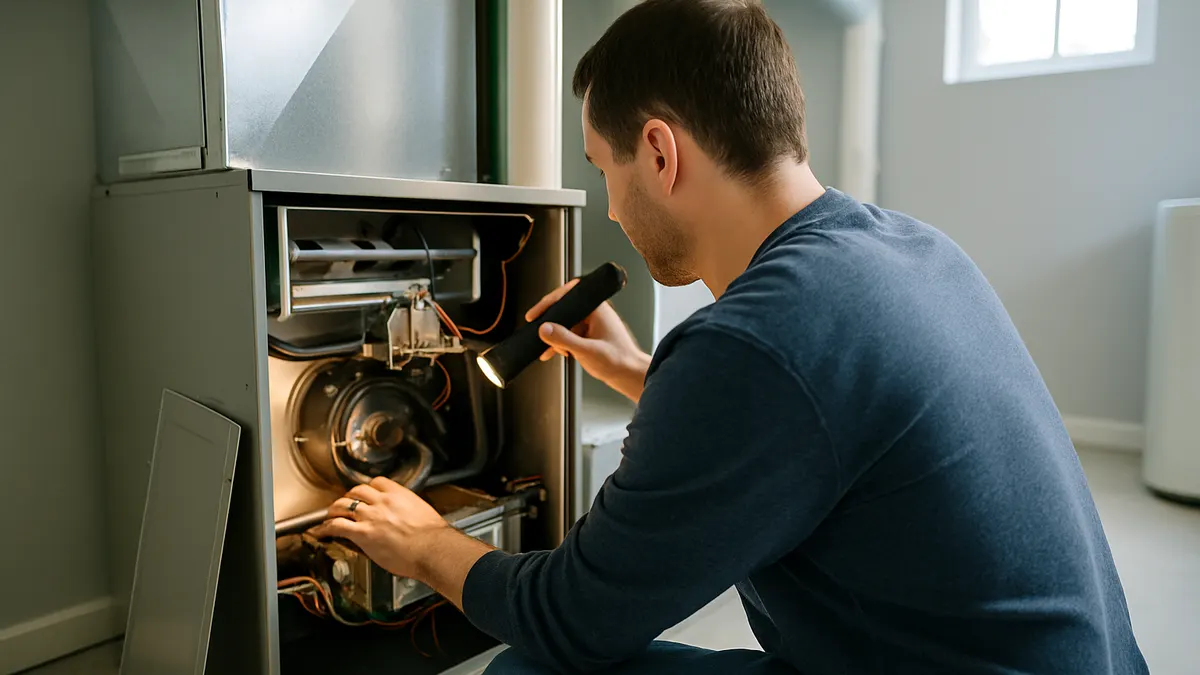
If your furnace runs but the house stays cold, the problem is almost always one of seven things: a thermostat set or wired wrong, a clogged air filter, a pilot light that has gone out, a dirty flame sensor, a tripped breaker, blocked or leaking ductwork, or a system that is simply too old to keep up. Most of these take only a few minutes to check, though anything involving gas, electricity, or a burner flame is safer left to a licensed technician.
Key Takeaways
- A furnace that runs but doesn't heat almost never means the whole system is dead — it usually points to one specific part.
- Check the thermostat and air filter first; together they cause a large share of “no heat” calls.
- Gas furnaces that won't ignite are commonly tied to a pilot light or a dirty flame sensor.
- A tripped breaker or blown fuse can cut power to the blower even when the thermostat display looks normal.
- Any smell of gas, a yellow burner flame, or a triggered carbon monoxide alarm means shutting the system down and calling for help — not troubleshooting further.
- A furnace older than 15 years that needs frequent repairs is often more cost-effective to replace than to keep patching.
What Does It Mean When a Furnace Runs but Won't Heat?
A furnace that won't heat is different from a furnace that won't turn on at all. If the blower runs, the display lights up, or you can hear the system cycling, power is reaching the unit — the breakdown is happening somewhere between that first signal and warm air actually reaching your vents. In gas furnaces, the culprit usually sits in the ignition sequence: the thermostat calls for heat, the system senses airflow, then it lights the burners safely. A break at any point stops warm air without stopping the furnace from running. Electric furnaces skip the gas steps but still depend on a working heating element, a functioning sequencer, and enough airflow to move heat where it's needed. Our licensed furnace repair and installation technicians see the same handful of causes on repeat calls each winter, which is why walking through them in order — instead of guessing — usually gets to the answer fastest.
7 Common Causes of a Furnace Not Heating
1. The Thermostat Is Set Wrong or Losing Its Signal
This is the most overlooked cause because it seems too simple to be the answer. Make sure the thermostat is switched to “Heat,” not “Auto” or “Cool,” and that the set temperature is actually higher than the current room temperature. Battery-powered thermostats can also drop their connection to the furnace when the batteries run low, even while the screen still lights up. Programmable and smart thermostats add another failure point: a schedule conflict, a Wi-Fi disconnect, or a firmware glitch can quietly override the setting you think you made.
Fix: Confirm the mode and temperature, swap in fresh batteries, and reboot smart thermostats from the app or by pulling them off the wall plate for 30 seconds. If the thermostat still won't communicate with the furnace after that, the wiring or the control board may need a professional look.
2. A Dirty or Clogged Air Filter
A blocked filter is one of the single biggest reasons a furnace runs constantly without warming the house. As air struggles to pass through, the heat exchanger overheats, and many furnaces respond by shutting the burners off as a built-in safety measure while the blower keeps running — which feels exactly like “no heat” even though the system technically didn't fail.
Fix: Pull the filter and hold it up to a light. If you can't see light through it, replace it. Standard 1-inch filters typically need changing every 30 to 90 days, more often with pets or during heavy heating season. This single habit prevents a surprising number of winter service calls.
3. The Pilot Light Has Gone Out
Older gas furnaces still rely on a standing pilot light rather than an electronic igniter. Drafts, a buildup of dust around the pilot assembly, or a failing thermocouple can all blow it out or prevent it from staying lit.
Fix: Locate the pilot light access panel and follow the relighting instructions printed on the furnace itself — they vary by manufacturer. If the pilot won't stay lit after a couple of attempts, the thermocouple is likely the problem, and that's a part best replaced by a technician, since it also serves as a gas safety shutoff.
4. Ignition or Flame Sensor Trouble
Newer gas furnaces replace the pilot light with an electronic igniter and a flame sensor, a small metal rod that confirms the burners actually lit. If that sensor gets coated in soot or residue, it can't detect the flame, so the furnace shuts the gas valve as a safety precaution within seconds of starting — leaving you with a system that clicks on and off but never produces heat.
Fix: This is a common source of repeat “short cycling” complaints, and while a technician can clean the sensor in minutes, the repair also involves opening the burner compartment, so it's not a step we'd recommend for a first-time DIY attempt.
5. A Tripped Breaker or Blown Fuse
Furnaces draw power for the blower motor and control board even on gas models, and that circuit can trip just like any other in the house — often from a power surge, an aging breaker, or a motor drawing more current than usual as it starts to fail.
Fix: Check your electrical panel for a breaker in the “off” or middle position and reset it fully. If it's a furnace with its own switch (often mounted near the unit or at the top of the basement stairs), confirm that hasn't been bumped off. A breaker that trips repeatedly after resetting points to an electrical fault that needs professional diagnosis rather than another reset.
6. Closed, Blocked, or Leaking Ductwork
Even a perfectly functioning furnace can't warm a house if the heated air never reaches the rooms. Furniture pushed against a vent, registers closed to “save energy” in unused rooms, and gaps or disconnected sections in the ductwork itself are all common culprits, especially in older homes or additions where duct runs were modified over the years.
Fix: Walk through the house and open every supply register, then check for obvious obstructions. If some rooms stay cold no matter what, or you notice a musty smell or dust streaks near duct joints, a duct inspection can confirm whether conditioned air is leaking into a crawlspace or attic before it ever reaches your living space.
7. An Aging System Nearing the End of Its Lifespan
Most furnaces are built to last 15 to 20 years, and toward the end of that range, repairs tend to come more often and address less of the underlying wear. A worn-out blower motor, a failing control board, or a heat exchanger that's cracked from years of expansion and contraction can all present as inconsistent or absent heat, and replacing individual parts on an old unit doesn't always restore reliable performance.
At that point, many homeowners weigh a straight furnace replacement against a different type of heating system altogether. A boiler heating system, for example, distributes heat through water rather than forced air and runs nearly silent, which some households prefer over duct-based heating.
Others compare gas furnaces directly against electric alternatives before deciding. If you're at that stage, it's worth weighing a furnace against a heat pump before committing to another repair, since a system nearing 15 years old rarely justifies a major part replacement on its own.
When “No Heat” Is Also a Safety Issue
Most furnace problems are inconvenient, not dangerous. A small number are both. Gas furnaces produce carbon monoxide as a normal byproduct of combustion, and that byproduct is supposed to vent safely outside through the flue. A cracked heat exchanger, a blocked vent, or incomplete combustion can let it escape into the home instead — and because carbon monoxide has no smell or color, the usual senses won't catch it.
Treat any of the following as reasons to shut the furnace off and call for help rather than continue troubleshooting: a burner flame that looks yellow or flickering instead of steady blue, soot or scorch marks near the furnace or vents, a persistent headache or nausea that improves when you leave the house, or a working carbon monoxide detector that goes off. None of these are DIY situations. If you notice any of them, turn the system off, get everyone outside into fresh air, and reach a licensed technician right away rather than waiting to see if the symptoms pass.
DIY Troubleshooting vs. Calling a Professional
Not every “no heat” problem calls for a service visit, but a few clear lines separate what's safe to check yourself from what should go to a licensed technician.
| Safe to check yourself | Best left to a professional |
|---|---|
| Thermostat mode, temperature, and batteries | Gas valve, burner, or ignition system repairs |
| Air filter condition and replacement | Cracked heat exchanger or flue issues |
| Open vs. closed supply registers | Flame sensor cleaning near the burner compartment |
| A single tripped breaker (one-time reset) | Repeated breaker trips or electrical faults |
| Furnace power switch position | Thermocouple or control board replacement |
If you've worked through the checks above and the furnace still isn't heating, that's the point to stop guessing and bring in a professional diagnosis rather than keep swapping parts.
Preventing Future Furnace Breakdowns
Most of the causes above share something in common: they build up gradually and get caught during routine maintenance long before they cause a cold house. A seasonal checklist keeps small issues from turning into a mid-winter emergency call.
| Season | What to check |
|---|---|
| Fall | Schedule a professional tune-up, replace the air filter, and test the thermostat before the first cold snap |
| Winter | Check the filter monthly, keep vents and registers clear, and listen for new noises or short cycling |
| Spring | Have the system inspected once heating season ends, noting any issues to address before next winter |
| Year-round | Keep the area around the furnace clear of stored items, and test carbon monoxide detectors monthly |
A single annual tune-up catches most of the wear-related causes above — a dirty flame sensor, a struggling blower motor, a thermocouple on its way out — before they leave you without heat. Homeowners throughout the Bucks County communities we serve typically schedule that visit in early fall, ahead of the first cold stretch.
Next Steps for a Furnace That Won't Heat
Whether you're in Willow Grove, Yardley, Bristol, Levittown, Warminster, or Newtown, a furnace that runs but won't heat rarely resolves itself, and waiting only raises the odds of losing heat entirely during the next cold snap. FKRIV Plumbing & Heating Inc has spent decades diagnosing and repairing heating systems throughout Bucks County, backed by a fourth-generation master plumber and a BBB A+ rating. If the checks above don't solve the problem, scheduling a diagnostic visit now is the surest way to avoid a mid-winter breakdown.
Frequently Asked Questions
Why does my furnace run constantly but never actually heat the house? This usually points to restricted airflow, most often from a clogged air filter or closed vents, which can trigger a safety shutdown of the burners while the blower keeps running.
Is it normal for a furnace to click on and off repeatedly without heating? No — that pattern, called short cycling, is commonly caused by a dirty flame sensor or an overheating limit switch, and it's worth having checked before the component fails completely.
Can a dirty air filter really stop a furnace from heating? Yes. A clogged filter restricts airflow enough to overheat the heat exchanger, and many furnaces are designed to shut the burners off automatically when that happens.
How do I know if my furnace's pilot light is out? Check the small glass viewing window on the burner compartment; if there's no small blue flame visible, the pilot has gone out and needs to be relit following the instructions on the unit.
Should I be worried about carbon monoxide if my furnace won't heat? Not from a furnace that simply isn't producing heat — but a yellow flame, soot near the unit, or a triggered CO alarm changes that immediately and calls for shutting the system down and getting help.
How often should a gas furnace be professionally serviced? Once a year, ideally in early fall before heating season begins, is the standard recommendation from most manufacturers and HVAC technicians.
Is it cheaper to repair an old furnace or replace it? It depends on the furnace's age and the repair cost, but as a general rule, a unit older than 15 years facing a major component failure is usually a better candidate for replacement than repeated repairs.
Can cold weather alone cause a furnace to stop heating? Extreme cold can expose an existing weakness, such as a struggling ignitor or a marginal electrical connection, but weather itself doesn't typically cause a furnace to fail outright.