Your garbage disposal suddenly stops working while you clean up after dinner. Or it turns on but only hums instead of grinding. Maybe water sits in the sink after you flip the switch, or you hear a strange rattle every time you run it. These moments are frustrating, but many disposal problems have simple, safe explanations.
This garbage disposal troubleshooting guide covers the most common issues homeowners run into, what is safe to try yourself, and when to call a professional plumber instead.
Before You Start: Garbage Disposal Safety Tips
Garbage disposals are powerful appliances, and a few basic precautions keep troubleshooting safe.
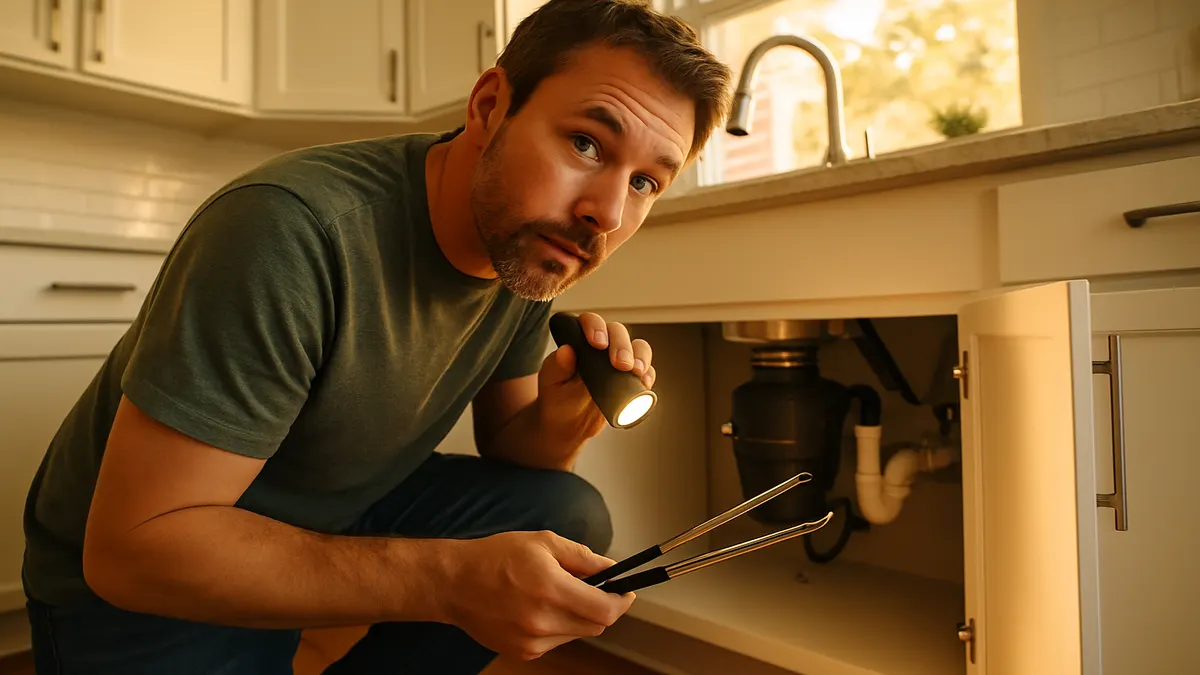
Always turn off the disposal, and switch off power at the breaker before looking underneath the unit. Never put your hand inside the chamber, even when it appears off, and avoid reaching in to remove stuck objects since a disposal can activate unexpectedly. Use a flashlight and long tongs to look inside rather than your fingers. If a problem involves wiring, a burning smell, or a unit that will not respond, stop and call a professional instead of continuing on your own.
Garbage Disposal Not Working? Start With These Checks
Before assuming the worst, run through a short list of basic checks. Confirm the disposal is receiving power by testing the wall switch, and check your circuit breaker panel for a tripped breaker.
Next, look underneath the unit for a small reset button, usually red or black. This button trips automatically when the motor overheats or draws too much current, acting as a built in safety switch. Press it firmly once, let the motor cool for a few minutes, then test the disposal again.
If the unit still will not respond, avoid forcing the switch repeatedly or attempting electrical repair yourself. That points toward a deeper issue needing a professional plumber’s diagnosis.
Common Garbage Disposal Problems and How to Troubleshoot Them
Garbage Disposal Hums but Does Not Grind
A humming sound usually means the motor has power, but something is stopping the blades from spinning freely. Common causes include a food blockage, a small foreign object like a bottle cap or fruit pit, a jammed grinding mechanism, or an overloaded motor from too much food waste at once.
Turn off the disposal and the power at the breaker first. Many units have a hex socket underneath that lets you manually rotate the flywheel with an Allen wrench to free a jam. If humming continues, or you cannot find the hex socket, professional garbage disposal repair is the safer next step.
Garbage Disposal Is Completely Silent
A disposal that makes no sound at all often points to a power issue rather than a mechanical one. Check for a tripped breaker, a faulty wall switch, or an unreset reset button first. If power checks out and the unit is still silent, the motor itself may have failed.
Hearing nothing at all, including no hum, usually means an electrical problem. Hearing a hum but no grinding means the motor has power and the issue is mechanical instead.
Garbage Disposal Is Not Draining
Sometimes a disposal runs and sounds normal, yet water still pools in the sink afterward. This usually points to food buildup inside the unit, a clogged drain line, or a blockage further down in the kitchen plumbing. Repeatedly running the disposal will not clear a true blockage and can push debris deeper into the pipe.
If flushing the drain with hot water does not help, the blockage is likely beyond what the disposal itself can resolve, and it may be part of a larger residential plumbing issue worth having inspected.
Garbage Disposal Is Making a Strange Noise
Not all noises mean the same thing. A steady hum suggests the motor has power but the blades are stuck. Rattling often means a foreign object, such as glass or metal, has gotten into the chamber. Screeching or a harsh metal on metal sound can indicate worn blades or a damaged motor mount. Do not reach inside to retrieve an object, even with the power off. Use tongs instead, or have a plumber remove it safely.
Garbage Disposal Is Leaking
Leaks typically come from one of four spots: the sink flange, the disposal body itself, the drain connection underneath, or the dishwasher hose connection. Dry the area, run the disposal briefly, and see which spot gets wet first. That location tells you where the seal or connection has failed.
A leaking disposal should never be ignored, since even a small drip can damage cabinets and flooring over time.
When Should You Reset a Garbage Disposal?
The reset button is designed for temporary situations, such as the motor overheating from heavy use or a brief overload from too much food at once. Pressing it can restore power after these minor shutdowns.
If you find yourself resetting the disposal over and over within the same day or week, that is not a fix, it is a warning sign of an underlying motor or wiring problem that needs professional attention.
What You Should NOT Do When Troubleshooting a Garbage Disposal
A few habits can turn a small problem into a bigger, more expensive one.
- Never put your hand inside the disposal, even when the power is off.
- Do not keep running a jammed disposal, hoping it clears itself.
- Never ignore repeated leaking, since water damage compounds quickly.
- Avoid repeatedly resetting an overheating unit instead of addressing the cause.
- Do not use excessive force on the unit or the flywheel.
- Never dismantle electrical components unless you are qualified.
- Stop using a disposal once it shows serious mechanical or electrical trouble.
When Is It Time to Call a Professional Plumber?
Some situations call for professional judgment rather than more troubleshooting. Reach out to a plumber if your disposal repeatedly stops working, the motor only hums, or you notice persistent leaking under the sink. A burning smell, sparking, or other electrical symptoms are also reasons to stop immediately.
Other warning signs include a severe blockage that will not clear, a unit that does not respond after basic troubleshooting, a disposal that is old and needs frequent repairs, or a grinding mechanism that seems physically damaged. A plumber can diagnose whether garbage disposal repair or full replacement makes more sense for your situation.
How to Prevent Garbage Disposal Problems
A little daily care goes a long way toward avoiding future breakdowns.
- Add food waste in smaller portions rather than all at once.
- Keep inappropriate materials, such as grease, fibrous vegetables, and hard bones, out of the disposal.
- Run cold water while the unit operates and for a short time afterward.
- Avoid overloading the motor by forcing too much through it quickly.
- Clean the disposal regularly with mild dish soap to prevent buildup and odors.
- Address unusual sounds or leaks as soon as you notice them.
Garbage Disposal Troubleshooting: When a Simple Fix Isn’t Enough
Many disposal problems come down to a stuck flywheel, a tripped reset button, or a small clog that clears with a bit of patience. But recurring humming, ongoing leaks, electrical issues, or visible mechanical damage are signs that basic troubleshooting has reached its limit.
When that happens, do not keep pushing a struggling unit. Our team offers professional drain cleaning services and full garbage disposal diagnostics for homeowners across Bucks County, so you can get your kitchen back in working order safely and quickly.Contact FKRIV Plumbing.
FKRIV also serves homeowners in Bensalem, Feasterville, Doylestown, Warminster, and Jamison, providing reliable plumbing services for local homes.
Frequently Asked Questions About Garbage Disposal Troubleshooting
1. Why is my garbage disposal not turning on?
The most common causes are a tripped circuit breaker, a disengaged reset button, or a faulty wall switch. Check the breaker panel first, then look underneath the unit for the reset button. If the disposal still will not power on after these checks, the motor or wiring may need professional evaluation.
2.What should I do if my garbage disposal is humming but not spinning?
Humming with no spinning usually means the blades are jammed by food, a small object, or overload. Turn off the power, then use the hex socket underneath the unit with an Allen wrench to manually free the flywheel. If humming continues, have a plumber inspect the mechanism.
3.How do I reset my garbage disposal?
Locate the small red or black reset button on the underside of the unit. Press it firmly once and wait a few minutes for the motor to cool before testing the disposal again. Frequent resets within a short period usually point to a deeper problem.
4.Why is my garbage disposal not draining the sink?
Standing water usually means buildup inside the disposal, a clogged drain line, or a blockage further down the pipe. Running the disposal again will not clear a real clog and may worsen it. Persistent drainage issues often need professional attention.
5.Why is water leaking from my garbage disposal?
Leaks generally come from the sink flange, the disposal body, the drain connection, or the dishwasher hose. Drying the area and running the unit briefly helps pinpoint the source. Leaks should be addressed quickly to avoid cabinet and floor damage.
6.When should I replace my garbage disposal instead of repairing it?
Replacement usually makes sense when the unit is old, needs frequent repairs, or shows visible motor or blade damage. A professional plumber can inspect the disposal and advise whether repair or replacement offers better long term value for your kitchen..