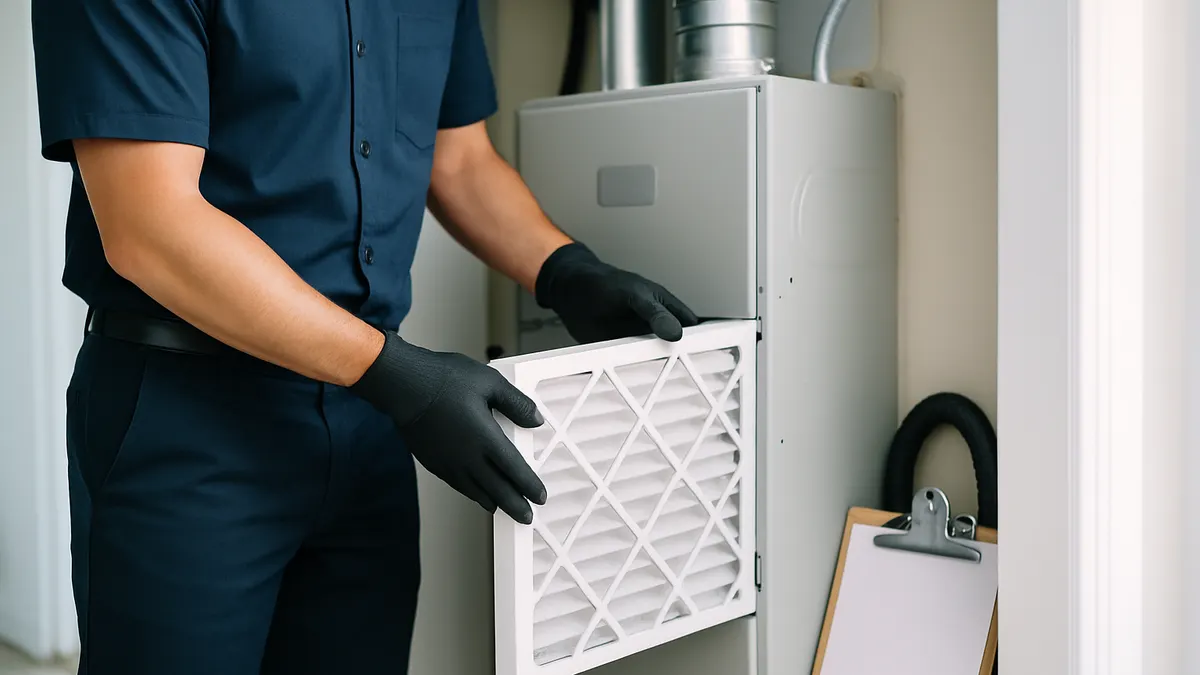
Most homeowners should schedule a professional furnace tune-up once a year, ideally in early fall before the heating season begins. Furnaces older than 10 to 12 years, systems that run constantly through long winters, or households with pets, allergies, or a manufacturer warranty on file may benefit from service twice a year. Annual maintenance keeps a furnace running safely, protects manufacturer warranties, and catches small problems before they turn into a mid-winter breakdown.
That is the short version. The rest of this guide walks through why that yearly rhythm exists, which factors can push a furnace onto a different schedule, what a technician actually checks during a visit, and the warning signs that mean a homeowner should not wait for the next scheduled appointment.
What a Furnace Tune-Up Actually Involves
A furnace tune-up is a scheduled inspection and cleaning, not a repair call. A licensed technician opens the cabinet, checks the components involved in combustion, airflow, and safety, and confirms the system is operating within the manufacturer's specifications. This is different from an emergency service call, which happens only after something has already failed.
For homeowners weighing furnace installation and repair services against a simple tune-up, the distinction matters: maintenance is preventive, while repair addresses a problem that has already shown up. A well-maintained furnace rarely needs emergency repair, since most failures trace back to a component that wears down gradually and would have been caught during a routine visit. Think of it the same way as an annual physical: nothing may feel wrong going in, but the visit exists to catch what has not yet become a symptom.
Why Regular Furnace Service Matters
Skipping maintenance rarely causes an immediate failure. Instead, small inefficiencies compound until the system finally gives out, often during the coldest week of the year. Four reasons keep coming up when homeowners ask whether annual service is worth the time.
- Safety. Furnaces burn fuel to produce heat, and a cracked heat exchanger or blocked flue can allow carbon monoxide to enter the home. This gas is colorless and odorless, so a technician's combustion and vent inspection is often the only way to catch the problem before it becomes dangerous.
- Energy efficiency. A dirty filter or dirty burner assembly forces the system to work harder to reach the same temperature, and that extra effort shows up directly on the utility bill.
- Warranty protection. Most furnace manufacturers require documented annual service by a licensed technician to keep the parts and labor warranty valid. Skipping even a single year can void coverage on a heat exchanger or blower motor that would otherwise be replaced at no cost.
- Equipment lifespan. A furnace that receives consistent care typically lasts into its late teens or twenties, while a neglected one is more likely to need premature replacement.
Factors That Affect Your Furnace's Ideal Service Schedule
Once a year is the baseline, but not every home fits that baseline exactly. A handful of variables can shift the right frequency for a specific system.
Furnace age. Units under 10 years old generally hold up fine on one visit per year. Once a furnace passes the decade mark, components like the blower motor, ignitor, and heat exchanger carry more wear, and a second inspection mid-winter can catch problems before they turn into a no-heat emergency.
Fuel type. Oil furnaces build up soot and residue faster than gas furnaces and typically need service more often, sometimes on a strict annual schedule regardless of age, because the burner nozzle and filter clog more quickly. Gas and electric furnaces tend to stay cleaner between visits.
Usage pattern. A furnace that serves as the sole heat source for a large, older home and runs most of the winter logs more hours than one that supplements a heat pump or only kicks on during the coldest stretches. More run-time means more wear on moving parts.
Household factors. Pets, smokers, and anyone with allergies or asthma in the home add more particulate to the air the system has to move, which can justify more frequent filter changes and an extra mid-season filter check between full tune-ups.
System type. A furnace is only one branch of a home's heating options. Homes with a boiler heating system instead of forced air follow a similar annual rhythm, but the inspection points differ since boilers rely on circulated water rather than moving air.
| Furnace Age | Recommended Service Frequency |
| 0-10 years | Once a year, before the heating season |
| 10-15 years | Once a year, plus a mid-winter filter and airflow check |
| 15+ years or oil-fired | Twice a year, or as recommended by your technician |
Best Time of Year to Schedule Furnace Service
Early fall, roughly September through October, is the ideal window. Scheduling before the first cold snap means the furnace gets inspected and made ready before it has to run continuously, and it avoids the scheduling backlog that hits HVAC companies once temperatures drop. Waiting until a system fails on a cold night usually means a longer wait for an appointment and far less flexibility on timing.
Pairing furnace maintenance with the rest of a home's seasonal upkeep is an efficient way to stay ahead of problems across every system, not just heating. A season-by-season home maintenance checklist can help homeowners build a simple routine that covers plumbing, drains, and heating equipment together, rather than tracking each one separately.
Signs Your Furnace Needs Attention Before Your Next Scheduled Visit
Annual service is a baseline, not a substitute for paying attention between visits. Call a technician right away if you notice:
- Banging, rattling, squealing, or grinding sounds when the system starts or runs
- Short cycling, where the furnace turns on and off every few minutes instead of completing a full cycle
- A noticeable jump in heating costs without a change in usage or weather
- Uneven heating between rooms or a system that runs constantly without reaching the set temperature
- A burning smell that does not fade after the first few minutes of a cold start, or any smell resembling rotten eggs
- Visible soot, rust, or moisture around the unit
- A pilot light or flame burning yellow instead of blue
Any of these can point to a component that is failing rather than simply dirty, and waiting for the next scheduled visit risks a full breakdown.
What Happens During a Professional Furnace Tune-Up
A trained technician, backed by four generations of licensed, insured master plumbers and HVAC experience, knows exactly where a furnace tends to develop problems first. A thorough tune-up typically takes about an hour and covers more ground than most homeowners expect.
- Filter inspection and replacement restores proper airflow.
- Burner and ignition system cleaning ensures even, efficient combustion.
- Heat exchanger inspection checks for cracks or corrosion that could allow combustion gases to escape.
- Flue and venting checks confirm exhaust gases are leaving the home safely.
- Electrical connection tightening and testing addresses a common cause of intermittent failures.
- Blower motor and belt inspection, including lubrication where applicable, keeps moving parts from binding.
- Thermostat calibration confirms the system responds accurately to temperature settings.
- Carbon monoxide and gas leak testing, using dedicated detection equipment rather than a visual check alone, closes out the visit.
DIY Maintenance vs. Professional Service
Some furnace upkeep is safe and appropriate for homeowners to handle between professional visits. Other tasks require training, calibrated tools, or licensing.
What homeowners can do themselves
- Replace or clean the air filter every one to three months depending on filter type and household conditions
- Keep the area around the furnace clear of boxes, furniture, and stored items
- Vacuum visible dust from vents and the immediate area around the unit
- Watch for the warning signs listed above between scheduled visits
What should be left to a licensed technician
- Opening the burner assembly or adjusting gas pressure
- Inspecting or repairing the heat exchanger
- Testing for carbon monoxide and combustion gas leaks
- Calibrating electrical components or replacing the ignitor
What Happens If You Skip Furnace Maintenance
A furnace that never gets serviced does not fail all at once. Efficiency drops gradually, energy bills creep up, and small issues, a dirty flame sensor, a slightly misaligned burner, a filter overdue for replacement, accumulate until one of them causes the system to shut down entirely. Emergency no-heat calls during the coldest weeks of winter are disproportionately linked to systems that missed their annual service, and warranty coverage on major components is often void by that point as well, leaving the full repair cost uncovered.
Furnace Maintenance and Indoor Air Quality
A furnace does not just heat a home, it moves the air throughout it. A clogged filter or dirty blower recirculates dust, pet dander, and other particulates every time the system runs, which is part of why allergy symptoms tend to flare up when the heat kicks on for the season. Regular filter changes and an annual cleaning address both problems at once, keeping the air moving through the home cleaner while keeping the equipment efficient.
When Maintenance Stops Being the Right Call
Regular service extends a furnace's life, but it does not make a furnace last forever. Somewhere around the 15 to 20 year mark, the calculation starts to shift, especially if a technician has flagged the same component for attention two or three tune-ups in a row. A furnace that needs an increasingly expensive repair each season, or one that no longer holds a consistent temperature despite a clean filter and a recent tune-up, is often signaling that replacement will cost less over time than continued repair. A licensed technician can walk through that comparison honestly during a routine visit, rather than waiting for a full breakdown to force the decision.
Local Considerations for Bucks and Montgomery County Homes
Southeastern Pennsylvania winters bring a long stretch of sustained cold rather than a few isolated cold snaps, which means area furnaces log more total run-time than systems in milder climates. Bristol homeowners and Warminster Heights households dealing with older housing stock often have furnaces that are original to the home or inherited from a previous owner, which makes an annual inspection especially useful for catching age-related wear before it becomes a mid-winter emergency.
Keeping Your Furnace on Schedule
A once-a-year tune-up, timed for early fall and adjusted for a furnace's age and usage, is the simplest way to avoid a mid-winter breakdown and keep a heating system running efficiently for its full expected lifespan. FKRIV Plumbing & Heating Inc is a veteran-owned, family-run company serving homeowners throughout Jamison, Levittown, Yardley, Willow Grove, Bristol, and Warminster, and scheduling a furnace tune-up before the season's first cold snap is one of the easiest ways to head into winter with confidence.
Frequently Asked Questions
Is it really necessary to service a furnace every year, even if it seems to be running fine?
Yes. Many of the problems a tune-up catches, like a cracked heat exchanger or a failing ignitor, do not produce obvious symptoms until they cause a breakdown or a safety issue. A furnace that seems fine can still be operating less efficiently or less safely than it should.
How much does it cost to have a furnace serviced?
Cost varies by system size, condition, age, and location, so the most accurate figure comes from a technician after an on-site look at the specific furnace. Many providers also offer maintenance plans that bundle annual visits together, which is worth asking about when scheduling.
Can a homeowner service their own furnace instead of hiring a professional?
Homeowners can safely handle filter changes and keeping the area around the unit clear. Combustion, gas pressure, and heat exchanger inspections require training and calibrated equipment that most homeowners do not have access to.
What is the difference between a furnace tune-up and a furnace inspection?
The terms are often used interchangeably. In practice, a tune-up usually includes cleaning and adjustment along with inspection, while a standalone inspection may only cover the check without cleaning or adjusting components.
Does furnace maintenance affect a home's resale value?
A documented maintenance history can reassure buyers and inspectors that the heating system has been cared for, which can smooth a home inspection and support the system's remaining useful life in a seller's disclosure.
How long does a typical furnace tune-up take?
Most tune-ups take about an hour, though older systems or units with more wear may take longer if the technician finds something that needs additional attention.
Should a homeowner still get a tune-up if the furnace is brand new?
Yes. New furnaces still need an annual check to keep the manufacturer's warranty valid, and a first-year tune-up establishes a baseline for how the system should be running.
What is the risk of waiting until the furnace breaks down to call for service?
Waiting means dealing with a no-heat emergency, likely during the coldest part of the year when technicians are booked solid, along with a higher chance that a small, cheap-to-fix issue turned into a larger repair.