A hidden water leak might seem like a minor inconvenience, but left unaddressed, it can quietly cause thousands of dollars in damage to your home’s structure, flooring, and walls. The tricky part? Most hidden leaks give very few obvious signs until the damage is already done.
That’s where professional plumbers come in. Modern leak detection is far more advanced than simply listening for dripping sounds. Today’s plumbers use a combination of experience, specialized tools, and technology to pinpoint leaks — even those buried deep inside walls, under slabs, or beneath your yard.
If you’ve ever wondered how professionals track down something you can’t even see, this guide breaks it all down in plain language.
Why Hidden Leaks Are So Hard to Find on Your Own
Water is sneaky. A small crack in a pipe behind a wall can slowly seep moisture for weeks before you notice a stain on the drywall or a spike on your water bill. Underground leaks can saturate the soil around your foundation for months before any surface signs appear.
Homeowners often spot the symptoms — a musty smell, higher water bills, soft spots in the floor, or peeling paint — but tracing the problem back to its source requires the right equipment and know-how. Attempting a DIY investigation without proper tools often leads to unnecessary demolition, missed leaks, and wasted money.
This is why calling a trusted plumbing professional early makes all the difference.
Common Warning Signs of a Hidden Water Leak
Before a plumber even arrives, homeowners often notice one or more of these red flags:
- Unexplained increase in water bills without a change in usage;
- Damp or discolored patches on ceilings, walls, or floors;
- Musty or moldy odors, especially in bathrooms or basements;
- Sounds of running water when all fixtures are turned off;
- Warm spots on the floor, which may indicate a hot water line leak beneath the slab;
- Low water pressure in certain areas of the home.
If you notice more than one of these signs, it’s time to schedule a professional inspection. Don’t wait — early detection can save you from costly structural repairs down the line.
Tools and Methods Plumbers Use to Detect Leaks
1. Visual Inspection
The first step in any leak detection service is a thorough visual inspection. A skilled plumber examines accessible pipes, joints, fixtures, and visible plumbing for signs of corrosion, moisture, or damage. While this step alone won’t reveal every hidden leak, it helps rule out surface-level issues and gives the plumber a starting point for deeper investigation.
2. Pressure Testing
Plumbers often use pressure gauges to test your water supply lines. By isolating sections of pipe and monitoring pressure over time, they can determine whether there’s a drop — a telltale sign that water is escaping somewhere it shouldn’t. This method is especially effective for checking entire line segments before narrowing down the location.
3. Acoustic Leak Detection
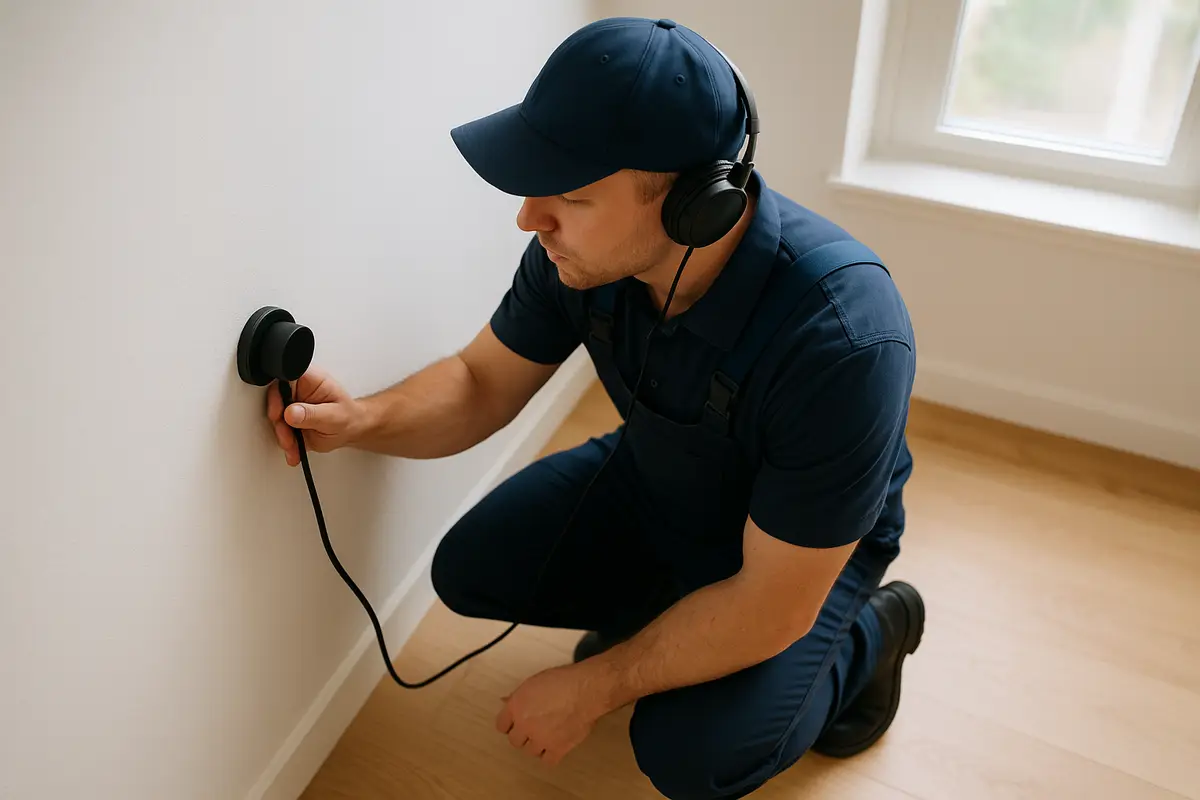
One of the most widely used techniques, acoustic detection involves listening for the distinct sound of pressurized water escaping through a crack or hole. Plumbers use sensitive ground microphones and listening devices placed along pipes or directly on surfaces. Even through concrete slabs or thick walls, these tools can pick up the subtle sounds of a leak and help triangulate its location.
This is a non-invasive approach that minimizes unnecessary digging or demolition — a big advantage for homeowners.
4. Thermal Imaging (Infrared Cameras)
Thermal cameras detect temperature differences in surfaces. Since leaking water is typically a different temperature than the surrounding material, it shows up clearly on an infrared scan. This technology is particularly useful for finding leaks inside walls, ceilings, and under flooring without cutting into anything.
Thermal imaging is fast, accurate, and completely non-destructive — making it a preferred method for detecting leaks in finished spaces.
5. Video Pipe Inspection
For drain lines, sewer pipes, and hard-to-reach plumbing, plumbers insert a waterproof camera attached to a flexible cable directly into the pipe. This gives a real-time view of the pipe’s interior, allowing the technician to see cracks, root intrusion, corrosion, or blockages with their own eyes.
Our team provides professional plumbing services and advanced leak detection methods that can pinpoint underground plumbing issues without any digging.
6. Tracer Gas Testing
In some cases — especially for underground or slab leaks — plumbers use tracer gas (a mix of hydrogen and nitrogen) to locate the problem. The non-toxic gas is pumped into the pipe, and a sensitive detector above ground picks up where the gas escapes. This method is highly precise and can identify leaks even under driveways, patios, or thick concrete slabs.
7. Moisture Meters
Moisture meters measure the water content in walls, floors, and ceilings. By scanning different areas, a plumber can quickly identify where moisture levels are abnormally high, which points to nearby leakage. It’s a simple but effective diagnostic tool that helps confirm what thermal imaging or acoustic testing may suggest.
What Happens After a Leak Is Found?
Once the leak is located, your plumber will walk you through your repair options. Depending on the severity and location, this could involve:
- Performing pipe patching or re-piping for cracked, leaking, or heavily corroded lines;
- Executing fixture replacement for faulty valves, faucets, or connectors;
- Scheduling professional water heater repair if the moisture originates from the tank or its connected lines. Our team handles this as part of our comprehensive water heater repair services;
- Providing target Drain line repair or cleaning to address backed-up or compromised sewer lines;
- Sump pump inspection, especially when basement water intrusion is a concern.
No matter the source of the problem, FKRIV Plumbing & Heating Inc. provides full-service plumbing solutions in Levittown, PA to protect your home. From rapid leak detection to sump pump installation services and dedicated drain cleaning services in Levittown, our licensed team ensures your property stays completely safe from future flooding.
The Cost of Ignoring a Hidden Leak
It’s tempting to delay calling a plumber when there are no obvious signs of damage. But hidden leaks don’t stay hidden forever. Over time, unchecked moisture can lead to:
- Mold and mildew growth, which poses serious health risks;
- Rotting wood framing and structural weakening;
- Foundation damage from prolonged soil saturation;
- Damaged insulation, drywall, and flooring;
- Dramatically higher utility bills.
A professional leak detection call is a fraction of the cost compared to repairing mold remediation, structural damage, or replacing water-damaged flooring. Think of it as a worthwhile investment in your home’s longevity.
When to Call an Emergency Plumber
Some leaks can’t wait for a scheduled appointment. If you notice any of the following, it’s time to call for emergency plumbing help right away:
- Water actively gushing or flooding inside the home;
- A sudden and dramatic drop in water pressure;
- Visible pipe burst or sewage backup;
- Water near electrical outlets or panels.
Immediate action in these situations can prevent catastrophic damage and keep your family safe. If you need immediate assistance or want to schedule an inspection, call us today at (215) 874-0592.