That small drip under your sink or behind a wall might seem like no big deal — until you realize it's steadily eating away at your drywall, flooring, or cabinet. Pinhole leaks in copper pipes are one of the most common plumbing problems homeowners face, and while they can seem minor at first, they have a way of turning into costly repairs if ignored.
The good news? Depending on the severity of the leak and your comfort level with DIY repairs, fixing a pinhole leak can be straightforward. This complete guide walks you through everything you need to know — from identifying the problem to choosing the best repair method — so you can act fast and protect your home.
What Causes Pinhole Leaks in Copper Pipes?
Before you grab your tools, it helps to understand why these tiny holes form in the first place. Copper is a durable material, but it's not invincible.
The most common causes include:
- Corrosion from aggressive water chemistry: Water with high acidity or chlorine content can slowly eat through copper over time.
- Pitting corrosion: This type of corrosion creates deep, narrow pits in the pipe wall, eventually breaking through and creating a leak.
- Age and wear: Copper pipes can last 50+ years, but older systems are naturally more vulnerable to degradation.
- High water pressure: Consistently high pressure can stress your pipes and accelerate wear at weak points.
- Flux residue from original installation: Improper soldering during installation can leave behind acidic flux that corrodes from the inside out.
If you've noticed multiple pinhole leaks in your home, it may signal a broader plumbing repair concern that's worth having a professional evaluate.
Tools and Materials You'll Need
When you gather your supplies before starting, you will ensure a much smoother repair process. Here's what you'll typically need:
- Pipe cutter or hacksaw
- Emery cloth or sandpaper
- Slip coupling or compression fitting (sized to your pipe diameter)
- Pipe repair clamp (for temporary fixes)
- Epoxy putty or repair tape (for very minor leaks)
- Propane torch and solder (if soldering)
- Plumber's flux
- Bucket and towels
- Adjustable wrench and pliers
If you don't have soldering experience, don't worry — there are no-solder repair options that work just as well for most situations.
How to Fix a Pinhole Leak in a Copper Pipe: Step-by-Step
Step 1: Shut Off the Water Supply
Always start by turning off the water supply to the affected pipe. For a localized repair, this may mean shutting off the valve under a sink or behind a wall. If no local shutoff exists, turn off the main water supply to your home.
Open a nearby faucet to drain any remaining water from the line. This relieves pressure and keeps the work area dry.
Step 2: Locate and Dry the Leak
Pinhole leaks can be sneaky. Run your hand along the pipe and look for moisture, discoloration, or green/white mineral deposits on the copper surface — these are telltale signs of ongoing corrosion. Once found, dry the area thoroughly with a towel before attempting any repair.
Step 3: Choose Your Repair Method
There are a few effective ways to fix a pinhole leak, depending on how serious it is and whether you want a temporary fix or a permanent solution.
Option A: Pipe Repair Clamp (Temporary)
A pipe repair clamp is a quick, inexpensive fix that wraps around the leak and creates a tight seal. This is best used as a short-term solution while you arrange for a more permanent repair.
- Center the rubber gasket of the clamp directly over the hole.
- Tighten the bolts evenly until secure.
- Restore water pressure and check for continued leaking.
Option B: Epoxy Putty (For Very Small Holes)
For a truly tiny pinhole, two-part epoxy putty can work well strictly as a temporary emergency fix until a proper repair can be made. It hardens into a waterproof seal within minutes but should never be relied upon as a long-term solution for pressurized lines.
Note: This method works best on dry, clean copper surfaces, so make sure the pipe is completely dry before applying.
Option C: Slip Coupling (Permanent Fix — No Solder)
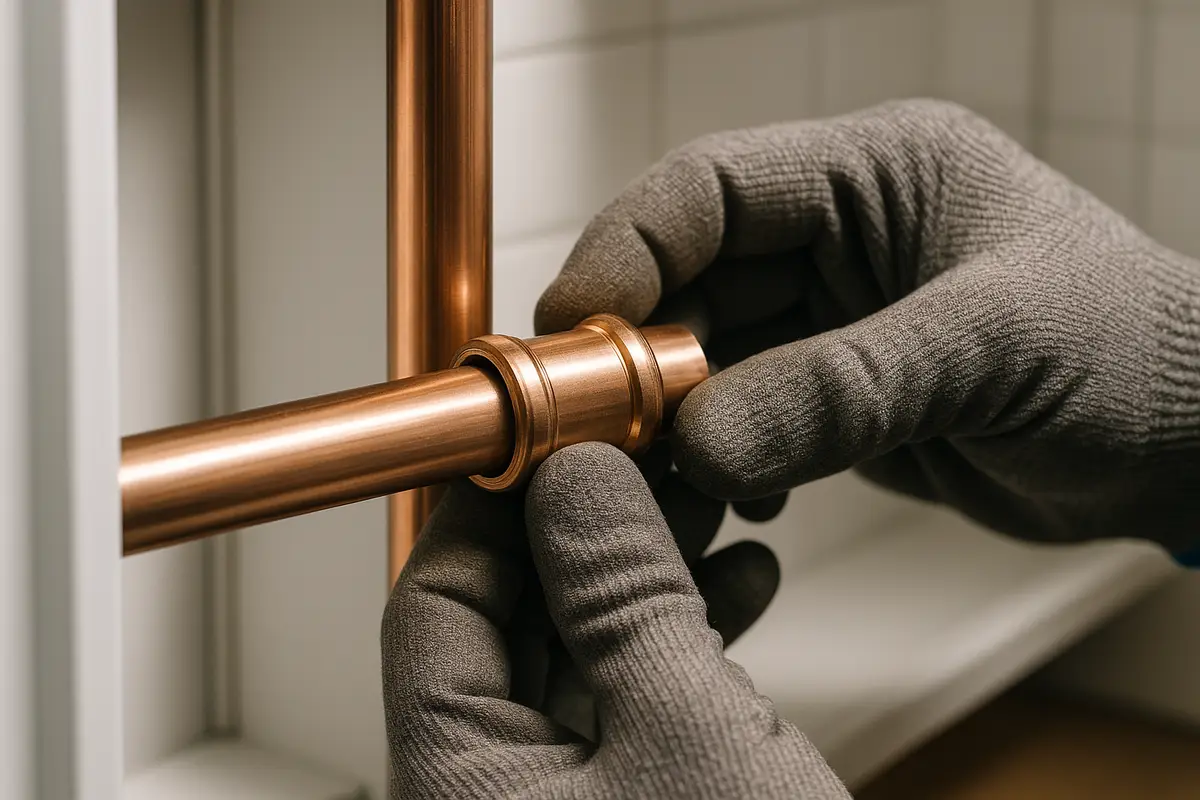
For a lasting repair without soldering, a slip coupling is one of the best options. It works by sliding over the damaged section of pipe and creating a secure connection.
- Use a pipe cutter to remove a small section of pipe around the damaged area (typically 1–2 inches on each side of the hole).
- Smooth the cut ends with emery cloth.
- Slide the slip coupling over one end, then align with the other end and tighten according to manufacturer instructions.
This type of repair is clean, code-compliant in most areas, and can be done in under an hour even by a first-timer.
Option D: Soldered Copper Patch (Permanent Fix — With Solder)
If you're comfortable with a torch and have experience soldering, cutting out the damaged section and soldering in a new piece of pipe is the most traditional, permanent fix. If this is your first time soldering copper, we recommend watching a tutorial first or calling a licensed plumber to avoid creating a bigger problem.
Restore Water and Test Your Repair
Once your repair is complete, slowly turn the water supply back on and watch the repaired area closely for 5–10 minutes. Run water through the line and check for any signs of dripping or moisture. If everything looks dry, you're in good shape.
It's also a smart idea to check for water damage in the surrounding area — particularly if the leak was hidden inside a wall or under a cabinet. Catching moisture damage early prevents mold growth and structural issues down the line.
When Should You Call a Professional Plumber?
DIY repairs work well for isolated pinhole leaks that are easy to access. But some situations are better handled by a licensed plumber:
- The leak is located inside a wall, ceiling, or under a concrete slab.
- You've found more than one pinhole leak in your system.
- Your pipes are older and showing widespread signs of corrosion.
- You're unsure which section of pipe is affected.
- Water damage has already spread to surrounding materials.
If you're facing a sudden or severe leak, don't wait — contact an emergency plumber right away. Quick action can prevent thousands of dollars in water damage.
At FKRIV Plumbing & Heating Inc., our team handles everything from minor pipe repairs to full plumbing services, including sump pump installation and water heater repair — so you have one trusted team for all your home's plumbing needs.
How to Prevent Pinhole Leaks in the Future
A little proactive maintenance goes a long way in keeping your copper pipes in good shape:
- Test your water quality: If your water is highly acidic or chlorinated, consider a whole-house water filter or pH balancer.
- Monitor water pressure: Keep pressure below 80 psi. High pressure is a leading cause of pipe stress.
- Schedule regular inspections: Have a plumber inspect your pipes every few years, especially if your home is older.
- Address minor leaks immediately: A small drip today can become a major flood tomorrow.
If your home is in Doylestown, routine drain cleaning in Doylestown is a great way to stay ahead of slow drainage that can put excess stress on your pipe system. Similarly, homeowners should also consider sump pump installation in Doylestown to manage groundwater and reduce moisture-related pipe damage.
Pinhole leaks are a common plumbing headache, but with the right information and tools, they don't have to become a crisis. Whether you tackle the repair yourself or call in a pro, the most important thing is to act quickly and not let a small drip turn into a big problem.
Need help with a pipe leak or other plumbing concern? The team at FKRIV Plumbing & Heating Inc. is ready to assist with fast, reliable, and affordable service. Give us a call at (215) 874-0592 today.