Your Tap Water May Be Safe but Still Not Clean
Municipal water in Bucks County meets EPA standards, which means it is technically safe to drink. But safe and clean are not the same thing. Treated tap water can still contain chlorine, sediment, trace levels of lead from older service lines, volatile organic compounds, and hard water minerals that affect taste, odor, and the long-term health of your plumbing system. If you have ever noticed a chemical taste in your water, white residue on fixtures, or dry skin and hair after showering, your water quality may be adequate by regulatory standards but far from ideal for your household.
A whole-house water filtration system addresses these concerns at the point where water enters your home, providing cleaner, better-tasting water from every tap, shower, and appliance. But is the investment worth it? For most Bucks County homeowners, the answer depends on what is actually in your water and what you want to protect.
What a Whole-House Water Filtration System Actually Does
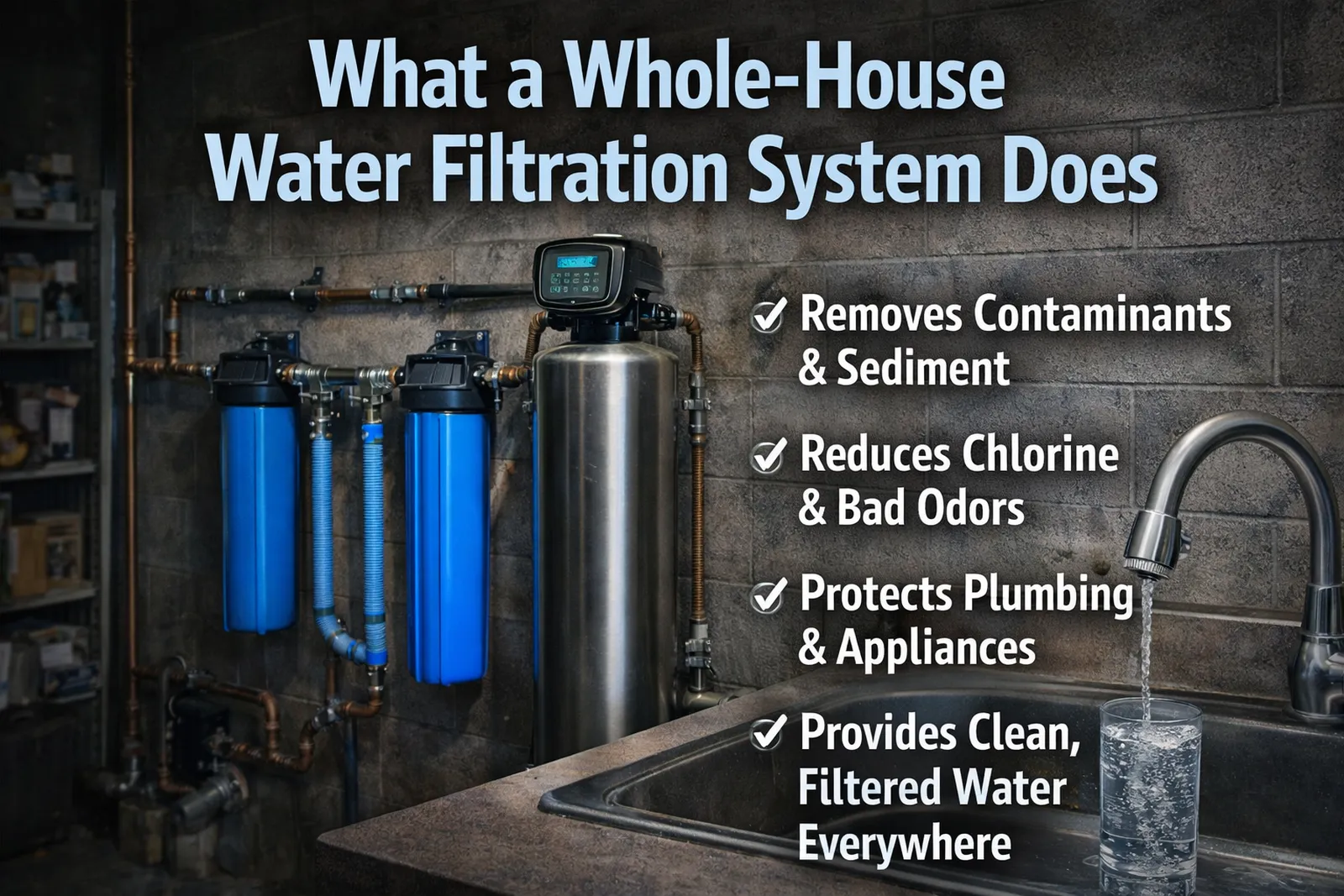
Unlike an under-sink filter or a pitcher filter that treats water at a single point, a whole-house system installs on your main water supply line and filters every gallon that enters your home. This means your kitchen faucet, your bathroom sinks, your showers, your washing machine, your dishwasher, and your water heater all receive filtered water.
Most whole-house systems use a multi-stage filtration approach. A sediment pre-filter captures dirt, rust, and particulate matter. An activated carbon filter removes chlorine, chloramines, and organic chemicals that cause taste and odor issues. Depending on the system, additional stages may target specific contaminants like lead, PFAS, or volatile organic compounds. Some systems also include a water softening component that addresses hard water minerals.
The result is water that tastes better, smells better, and is gentler on your plumbing, your appliances, and your body.
Health Benefits of Filtered Water Throughout Your Home
Drinking water quality gets most of the attention, but filtration benefits extend well beyond the kitchen. Chlorine and chloramines in unfiltered water can irritate skin and eyes, aggravate conditions like eczema and psoriasis, and dry out hair. Showering in filtered water can noticeably improve skin hydration and reduce irritation, especially for children and anyone with sensitive skin.
Removing sediment and contaminants from your entire water supply also means that the ice from your freezer, the water you cook with, and the water your pets drink are all filtered. For households with young children, elderly family members, or anyone with a compromised immune system, whole-house filtration provides a meaningful layer of protection against contaminants that standard municipal treatment may not fully eliminate.
How Filtration Protects Your Plumbing and Appliances
The benefits to your plumbing system are significant and measurable. Sediment in unfiltered water gradually accumulates inside pipes, valves, faucet aerators, and appliance components. Hard water minerals form a limescale that reduces pipe diameter, coats heating elements in your water heater, and shortens the lifespan of washing machines and dishwashers.
A filtration system that includes sediment removal and water softening dramatically reduces these effects. Water heaters last longer and operate more efficiently. Faucets, shower heads, and valves stay cleaner and function properly. Appliances connected to your water supply experience less wear and require fewer repairs. Over the life of the system, the savings on appliance replacement, plumbing repairs, and energy bills can offset a significant portion of the installation cost.
Understanding the Cost and Long-Term Savings
Whole-house water filtration systems vary widely in cost depending on the technology, capacity, and complexity of the installation. A basic sediment and carbon filtration system is the most affordable option and addresses the most common water quality concerns. Systems that include water softening or advanced contaminant removal cost more upfront but deliver additional benefits.
When evaluating cost, consider what you are already spending to work around your water quality. Bottled water purchases, replacement pitcher filters, cleaning products for hard water stains, premature appliance replacements, and extra plumbing repairs all add up. Many homeowners find that a whole-house system pays for itself within a few years when these ongoing costs are factored in.
A licensed plumber can test your water, assess your household usage, and recommend a system that matches your specific needs and budget. Proper sizing and professional installation are essential because an undersized or poorly installed system will not perform as intended and may even restrict water flow.
Professional Installation Makes the Difference
A water filtration system is only as good as its installation. The system must be correctly sized for your household’s water demand, properly connected to your main supply line, and positioned where filters can be easily accessed for maintenance. Bypass valves should be installed so the system can be serviced without shutting off water to the entire house.
At FKRIV Plumbing & Heating Inc., we help homeowners throughout Jamison, Levittown, Yardley, Willow Grove, and surrounding Bucks County communities evaluate their water quality and choose the right filtration solution for their homes. From initial water assessment through installation and ongoing maintenance, we make sure your system is set up correctly and working as designed.
Ready to Get Help?
Contact FKRIV Plumbing & Heating Inc. today. Call (215) 874-0592 or visit to schedule service.