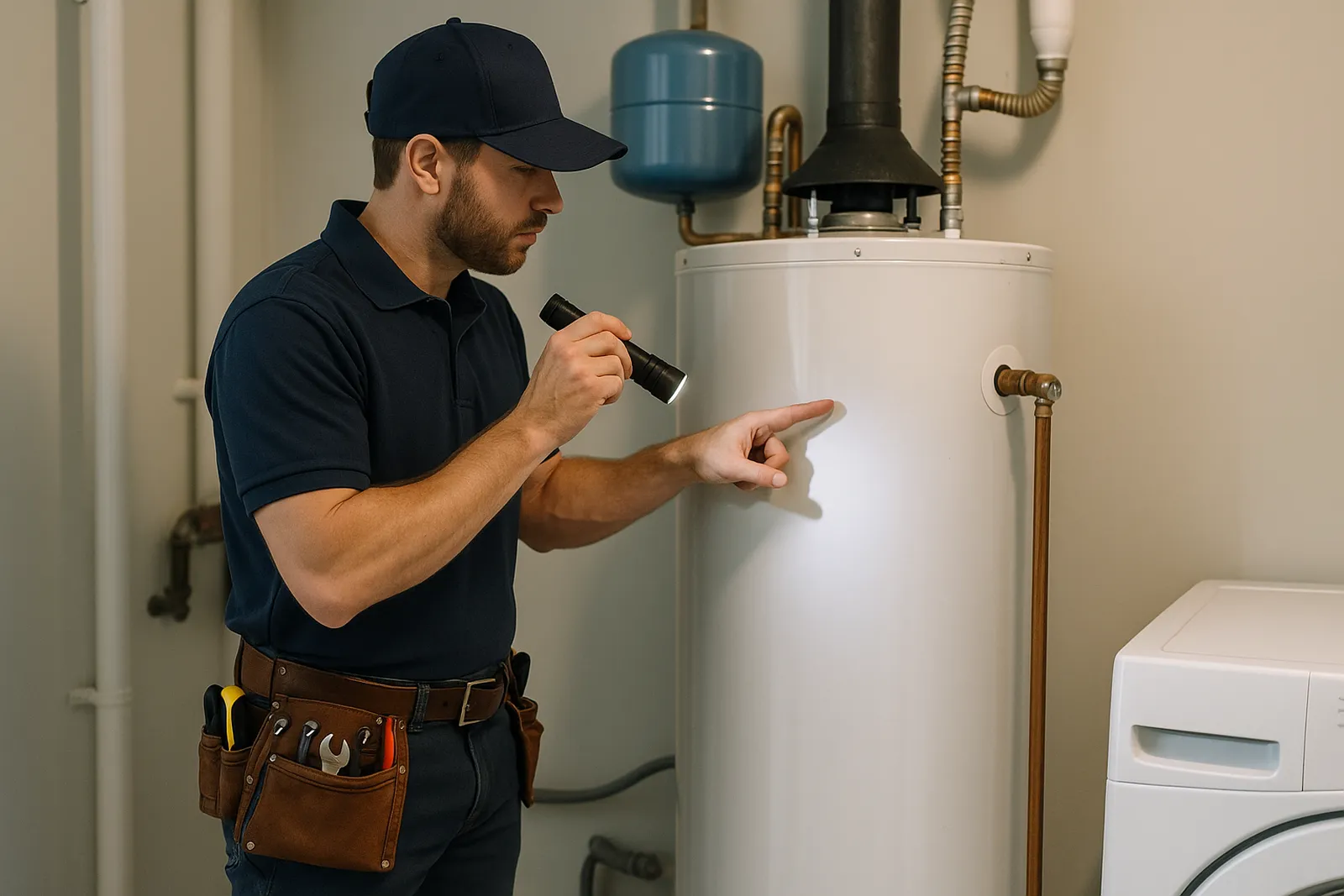
What Hard Water Actually Does Inside Your Plumbing
If you live in Bucks County, there is a good chance your home has hard water. Hard water contains elevated levels of dissolved minerals, primarily calcium and magnesium, that enter your supply as groundwater passes through limestone and sedimentary rock formations common throughout southeastern Pennsylvania. You might notice it as white residue on your faucets or spots on your glassware. But what you cannot see is what hard water is doing inside your hot water system, and the damage can be far more serious than cosmetic stains.
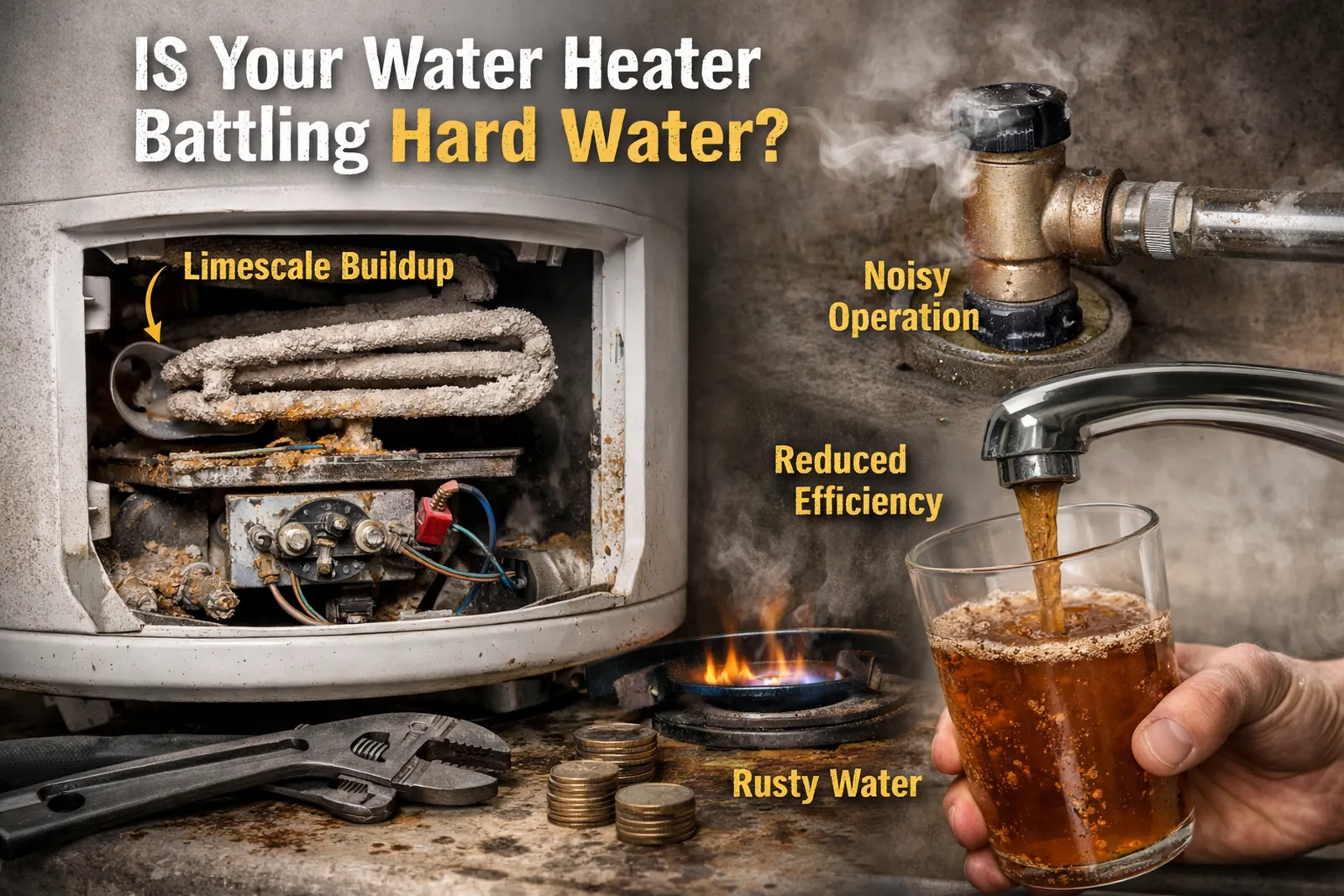
Every time your water heater cycles on, it heats water that contains these dissolved minerals. As the temperature rises, calcium carbonate separates from the water and settles to the bottom of the tank as a chalky, rock-hard deposit called limescale. Over months and years, this sediment builds up layer by layer, gradually reducing your system’s efficiency, shortening its lifespan, and costing you more money on every energy bill.
How Limescale Formation Reduces Heating Efficiency
The heating element in an electric water heater or the burner plate in a gas unit is designed to transfer heat directly to the water. When a layer of mineral scale forms between the heat source and the water, it acts as insulation, forcing the system to work harder and run longer to reach the set temperature. Even a quarter-inch of scale buildup can increase energy consumption by as much as twenty-five percent.
For gas water heaters, sediment buildup creates an additional problem. The layer of calcium deposits traps heat against the bottom of the tank, causing localized overheating that can weaken the tank steel over time. This is one of the leading causes of premature tank failure and leaks. If you have heard popping, crackling, or rumbling sounds coming from your water heater, that is often the sound of steam bubbles escaping through hardened sediment, and it means the problem is already well advanced.
Electric water heaters face a different version of the same issue. Scale encrusts the lower heating element, reducing its effectiveness and eventually causing it to burn out. Replacing a heating element is a manageable repair, but if the underlying hard water problem is not addressed, the new element will fail just as quickly.
The Real Cost of Ignoring Hard Water Damage
The financial impact of hard water on your hot water system goes beyond higher utility bills. A water heater operating under the strain of sediment buildup is under constant thermal stress. Components fail sooner. The tank corrodes faster from the inside. What should be a twelve to fifteen year appliance may need replacement after eight or nine years.
Sediment buildup also affects water quality. As deposits accumulate and break apart, you may notice discolored hot water, a metallic taste, or reduced flow from your hot water taps. These are signs that the interior of your tank is deteriorating and that mineral particles are circulating through your plumbing.
Beyond the water heater itself, hard water affects your entire plumbing system. Limescale gradually narrows pipe diameter, reducing water pressure and flow throughout the house. Fixtures, faucet aerators, and shower heads clog more frequently. Washing machines, dishwashers, and any appliance connected to your water supply works harder and wears out faster.
Signs Your Hot Water System Is Suffering from Hard Water
Homeowners often do not realize hard water is damaging their system until a noticeable problem develops. Watch for these warning signs that suggest mineral buildup has already started affecting your water heater and plumbing:
Your water heater takes noticeably longer to deliver hot water than it used to. You hear rumbling, popping, or banging sounds from the tank during heating cycles. Your energy bills have increased without a change in usage patterns. Hot water has a slight discoloration or unusual taste. You see white or yellowish deposits around faucets and shower heads. Water pressure from hot water taps is weaker than from cold taps. Your water heater is requiring more frequent repairs.
If you are experiencing any combination of these symptoms, it is worth having a professional plumber assess both your water heater and your overall water quality.
Water Softener Solutions and Preventive Maintenance
The most effective long-term solution for hard water is a whole-house water softener. These systems use an ion exchange process to remove calcium and magnesium from your water supply before it reaches your water heater and fixtures. A properly sized and maintained water softener dramatically reduces scale formation, extends the life of your water heater and appliances, and improves water quality throughout your home.
Even if you are not ready to install a water softener, regular maintenance can help manage the effects of hard water on your hot water system. Annual tank flushing removes accumulated sediment before it hardens into a solid mass. Checking and replacing the anode rod, the sacrificial metal rod inside your tank that attracts corrosive elements, prevents accelerated tank deterioration. These are straightforward maintenance tasks that a qualified plumber can perform during a routine service visit.
For homes with particularly hard water, a plumber may also recommend a sediment filter on the cold water inlet to your water heater, or a descaling treatment for pipes that have already developed significant buildup.
Professional Plumbing Inspection Protects Your Investment
Your water heater is one of the most expensive and essential appliances in your home, and hard water is its biggest silent threat. A professional drain inspection and plumbing assessment can identify mineral buildup in your tank, pipes, and fixtures before it leads to costly failures. At FKRIV Plumbing & Heating Inc., we help homeowners across Jamison, Levittown, Yardley, Willow Grove, and surrounding areas protect their plumbing from hard water damage through expert diagnosis, maintenance, and installation of water treatment solutions.
Ready to Get Help?
Contact FKRIV Plumbing & Heating Inc. today. Call (215) 874-0592 or visit to schedule service.