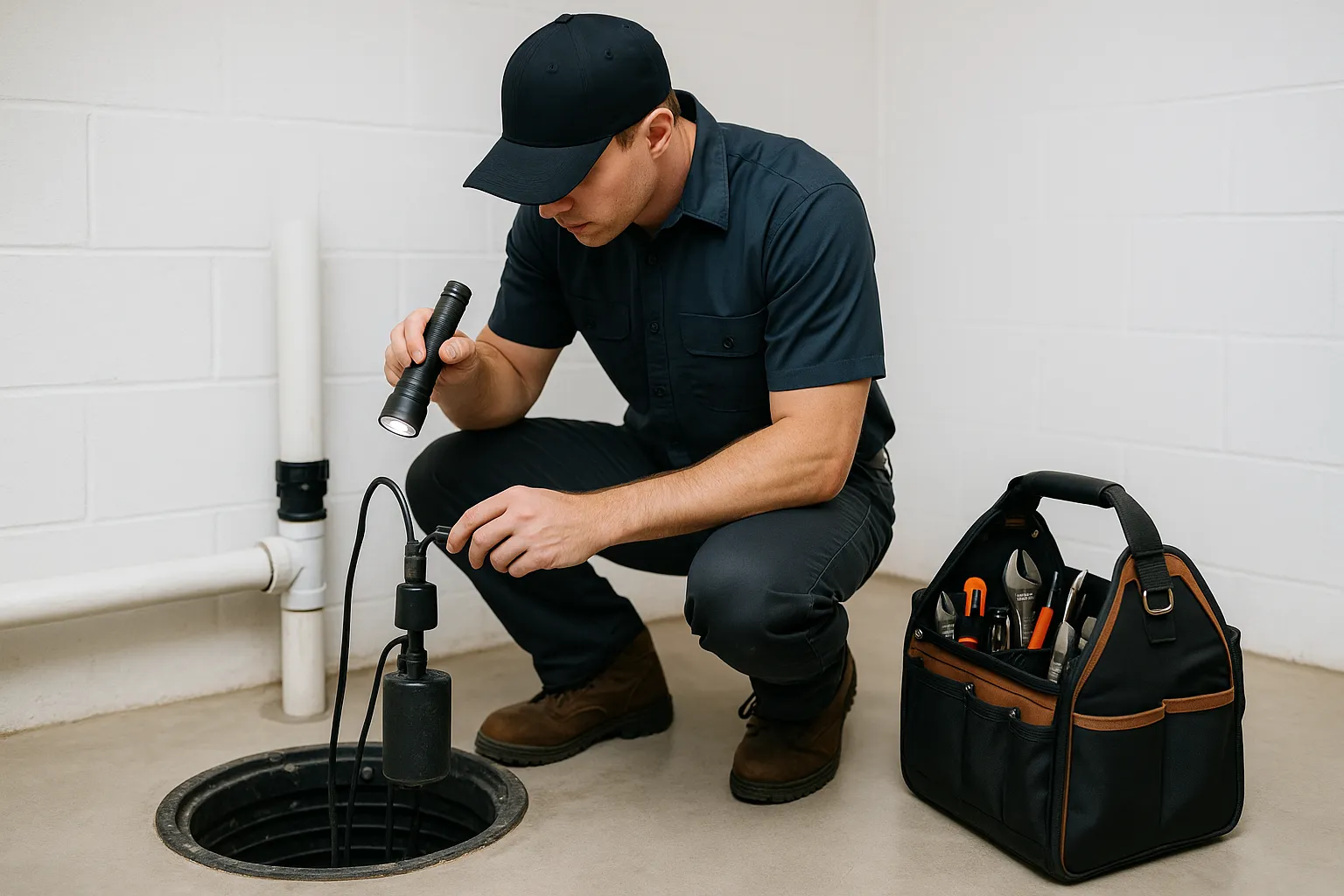
A sump pump is one of those pieces of home equipment that quietly does its job in the background — until the day it doesn’t. Tucked away in the basement or crawl space, it works to push groundwater away from your foundation so your home stays dry. When it stops working properly, the consequences can show up fast: a damp basement, ruined storage, warped flooring, and in serious cases, thousands of dollars in water damage.
It’s tempting to treat sump pump trouble like a simple DIY fix. After all, it’s “just” a pump. But sump pumps sit at the intersection of plumbing, drainage, and electrical work, and a small misstep during a repair can leave the system worse off than before. That’s why most homeowners are better off bringing in a trusted local plumbing team when something goes wrong. Below, we’ll break down why professional sump pump repair matters, what an experienced plumber actually checks, and how to know when it’s time to make the call.
A Quick Look at How a Sump Pump Works
Before we get into repairs, it helps to understand what your sump pump is actually doing. The pump sits in a small pit (the sump basin) at the lowest point of your basement or crawl space. When groundwater rises into that pit, a float switch triggers the pump motor, which then pushes the water up and out through a discharge pipe that carries it safely away from the foundation.
It sounds simple, but every part of that chain has to work correctly. The float has to move freely. The check valve has to seal. The discharge line has to stay clear. The motor has to start on demand, every time. If any one component fails — especially during a heavy rain — water has nowhere to go but into your basement.
Why DIY Sump Pump Repair Is Riskier Than It Looks
On the surface, swapping a part or unclogging an inlet seems straightforward. In practice, sump pump repair involves a few hidden challenges that catch homeowners off guard.
Diagnosis Is Often the Hardest Part
A pump that won’t turn on could be suffering from a stuck float, a tripped breaker, a burned-out motor, a wiring fault, a clogged impeller, or a frozen discharge line. They all look the same to the homeowner: nothing happens when you flip the switch. A trained plumber works through these possibilities methodically, using the right tools, instead of guessing and replacing parts that may not be the real culprit.
Electrical Hazards Are Real
Sump pumps live in damp environments and pull a meaningful amount of current. Working on one without disconnecting power properly — or without understanding GFCI requirements and grounding — can result in shocks, blown circuits, or damage to nearby appliances. Professionals follow safe procedures because they do it every day.
A Bad Repair Often Causes a Bigger Failure
Installing the wrong size pump, mismatching pipe diameters, leaving an old check valve in place, or skipping the air-relief hole on the discharge pipe can all cause the pump to short-cycle, overheat, or fail entirely the next time it’s needed. The cost of a small mistake usually shows up as a flooded basement during the worst possible storm.
What a Professional Plumber Actually Does During a Sump Pump Repair
When you bring in an experienced plumber, you’re not just paying for a part swap. You’re paying for a full assessment of the system. A typical professional plumbing repair visit for a sump pump usually includes the following:
- Inspecting the sump basin for sediment, debris, and proper depth.
- Testing the float switch for free movement and reliable triggering.
- Checking the motor, capacitor, and wiring for wear or moisture damage.
- Verifying the check valve is sealing and oriented correctly.
- Examining the discharge line for clogs, freezing risks, and proper slope.
- Confirming the pump is correctly sized for the home’s water table and basement footprint.
- Testing the entire system under load by filling the pit and watching a full cycle.
That last step matters. A pump can look healthy at rest and still fail under real conditions. Running the system end-to-end is the only way to know it’ll perform when it counts.
Signs Your Sump Pump Needs Professional Attention
Most sump pump failures don’t come out of nowhere. The system usually gives off warning signs before it gives up entirely. Watch for any of the following:
- Strange grinding, rattling, or gurgling sounds during operation.
- The pump runs constantly, even when there’s no significant rain.
- The pump short-cycles — turning on and off rapidly.
- Visible rust, corrosion, or standing water around the unit.
- A musty or damp smell in the basement that wasn’t there before.
- The pump simply doesn’t activate when the basin fills.
- The unit is more than 7–10 years old and has never been serviced.
If you notice any of these issues — especially during storm season — it’s worth having the system evaluated before the next heavy rain. And if water is already coming in, treat it as urgent and reach out to an after-hours plumbing team right away. Waiting it out is rarely the cheaper option once water has reached the floor.
Repair or Replace? How a Professional Helps You Decide
Not every failing sump pump needs to be replaced. A clogged inlet, a bad float, or a worn check valve can usually be repaired affordably. But there’s a point where continuing to repair an older unit costs more than it’s worth — and a knowledgeable plumber will tell you that honestly.
Generally speaking, repair makes sense when the pump is under about seven years old, the motor is still healthy, and the issue is isolated to a specific component. Replacement starts to make more sense when the unit is older, has failed multiple times, is undersized for the home, or doesn’t have a backup option.
If replacement turns out to be the right call, your plumber can walk you through options for a properly sized new pump, including primary units, backup battery systems, and water-powered backups for homes that lose electricity during storms. The goal is a system you can actually rely on — not just a unit that fits the same hole.
The Long-Term Value of a Professional Repair
A professional sump pump repair isn’t just about getting the pump running again today. It’s about protecting your home, your belongings, and your peace of mind through years of seasonal rain and snowmelt. A correctly diagnosed and repaired system runs more efficiently, lasts longer, and is far less likely to fail at exactly the wrong moment.
There’s also a financial side to it. Insurance claims for basement flooding can be denied or reduced when an inspector finds evidence of a poorly maintained pump or a non-compliant installation. A documented repair from a licensed plumber gives you a paper trail that protects you if something goes wrong later.
Related Topics Worth Exploring
Your sump pump doesn’t exist in isolation — it’s part of a larger water management system that runs throughout your home. Homeowners who care about keeping basements dry usually find value in related guides such as a
deeper look at common signs of basement water intrusion, an honest comparison of battery backup vs. water-powered sump pump systems, a homeowner’s walk-through of sump pump maintenance you can do between professional visits, and a guide to preparing your basement plumbing for winter weather. Each of these connects directly to the longevity of the sump pump system you already rely on.
Protect Your Basement with the Right Help
A sump pump is one of those small machines that prevents very large problems. Treating its repair as a quick weekend project can be a costly gamble — and the homeowners who fare best are the ones who bring in an experienced professional at the first sign of trouble. From diagnosis to documentation, working with a licensed local plumbing company gives you a system that’s safer, longer-lasting, and ready when the next storm rolls in.
FKRIV Plumbing & Heating Inc. helps homeowners across Levittown, Yardley, and Willow Grove keep their basements dry with reliable sump pump repair, replacement, and routine maintenance. If your pump isn’t behaving the way it should — or if you simply want a second opinion before the rainy season picks up — reach out and we’ll take a look. You can also browse related guidance on our drain cleaning blog for more on protecting your home’s plumbing year-round.