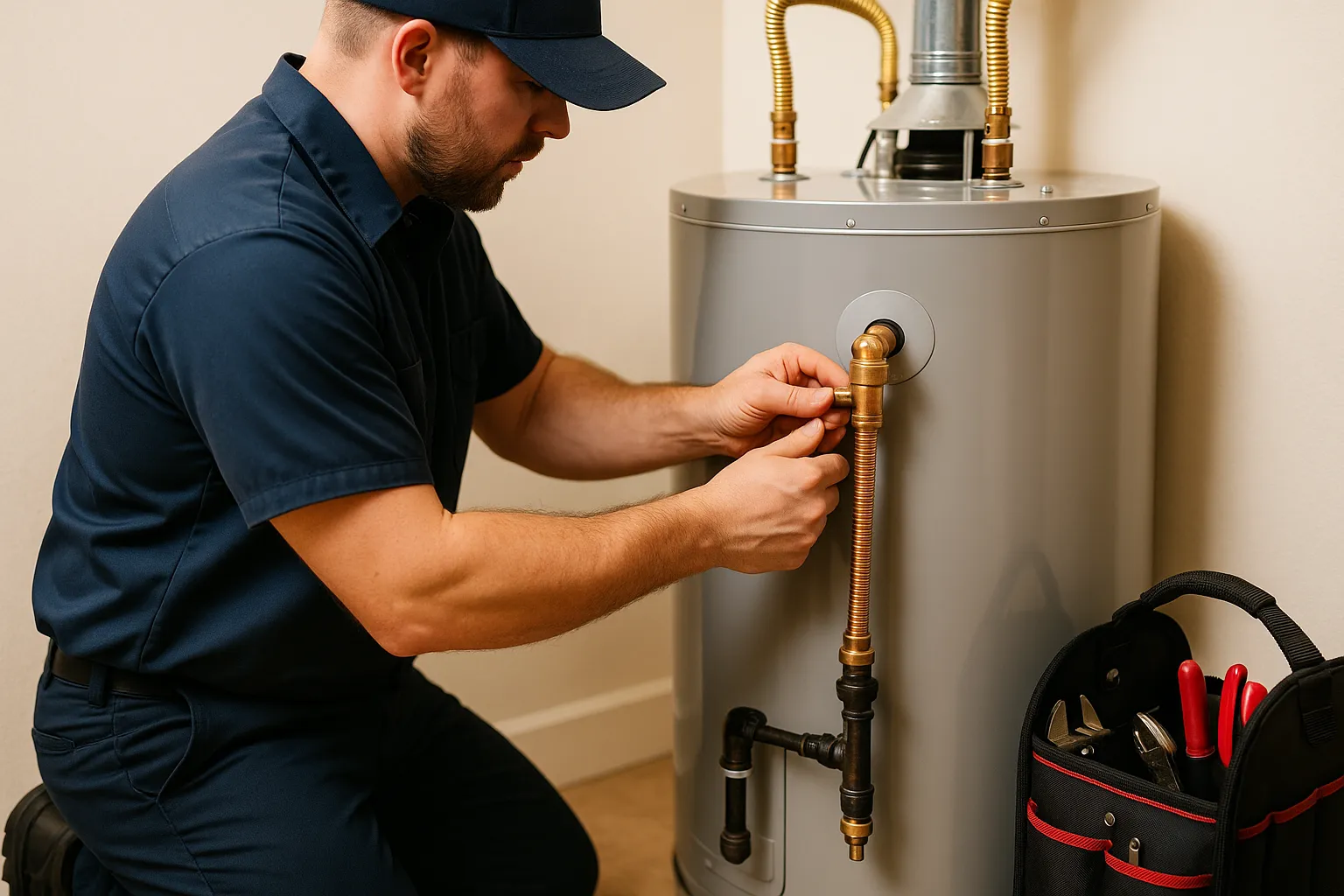
Replacing a water heater is a project most homeowners only think about when something goes wrong. A cold shower, a puddle near the tank, or a rising utility bill is usually the first clue that it is time for a new unit. But the installation itself is more involved than swapping out an old tank for a new one. Done correctly, the job requires the right equipment, the right permits, and a trained set of hands that understands both plumbing and local code. This guide walks through what a professional plumber actually does during a water heater installation so you know exactly what to expect.
Why Professional Installation Matters
A water heater is a pressurized vessel connected to gas or electricity, fresh water supply, and a drainage system. Every one of those connections has to be built to code and tested for safety. A DIY install can leave behind slow gas leaks, improper venting, water damage from undersized relief valves, or voided manufacturer warranties.
When you hire professional water heater installation services, you get a licensed plumber who knows the code requirements for your township and carries insurance that protects your home if anything goes wrong.
Step 1: The In-Home Assessment
Before any tools come out, a good plumber starts with an assessment. This 20 to 30-minute visit covers several key questions:
- What size and type of unit does your household actually need?
- Do you want to stay with a conventional tank, upgrade to a tankless system, or consider a heat pump water heater?
- Is the existing space properly vented, drained, and accessible for service?
- Are the gas line, electrical supply, and water lines up to current code?
Sizing is critical. A family of four has very different hot water demands than a single person, and an undersized unit will run constantly while an oversized one wastes energy. Your plumber will ask about the number of bathrooms, peak usage times, and any appliances that draw hot water, then recommend the right tank capacity or tankless flow rate for your household.
Step 2: Permits, Code, and Safety Prep
Most municipalities require a permit for water heater replacement. The permit triggers an inspection that confirms the work was done safely, which matters for insurance claims and home resale. A licensed plumber pulls the permit on your behalf and handles the inspection. Safety prep also includes shutting off the gas or electrical supply, closing the cold water valve, and draining the old tank, which can be surprisingly messy when sediment is involved.
Step 3: Removing the Old Unit
Once drained, your plumber disconnects the supply lines, gas or electrical connections, and venting. Older units often have corroded fittings that need to be cut rather than unthreaded, which is where experience really pays off.
This is also a good moment to inspect the surrounding plumbing. Many homeowners are surprised to learn how hard water affects your system, and a new install is the right time to address mineral buildup before it damages your new equipment.
Step 4: Setting and Connecting the New Water Heater
The new unit is positioned, leveled, and secured. From there, your plumber reconnects the water lines, installs a new temperature and pressure relief valve, and runs a properly sized discharge pipe to code. Gas units get new flex connectors, shutoff valves, and sediment traps. Electric units get fresh wiring and a dedicated breaker check. Tankless systems require additional venting and often a gas line upgrade. A quality install also includes details that inexperienced installers skip, such as dielectric unions to prevent galvanic corrosion and expansion tanks where closed plumbing systems require them.
Step 5: Testing, Inspection, and Cleanup
Once everything is connected, the system is filled slowly to avoid air pockets, checked for leaks, and fired up. Gas units get a combustion check; electric units have their heating elements verified; tankless units are flushed and calibrated. Your plumber should walk you through the thermostat settings and show you where the shutoff valves are located.
A reputable installer hauls away the old unit, cleans up the workspace, and files the permit inspection. If you are working with trusted hot water system installers, this full-service approach comes standard.
Timeline and Cost Expectations
A standard tank water heater swap typically takes two to four hours. Tankless installs and tank-to-tankless conversions run four to eight hours because of the additional venting and gas work. Pricing varies by unit type and install complexity: a standard 40 or 50-gallon gas tank replacement usually runs $1,500 to $2,800 installed, while tankless systems fall in the $3,500 to $6,000 range. Heat pump water heaters sit in between and often qualify for federal tax credits and utility rebates.
Always request an itemized quote. A transparent estimate from experienced plumbing professionals will break out the unit cost, labor, permits, disposal, and any code-required upgrades.
Signs You Need a Professional Installer Now
A few warning signs point to the end of a water heater's service life:
- Your water heater is more than 10 to 12 years old
- Rusty or discolored hot water, especially in the morning
- Pooling water or corrosion around the base of the tank
- Popping or rumbling sounds during the heating cycle
- Inconsistent hot water or much longer recovery times than before
If any of these sound familiar, do not wait for a full failure. Reaching out to local installation experts near you before the tank fails saves you from a flooded basement or an emergency weekend call.
For homeowners weighing their options, future guides on tankless vs tank water heater comparison and water heater maintenance checklist will cover long-term efficiency planning in more detail.
Schedule Your Water Heater Installation
A professional water heater installation is an investment in the comfort, safety, and efficiency of your home. FKRIV Plumbing & Heating Inc. is a veteran-owned, fourth-generation master plumbing team serving Bucks County and the surrounding region. Call (215) 874-0592 to schedule your in-home assessment and get a transparent, itemized quote.