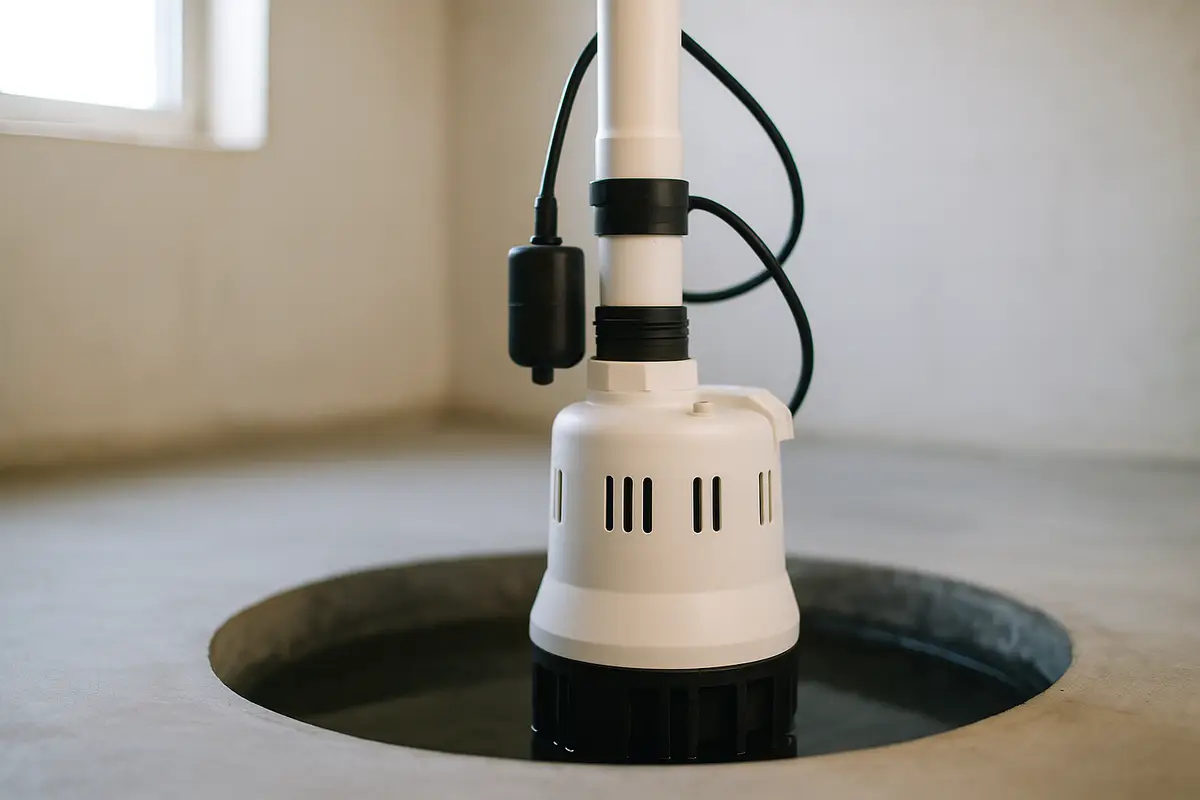
A failing sump pump usually shows warning signs, such as strange noises, frequent short cycling, or a musty smell in the basement, weeks before it stops working completely. Your sump pump works quietly in the background and is often forgotten until the day it fails. Located in the basement or crawlspace, it has one important job: moving water away from your home before it can cause damage.
The good news is that sump pumps rarely give out without warning — they tend to drop plenty of clues long before the breaking point. Knowing what to watch for, especially in older Bucks County homes prone to heavy basement moisture, can be the difference between a quick fix and a full-blown emergency. Below are seven clear signs your sump pump may need repair or replacement, along with practical guidance on what to do about each one.
1. Strange Noises During Operation
A healthy sump pump produces a low, steady hum while it runs. If you start hearing rattling, grinding, gurgling, or loud thudding, something is wrong inside the unit. These sounds usually point to worn bearings, a jammed impeller, or a struggling motor.
Rattling often means debris is interfering with the impeller, while grinding can signal that internal parts are wearing down. Ignoring these noises tends to shorten the lifespan of the pump and may leave you unprotected during the next heavy storm.
2. The Pump Runs Constantly or Cycles Too Often
A sump pump should switch on when water reaches a certain level, then shut off once the basin is clear. If yours runs nonstop or clicks on and off every few seconds, the system is struggling. Constant running may indicate a stuck float switch, an undersized pump, or a basin that fills faster than the unit can handle.
Frequent cycling places enormous strain on the motor and burns through its working life quickly. A pump that never gets a rest is a pump that will fail sooner rather than later, so this behavior deserves prompt attention.
3. Visible Rust or Corrosion
Take a close look at your pump from time to time. Brown or orange discoloration on the housing or fittings is a warning flag. While some rust comes from iron in the water, corrosion can also be caused by bacteria that clog the system and drag down performance.
Corroded components are weaker and more likely to crack or seize. If you spot flaking metal, a gel-like buildup, or a metallic odor near the pump, it is time to have the unit evaluated by a professional.
4. The Pump Is More Than Ten Years Old
Most sump pumps last somewhere between seven and ten years, depending on how often they run and the quality of the original installation. As a unit ages, the motor weakens, seals dry out, and the odds of a sudden failure climb steadily.
If you are not sure how old your pump is, check for a date stamp on the housing or look up the model number. Replacing an aging unit before it dies is far cheaper than handling water damage after the fact. Pairing a new pump with broader whole-home plumbing care helps keep your basement protected year-round.
5. Irregular Cycling or a Pump That Won't Turn On
Maybe your pump kicks on at odd times even when the basin is nearly empty, or it sits silent during a downpour when it should be working hard. Both extremes signal trouble. The float switch, which tells the pump when to start, can get stuck, misaligned, or tangled, throwing off the entire cycle.
Electrical problems, a tripped breaker, or a faulty switch can also leave the pump dead when you need it most. Testing the unit by pouring a bucket of water into the basin is an easy way to confirm whether it responds the way it should.
6. Water Pooling Around the Basin or in the Basement
The most obvious sign of trouble is also the most serious: standing water where it should not be. If you see moisture creeping across the basement floor, puddles near the pit, or a damp musty smell, the pump is not keeping up. This may be due to a clog, a failed check valve, or a discharge line that has frozen or backed up.
Lingering moisture invites mold and can damage your foundation over time. Because clogged or backed-up lines are a frequent culprit, scheduling professional blocked line clearing can restore proper flow and stop water from collecting where it does not belong.
7. Visible Damage or a Pump That Vibrates Excessively
Cracks in the housing, a bent or wobbly base, and heavy shaking during operation all point to internal damage. A pump that vibrates intensely often has a bent impeller, which throws the whole unit off balance and accelerates wear on every moving part.
Physical damage rarely repairs itself, and a compromised pump cannot be trusted to perform in an emergency. When the structure of the unit is failing, replacement is usually the safest and most cost-effective choice.
Repair or Replace: How to Decide
Not every warning sign means you need a brand-new pump. Many issues can be corrected with a timely repair, while others are a clear signal that the unit has reached the end of its useful life. As a general rule:
- Lean toward repair when the pump is relatively new, the problem is isolated, and the cost of the fix is modest.
- Lean toward replacement when the unit is near or past the ten-year mark, has failed more than once, or shows widespread corrosion.
- Always replace immediately if the pump failed during a flood and your home went without protection.
A professional inspection takes the guesswork out of this decision. An experienced technician can test the motor, float switch, and discharge line, then give you an honest recommendation based on the real condition of your equipment.
Protect Your Home Before the Next Storm
A sump pump is one of the most important defenses your home has against water damage, yet it is easy to overlook until something goes wrong. By paying attention to the seven signs above, you can address small problems before they turn into costly emergencies. When you notice trouble, do not wait for the next downpour to find out whether your pump is up to the task. If your sump pump is old, damaged, or no longer reliable, professional sump pump installation can help provide dependable protection for your basement.
FKRIV Plumbing & Heating Inc. helps homeowners across Doylestown, Fairless Hills, and Bristol keep their basements dry with dependable sump pump inspections, repairs, and replacements. Reach out today to schedule a professional evaluation and protect your home all year long.
Frequently Asked Questions
What are the common signs that a sump pump is failing?
Common warning signs include strange noises, constant running, irregular cycling, visible rust, excessive vibration, and water pooling around the basement.
How long does a sump pump typically last?
Most sump pumps last between seven and ten years, depending on usage, maintenance, and installation quality.
Why is my sump pump making loud or unusual noises?
Unusual sounds like grinding or rattling often indicate worn internal components, a jammed impeller, or motor issues that require inspection.
Should I repair or replace my sump pump?
If the pump is relatively new and the issue is minor, repair may be sufficient. However, older units or pumps with repeated issues are usually better replaced.
What should I do if my sump pump stops working during heavy rain?
Act immediately by checking the power supply and float switch, then contact a professional plumber to prevent basement flooding and water damage.