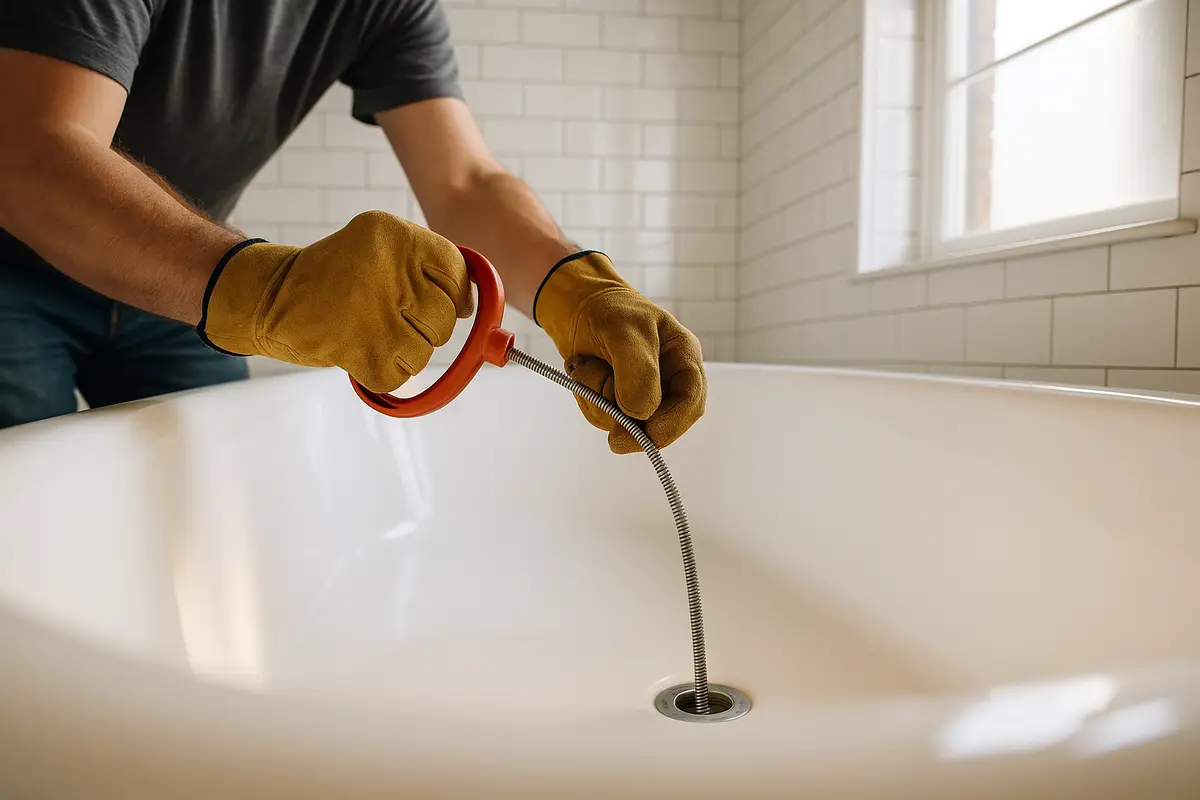
There is nothing quite as frustrating as standing in a bathtub with water pooling around your ankles because the drain can barely keep up. A slow or completely clogged tub drain is one of the most common household plumbing annoyances — and one that many homeowners can actually fix on their own with the right approach.
Snaking a bathtub drain is a practical DIY skill that can save you both time and money. Whether you are dealing with a stubborn hair clog, built-up soap scum, or something deeper in the pipe, this guide walks you through everything you need to know to get the job done safely and effectively.
Why Bathtub Drains Get Clogged in the First Place
Before you grab a drain snake, it helps to understand what you are actually dealing with. Bathtub drains are a magnet for a specific type of buildup that differs from kitchen or utility sink clogs. The most common culprits include:
- Hair: The number one offender. Hair naturally sheds during bathing and tangles around the drain stopper and pipe walls over time.
- Soap scum: Bar soap leaves behind a sticky residue that coats pipe walls and traps hair and other debris.
- Shampoo and conditioner residue: These products, especially thicker conditioners, contribute to slow drainage when they build up on pipe surfaces.
- Mineral deposits: If your home has hard water, calcium and magnesium scale can gradually narrow the drain pipe and worsen clogs significantly.
Most bathtub clogs form within the first few feet of the drainpipe — close enough that a drain snake is exactly the right tool. For clogs that sit much deeper in the system, you may want to read about what causes serious drain blockages at home to better understand what might be going on further down the line.
Tools and Supplies You Will Need
Getting prepared before you start makes the whole process smoother. Here is what to have on hand:
- Manual drain snake (or hand auger) — a 15 to 25-foot cable ideal for most bathtubs;
- Protective rubber gloves — to keep things sanitary and protect your hands;
- Flathead and Phillips screwdrivers — for removing the drain cover or stopper;
- Needle-nose pliers — helpful for pulling out hair near the drain opening;
- Bucket or heavy-duty trash bag — for disposing of removed debris;
- Pocket flashlight — to see into the drain line more clearly;
- Warm water and grease-cutting dish soap — to flush the pipe once cleared.
You do not need any special plumbing experience to use a manual drain snake. It is a simple, effective tool that most hardware stores carry for around $20 to $50.
How to Snake a Bathtub Drain: Step-by-Step Instructions
Step 1: Remove the Drain Cover or Stopper
Most bathtub drains have a stopper or cover that must come off before you can insert the snake. Depending on your bathtub, this could be a pop-up stopper, a lift-and-turn stopper, a trip lever stopper, or a simple grid-style cover held by a screw.
Use your screwdriver to unscrew the cover, or turn and lift the stopper to release it. Set the hardware aside in a safe place so it does not go down the drain. This is also a good moment to check the stopper itself — a thick mat of hair often collects right around the stopper body, and you can remove that by hand with your gloves on.
Step 2: Inspect the Drain Opening
With the stopper removed, use your flashlight to peer into the drain. You may be able to see a wad of hair just inside the opening. If so, try pulling it out with needle-nose pliers before inserting the snake. Removing visible surface debris first makes the snaking process more effective and less messy.
Step 3: Insert the Drain Snake
Feed the end of the drain snake into the drain opening. Begin turning the handle clockwise as you push the cable down into the pipe. The rotation is important — it helps the coil tip grab onto debris and work through any resistance it encounters.
Go slowly, especially at first. If you feel resistance, do not force the snake. Keep rotating and applying gentle forward pressure. The resistance you feel could be a bend in the pipe, a clog, or both. Continue until you have fed the snake about 15 to 20 feet into the line or until you feel the tip break through the clog.
Step 4: Break Through or Retrieve the Clog
Once the snake tip hits the obstruction, you have two options:
- To push through the clog by rotating and applying gentle forward pressure.
- To hook and retrieve the debris by wrapping the hair mass around the coil tip.
Pulling the clog out is generally the better approach for hair-based obstructions. It removes the material from the pipe entirely rather than pushing it further down the line where it could cause problems again.
Step 5: Flush the Drain
Once you have removed or broken up the clog, run hot water down the drain for two to three minutes. This flushes out any remaining loose debris and confirms that the drain is flowing freely. If the water still drains slowly, repeat the snaking process — there may be additional buildup further along the pipe.
If you live in an area with hard water, you may also want to learn about how mineral buildup affects your plumbing and hot water system. A hard water scale can narrow pipes over time, making clogs more frequent and harder to clear.
Step 6: Reassemble and Test
Once you are satisfied that the drain is clear, clean the drain snake thoroughly before storing it, then replace the stopper or drain cover. Run the water again to make sure the stopper seats properly and the drain is working as expected.
Helpful Tips for a Cleaner, Easier Process
A few practical tips that can make snaking your bathtub drain faster and more effective:
- Rotate the cable slowly and consistently rather than applying aggressive force.
- Place a plastic bag or newspaper nearby to collect debris during retrieval.
- Remove the stopper mechanism completely if the snake feels obstructed at the entry.
- Flush the line monthly with boiling water or enzymes to minimize organic buildup.
- Install a simple mesh drain catch over the tub opening to trap hair early.
When DIY Is Not Enough: Signs You Need a Professional
Snaking your bathtub drain will resolve the majority of common clogs. However, there are situations where a drain snake is not going to be sufficient, and calling a licensed plumber is the smarter move:
- Experiencing multiple clogged drains simultaneously throughout the home.
- Hearing unusual gurgling sounds from other fixtures during drainage.
- Noticing a persistent sewage odor near the drain opening.
- Dealing with recurring clogs that return every few weeks.
In these situations, professional drain cleaning services can identify and resolve the root cause rather than just clearing the symptom. FKRIV Plumbing & Heating Inc. uses professional-grade equipment and camera inspections to diagnose exactly what is happening inside your pipes.
If you are dealing with a sudden or severe backup, do not wait — emergency plumber services are available to address urgent drainage problems before they cause water damage.
Keeping Your Bathtub Drain Clear Long Term
Once you have cleared the clog, a little ongoing attention will go a long way toward preventing the next one. Here are a few habits worth building:
- Removing hair from the drain area after each shower or bath rather than letting it accumulate.
- Running hot water for 30 seconds after bathing to help flush soap and conditioning product residue down the drain.
- Using a hair strainer or drain cover to catch loose hair before it enters the pipe.
- Scheduling an annual drain cleaning if slow drainage is a recurring issue in your home.
For homeowners with older plumbing, it may also be worth having a professional perform a video inspection to assess the overall condition of your drainage system. Catching pipe deterioration or root intrusion early is far less expensive than dealing with a collapsed line.
You can also explore our full range of plumbing services to see how FKRIV Plumbing & Heating Inc. can help keep your entire plumbing system in top shape.