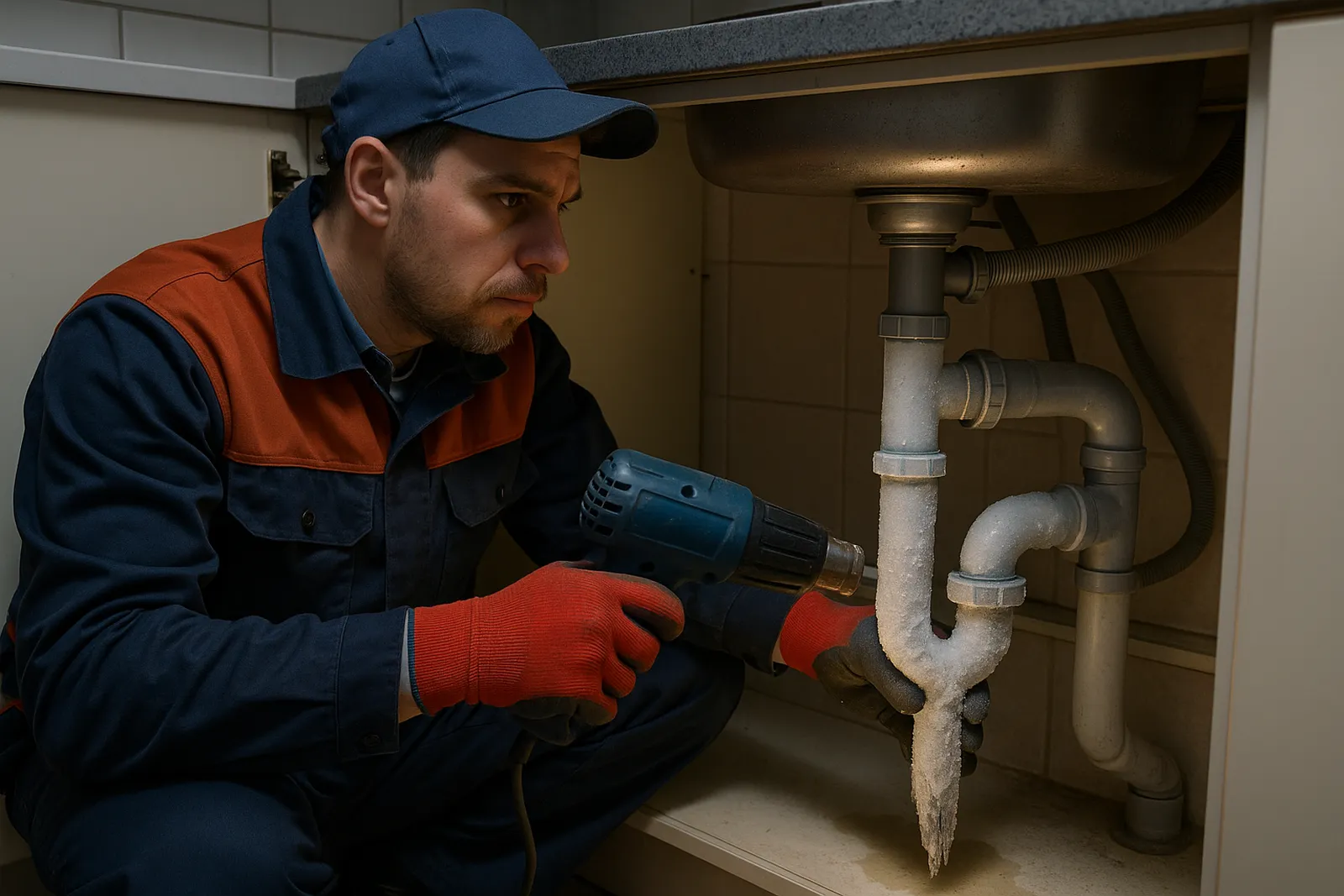
Frozen Pipes Are a Serious Emergency That Requires Quick Action
A frozen pipe is not just an inconvenience that will sort itself out when the temperature rises. When water freezes inside a pipe, it expands with enormous force, up to roughly two thousand pounds per square inch. That pressure can crack copper, split PVC, and rupture even galvanized steel. The real danger is not the freeze itself but the thaw. When the ice melts, the crack or split that the expansion created becomes an open path for pressurized water, and what was a frozen pipe becomes a burst pipe flooding your home.
If you wake up on a cold Bucks County morning and turn on a faucet that produces nothing but a trickle or no water at all, there is a strong chance you are dealing with a frozen pipe. What you do in the next hour can mean the difference between a manageable situation and thousands of dollars in water damage.
How to Identify a
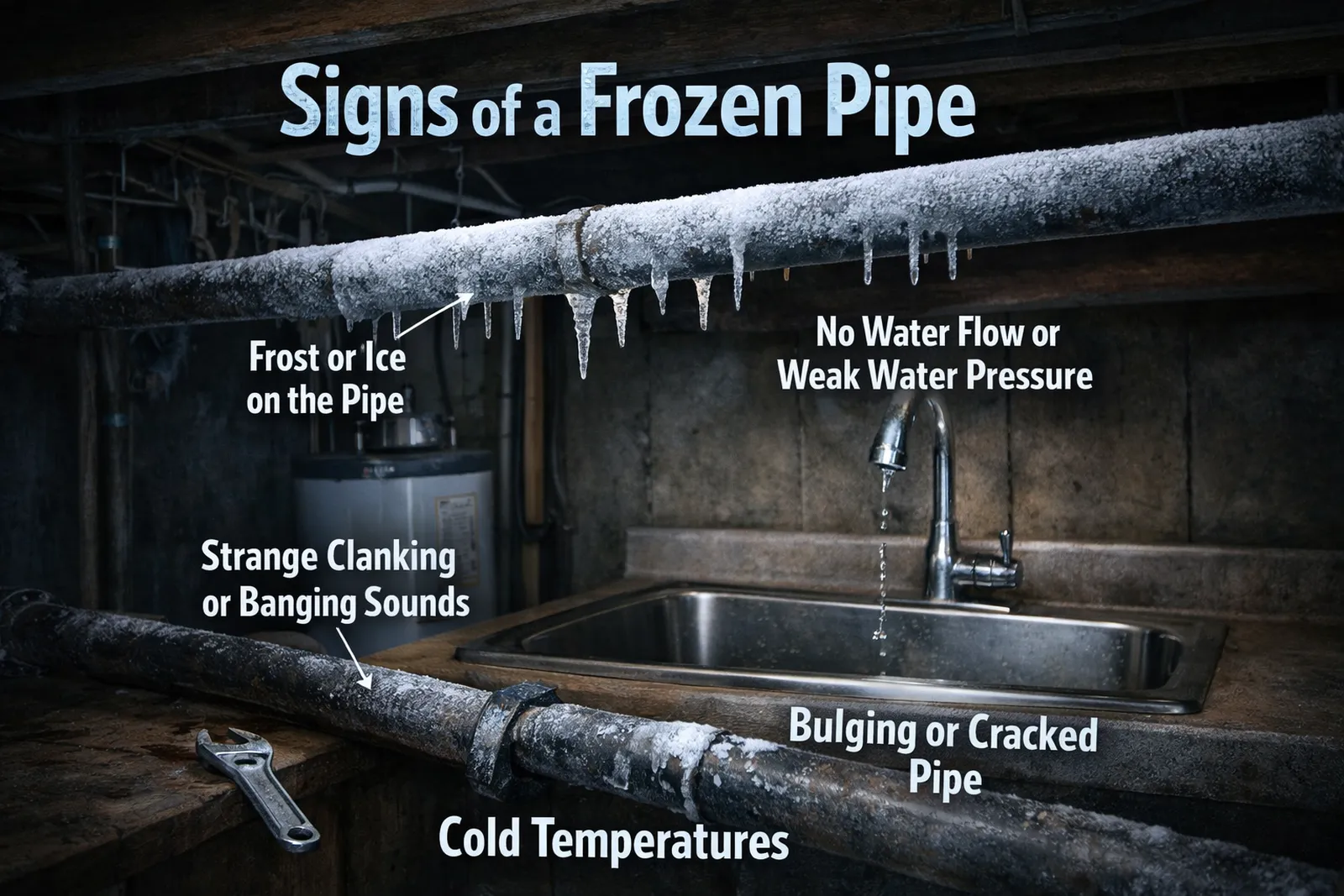
The most obvious sign is a faucet that will not produce water or produces only a weak trickle when you turn it on. Check whether the issue affects one fixture or multiple fixtures. If only one faucet is affected, the frozen section is likely in the supply line leading to that specific fixture. If multiple fixtures on the same wall or in the same area of the house are affected, the freeze is probably in a shared supply line.
Look for visible frost on exposed pipes in unheated areas like basements, crawl spaces, garages, and under kitchen or bathroom sinks on exterior walls. A pipe that feels ice-cold to the touch and has visible condensation or frost on its surface is almost certainly frozen. Also check for bulging or distortion in the pipe wall, which indicates ice expansion has already stressed the material.
Immediate Steps to Take
First, open the faucet that the frozen pipe feeds. This is critical. As you thaw the pipe, water and steam need somewhere to go. An open faucet allows pressure to escape and lets you see when water flow starts to return. Keep both the hot and cold handles open if the fixture has separate controls.
Next, locate your main water shutoff valve and make sure you know how to close it quickly. If the pipe has already cracked, you will need to shut off the water supply the moment you see water spraying or pooling. Do not wait to find the shutoff valve during an active flood.
Begin thawing the pipe starting from the faucet end and working back toward the frozen section. This ensures that as ice melts, water can flow out through the open faucet rather than building up behind the ice dam. Use a hair dryer, a heat lamp, a heating pad wrapped around the pipe, or towels soaked in hot water. Move the heat source back and forth along the frozen section. Do not concentrate heat on one spot.
Never use a propane torch, blowtorch, charcoal stove, or any open flame device to thaw a pipe. Open flames near pipes create a serious fire risk, especially in enclosed spaces with insulation, wood framing, and other combustible materials. They can also heat the pipe unevenly, causing the water inside to turn to steam and build dangerous pressure.
When Thawing Reveals a Burst Pipe
If you begin thawing and water starts spraying from a crack or split in the pipe, shut off the main water supply immediately. Open faucets at the lowest point in your house to drain remaining water from the system. Move furniture, electronics, and valuables away from the water. If the leak is significant, turn off electricity to the affected area at the breaker panel to prevent electrical hazards.
A burst pipe requires professional repair. Do not attempt to patch a cracked pipe with tape or sealant as a permanent fix. These temporary measures can fail under pressure and cause a worse flood later. Call a licensed plumber to replace the damaged section and inspect the surrounding pipes for additional freeze damage that may not be immediately visible.
How to Prevent Frozen Pipes Before the Next Cold Snap
Prevention is always cheaper than emergency repair. Insulate exposed pipes in unheated areas with foam pipe insulation sleeves, available at any hardware store. Seal gaps and cracks in exterior walls, around rim joists, and near pipe penetrations where cold air can reach supply lines. During extreme cold, open cabinet doors under kitchen and bathroom sinks on exterior walls to allow warm air to circulate around the pipes.
Let faucets on exterior walls drip slightly during nights when temperatures are forecast to drop below twenty degrees. Moving water is much harder to freeze than standing water. Keep your thermostat set to at least fifty-five degrees even when you are away from home or traveling. The small increase in heating cost is insignificant compared to the cost of repairing a burst pipe and the water damage it causes.
Disconnect and drain garden hoses before winter. Shut off interior valves that supply outdoor hose bibs and open the exterior faucet to drain any remaining water from the line. If your home has a crawl space, make sure the access vents are properly sealed during winter months.
FKRIV Plumbing & Heating Inc. helps homeowners across Jamison, Hartsville, Levittown, Yardley, Willow Grove, and the surrounding Bucks County area with frozen pipe emergencies, pipe insulation, and winterization services. When the cold hits, we respond fast.
Ready to Get Help?
Contact FKRIV Plumbing & Heating Inc. today. Call (215) 874-0592 or visit to schedule service.