Low Water Pressure Is a Symptom, Not Just an Annoyance
When the water pressure in your home drops unexpectedly, it affects everything from your morning shower to your dishwasher’s ability to clean properly. But low water pressure is more than an inconvenience. It is almost always a symptom of an underlying plumbing issue that will not resolve on its own and may get worse over time. Understanding the common causes helps you determine whether you are dealing with a quick fix or a problem that needs professional attention.
Start with These Quick Homeowner Checks
Before calling a plumber, there are a few things you can check yourself. First, determine whether the pressure drop affects one fixture or your entire house. If only one faucet or shower head has low pressure, the issue is likely localized, often a clogged aerator or shower head that needs cleaning. Unscrew the aerator from the faucet tip, rinse out any debris or mineral buildup, and reattach it. This simple step resolves more low-pressure complaints than most people realize.
If the pressure is low throughout your home, check your main water shutoff valve. It is typically located where the water supply line enters your house, often in the basement, crawl space, or utility room. Make sure the valve is fully open. A valve that was bumped or partially closed during a repair can restrict flow to the entire house. Also check the meter valve near the street if you have access to it.
Next, ask your neighbors whether they are experiencing the same issue. If multiple homes on your street have low pressure simultaneously, the problem may be on the municipal supply side and will resolve on its own, often due to a main break or hydrant flushing in the area.
Common Causes of Low Water Pressure in Bucks County Homes
If your quick checks do not reveal the cause, the issue is likely within your plumbing system. One of the most common culprits in older Bucks County homes is corroded galvanized steel pipes. Many homes built before the 1980s have galvanized supply lines that corrode from the inside out over decades, gradually narrowing the interior diameter and restricting water flow. The corrosion is invisible from the outside, but a plumber can diagnose it with a pressure test and visual inspection of accessible pipe sections.
A failing pressure regulator is another frequent cause. Most homes connected to municipal water have a pressure regulator, usually a bell-shaped device on the main supply line, that reduces incoming pressure to a safe level for household plumbing. When regulators fail, they can either allow pressure to spike dangerously high or restrict it to an unusable low. Replacement is a straightforward repair for a licensed plumber.
Hidden leaks in your main water line or within your walls can also cause pressure drops. A leak diverts water before it reaches your fixtures, and the lost volume shows up as reduced pressure. Signs of a hidden leak include unexplained increases in your water bill, wet spots on walls or floors, and the sound of running water when no fixtures are in use.
Sediment buildup in pipes and fixtures restricts flow even without full corrosion. This is especially common in areas with hard water, where calcium and mineral deposits accumulate inside pipes, valves, and fittings over time.
Water Pressure vs. Water Volume: Understanding the Difference
Homeowners often use the term water pressure when they are actually experiencing a volume issue. Pressure is the force behind the water. Volume, or flow rate, is how much water is being delivered. You can have adequate pressure but low volume if your pipes are too narrow or partially blocked, which feels the same as low pressure at the faucet but has a different cause and different solutions.
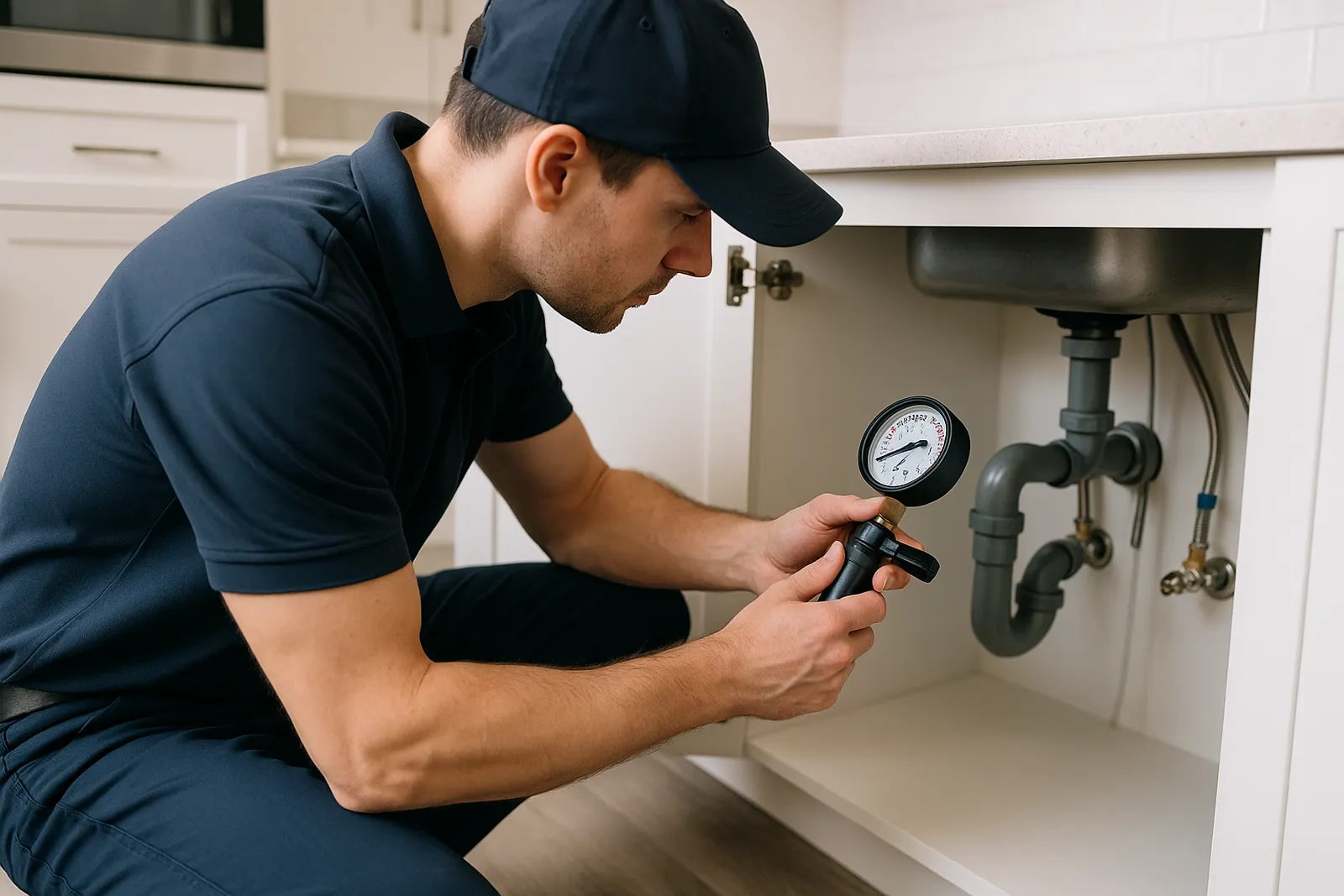
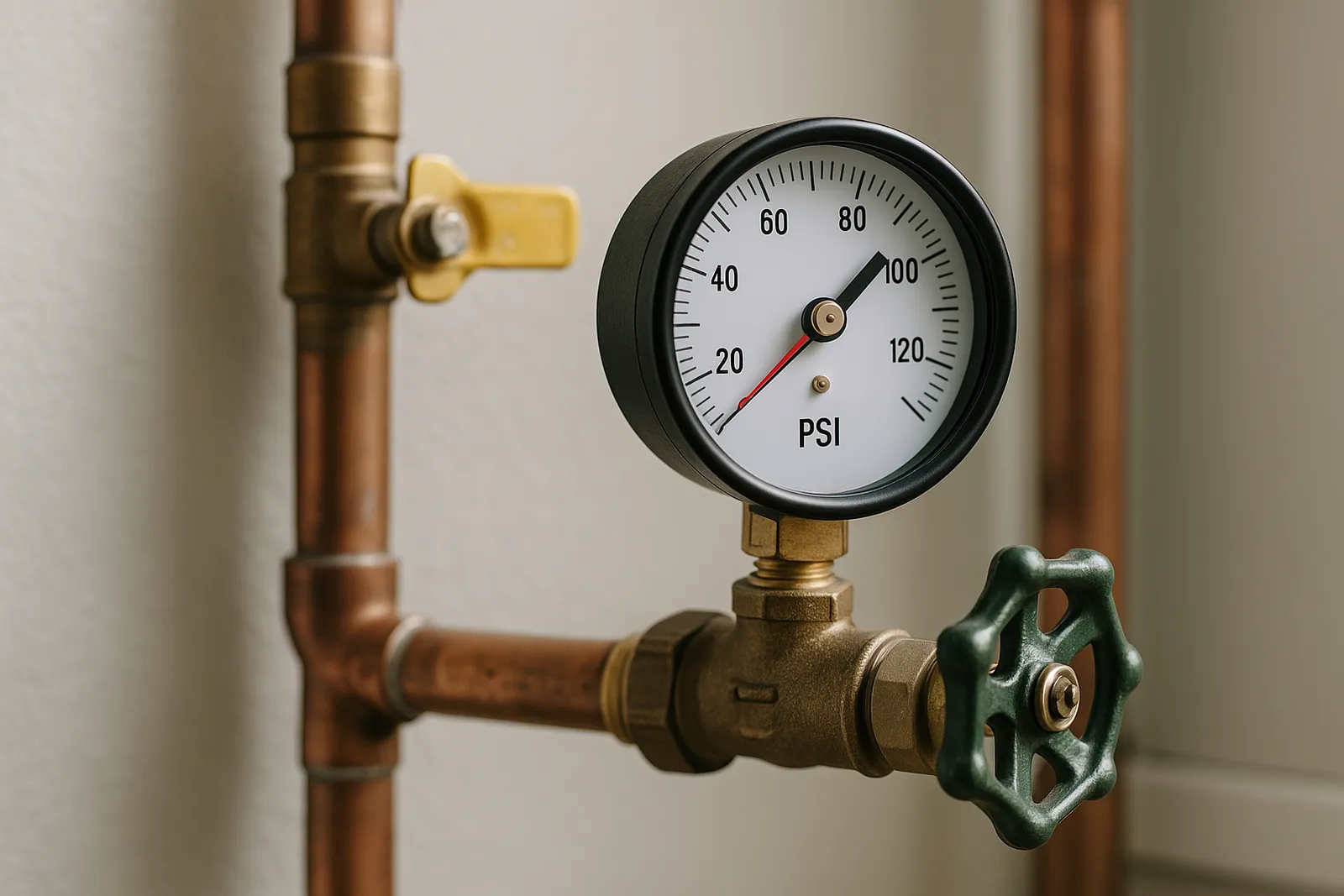
A professional plumber uses a pressure gauge to measure actual PSI at your hose bib and compares it to the expected municipal supply pressure. If the pressure reads normal but flow is weak, the problem is likely pipe restriction. If the pressure itself is low, the issue is upstream, either in the regulator, the supply line, or the municipal system.
How a Professional Plumber Diagnoses and Fixes the Problem
A plumber will start by taking pressure readings at multiple points to isolate where the drop occurs. This might include testing at the hose bib, at the water heater inlet, and at individual fixtures. If the pressure drops between two test points, the restriction is in the pipe section between them.
For corroded galvanized pipes, the long-term solution is repiping with copper or PEX, modern materials that resist corrosion and maintain full flow capacity for decades. This is a significant project but one that many older Bucks County homes eventually need. For a failing pressure regulator, replacement with a new adjustable unit restores normal pressure immediately. For leaks, the plumber locates the source using pressure testing, acoustic detection, or video inspection, then makes the targeted repair.
At FKRIV Plumbing & Heating Inc., we provide complete diagnostic and repair services for water pressure problems throughout Jamison, Hartsville, Levittown, Yardley, Willow Grove, and surrounding areas. Whether the fix is a simple valve adjustment or a full repiping project, we give you an honest assessment and clear options.
Ready to Get Help?
Contact FKRIV Plumbing & Heating Inc. today. Call (215) 874-0592 or visit to schedule service.