A clogged drain is one of those household problems that seems minor — right up until it isn't. A slow kitchen sink or a backed-up shower can disrupt your morning routine, and if left unchecked, even a partial blockage can put serious stress on your pipes and lead to much costlier repairs down the line.
The good news? Most drain clogs are entirely preventable. With a few smart habits and a basic understanding of what goes down your drains, you can keep your plumbing running smoothly all year. As our seasonal plumbing maintenance guide explains, staying proactive through the seasons is the single best way to avoid plumbing emergencies. Here are 12 expert tips any homeowner can put to work today.
Protecting Your Kitchen Drain
Tip 1: Never Pour Grease Down the Sink
Cooking grease and oils may look liquid when hot, but they solidify as they cool inside your pipes — coating the walls and narrowing the passage with every pour. Over time, this buildup becomes one of the most stubborn blockages a plumber encounters.
Let grease cool in a container, then toss it in the trash. If small amounts do reach the drain, flush immediately with hot water and dish soap. If you've already developed a grease problem, our guide to how kitchen sink plumbing works covers how P-traps and drain lines are laid out — and why the slope of a drain pipe determines where grease settles first.
Tip 2: Use a Sink Strainer
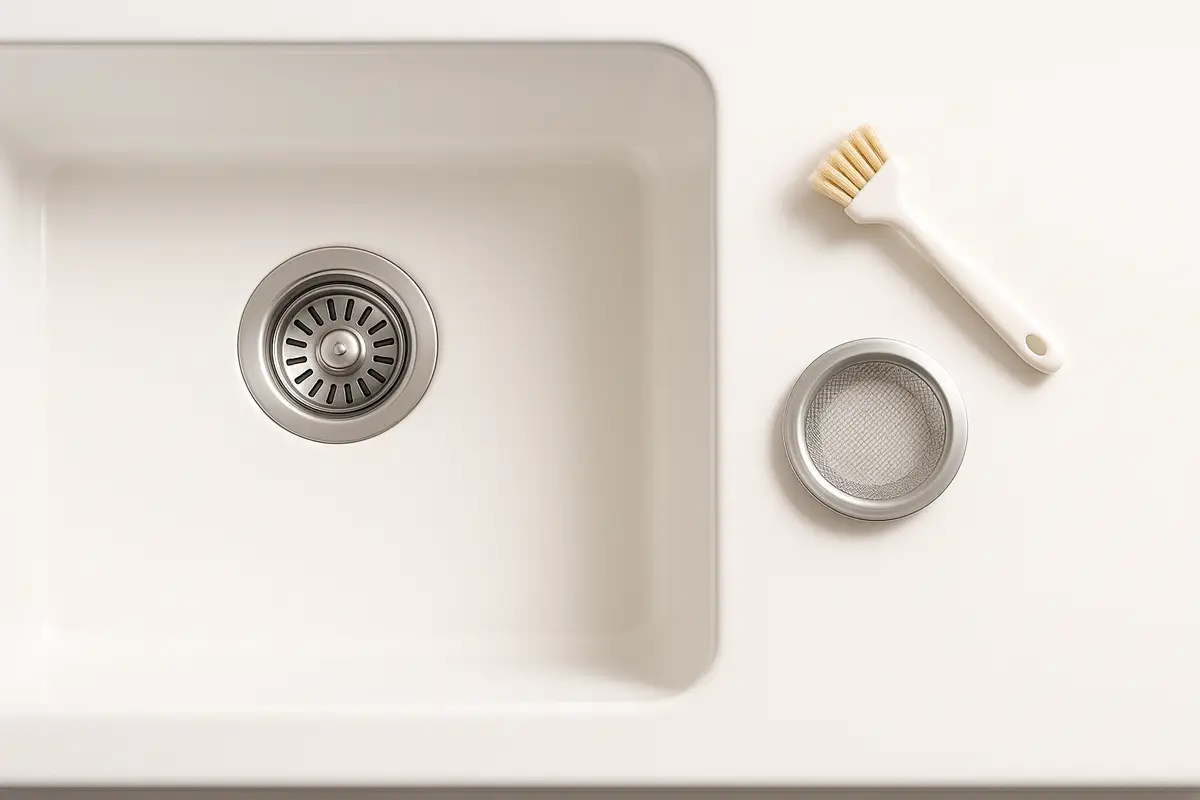
A simple mesh strainer over your kitchen drain is one of the most cost-effective prevention tools you can buy. It catches food scraps, coffee grounds, and other debris before they enter the pipe. Clean it after every use, and you'll be amazed how much material it collects over the course of a week.
Tip 3: Run Hot Water After Every Use
After washing dishes or rinsing produce, let hot water run for an additional 30 seconds. This helps flush away residual soap residue and light grease before it has a chance to cool and settle near the drain trap — the most common site for early-stage buildup.
Tip 4: Treat Your Garbage Disposal Carefully
A garbage disposal is not a catch-all for food waste. Fibrous foods like celery and banana peels can tangle the blades, while starchy foods like pasta and rice expand in water and form a paste inside your pipes. Always run cold water during and after use, and keep hard, stringy, or very greasy items out of the disposal entirely.
Keeping Bathroom Drains Clear
Tip 5: Install Drain Covers in Showers and Tubs
Hair is the number one cause of bathroom drain clogs. A quality drain cover or hair catcher traps it before it enters the pipe. Understanding how bathroom sink plumbing works — including the pop-up stopper assembly where hair collects most — helps you know exactly where to clean and how often. This single step can prevent the slow-drain buildup that typically requires a professional snake to clear.
Tip 6: Avoid Flushing "Flushable" Wipes
"Flushable" wipes don't break down quickly in water and are responsible for a significant number of sewer line clogs and backups nationwide. The only things that belong in a toilet are waste and toilet paper. If you're experiencing a running toilet alongside slow drains, our step-by-step guide on fixing a toilet that keeps running can help you address both issues before they compound each other.
Tip 7: Rinse Soap Scum Regularly
Bar soap and personal care products leave a residue on pipe walls that, combined with hard water minerals, forms soap scum. Over time, this scum narrows your drain passage and gives hair a surface to cling to. If you're noticing consistent buildup despite good habits, it may be worth reading our article on how hard water damages your hot water system — the same mineral deposits that corrode a water heater from the inside also narrow your drain lines. A monthly hot water and baking soda flush keeps things clear between professional visits.
Whole-Home Habits That Keep Pipes Healthy
Tip 8: Never Use Harsh Chemical Drain Cleaners
The caustic chemicals in store-bought drain cleaners eat through clogs — but they also eat through pipe walls, seals, and fittings over repeated use. They're especially damaging in older copper or galvanized steel lines. If you've noticed a pinhole drip near a drain that's been treated with chemical cleaners.
Tip 9: Watch What Goes Down Laundry and Utility Drains
Laundry drains collect lint, fabric softener residue, and detergent over time. Place a lint trap on your washing machine discharge hose and clean it periodically. Utility sink drains in garages accumulate dirt, gravel, and debris — especially in homes with large trees nearby. If your outdoor landscaping is close to your home's drain lines.
Tip 10: Know the Warning Signs of a Developing Clog
Catching a clog early is always easier and less expensive than clearing a fully blocked line. Be on the lookout for:
- Drains that empty noticeably slower than usual
- Gurgling sounds from drains or toilets when water runs elsewhere in the house
- Standing water in sinks, showers, or tubs after use
- Recurring unpleasant odors rising from drains, even after cleaning
- Multiple slow drains at the same time — a sign of a main-line issue, not a fixture clog
Tip 11: Schedule Annual Drain Maintenance
A once-a-year professional drain inspection and cleaning is one of the most cost-effective investments you can make for your home's plumbing. A technician can clear accumulating buildup before it becomes a full clog, identify early pipe deterioration, and catch root intrusion in outdoor lines. Our plumbing video inspection service uses a waterproof camera fed directly into the line — giving the technician a real-time view of what's building up inside your pipes, without any guessing or unnecessary digging. Homeowners in the Newtown area can schedule professional drain cleaning with our team year-round.
Tip 12: Consider a Sump Pump for Basement Drain Protection
Basement and utility room drains are especially vulnerable during heavy rain events. When groundwater rises around the foundation, floor drains can back up and standing water can damage flooring, walls, and belongings. A properly sized and installed sump pump acts as your first line of defense. If you've been dealing with recurring basement moisture, our sump pump installation services are worth a conversation before the next heavy storm season. You can also learn more about basement water management and which type of unit best suits your home's footprint and water table.
When Home Prevention Isn't Enough: Time to Call a Professional
Even the most diligent homeowner will encounter a clog that doesn't respond to simple fixes. If you've tried a plunger and a manual snake with no success, or the same drain keeps backing up, bring in a licensed plumber. A professional can use motorized augers, hydro jetting, or camera inspection to diagnose and clear the issue completely. Not sure which method applies to your situation? Our deep-dive comparison of hydro jetting versus drain snaking explains when each method is appropriate and what results you can expect.
Our comprehensive plumbing services in Newtown cover everything from stubborn single-fixture clogs to main sewer line issues. If water is backing up into multiple fixtures at once or you notice sewage odors that persist across the house, don't wait — read our guide to when you need a fast-response emergency plumber to understand what qualifies as an urgent situation and how quickly a trained team should respond.
Low water pressure is another symptom that often appears alongside recurring drain issues. Our article on why home water pressure suddenly drops explains how corroded galvanized pipes, failing pressure regulators, and underground leaks all contribute — and what a plumber can do to restore full flow.
For homeowners who've recently remodeled a bathroom or installed new fixtures and are now experiencing drainage slowdowns, our guides to installing shower plumbing and bathroom sink drain installation cover the exact specifications — pipe slope, trap sizing, and vent requirements — that determine whether a new drain runs properly from day one.
Keep Learning: Related Plumbing Topics for Homeowners
Preventing clogged drains is one piece of a healthy home plumbing strategy. These topics tie in directly and are worth exploring:
- 7 Drain Cleaning Methods Compared: Which One Do You Actually Need? — Snaking vs. hydro jetting vs. enzyme treatments: when each is appropriate and what results to expect.
- How Soil and Sediment Cause Repeat Drain Blockages — Why outdoor conditions and aging clay pipes lead to clogs that keep coming back no matter how often you clean them.
- Bathroom Plumbing Layout Ideas — If you're planning a remodel, how you position your fixtures and drains up front determines how easily they stay clear for years to come.
- Signs of tree root damage in sewer lines — One of the most overlooked causes of stubborn, recurring main-line clogs in older Bucks County neighborhoods.
Serving Homeowners Across Bucks and Montgomery Counties
FKRIV Plumbing & Heating Inc. is a family-owned, fourth-generation plumbing company proudly serving communities across the greater Philadelphia suburbs. Whether you're in Yardley, Willow Grove, Doylestown, Fairless Hills, Horsham, or Newtown, our team is nearby and ready to help you keep your plumbing system in top shape — from routine drain maintenance to emergency repairs.
Have a stubborn clog that home fixes haven't solved? Explore our full range of plumbing services or call us at (215) 874-0592 to request a free quote. We show up on time, we're honest about what we find, and we clean up before we leave.
Frequently Asked Questions
Q: What is the most common cause of clogged drains in homes?
In kitchens, grease and food waste top the list. In bathrooms, hair combined with soap residue is the primary culprit. In older homes, aging pipes with reduced interior diameter — from decades of mineral buildup and corrosion — can cause drainage to slow throughout the entire house even without a specific blockage.
Q: Is it okay to use baking soda and vinegar to clear a clogged drain?
Baking soda and vinegar create a fizzing reaction that can dislodge light buildup, and it's a safe option that won't damage pipes. However, it's largely ineffective against serious clogs caused by grease, hair mats, or solid debris deeper in the line. Use it as a monthly maintenance rinse rather than an emergency fix.
Q: How often should drains be professionally cleaned?
For most households, once a year is sufficient as a preventative measure. Homes with older pipes, heavy cooking activity, large families, or trees near the sewer line may benefit from more frequent cleaning. Our professional drain cleaning team can assess your specific situation and recommend the right schedule for your plumbing system.
Q: Can tree roots really clog household drains?
Yes — and more commonly than most homeowners realize. Tree roots are drawn to moisture and can infiltrate clay or older cast iron sewer pipes through small cracks or loose joints. Once inside, they grow and branch out, eventually causing significant blockages or even pipe collapse. Our detailed guide on what tree root intrusion looks like inside your sewer line covers the warning signs, the inspection process, and your repair options.
Q: What should I do if multiple drains in my home are slow at the same time?
Multiple slow drains simultaneously typically point to a blockage in the main sewer line — not an individual fixture. This is not a DIY situation. Call a licensed plumber promptly, because left unaddressed, a main-line blockage can lead to sewage backing up into your home through floor drains or toilets. If you're also noticing persistent odors alongside the slow drains, those two symptoms together almost always indicate a deeper pipe issue that needs professional evaluation.
Q: What's the difference between hydro jetting and drain snaking?
Snaking uses a flexible cable to break through or pull out a clog — it's fast, affordable, and effective for most standard blockages. Hydro jetting sends a high-pressure water stream that scours the pipe walls clean, removing grease, mineral scale, and root intrusion. Our comparison of when snaking works vs. when you need hydro jetting helps you understand which approach gives better results for your specific situation.
Q: Can a new bathroom installation affect how well drains work?
Absolutely. Incorrect drain slope, undersized P-traps, or improperly vented lines during a new installation can create chronic slow-drain problems from day one. Our guides to shower plumbing installation and toilet plumbing setup walk through the specifications that licensed plumbers always verify before closing up a wall — steps that prevent drainage problems from being built in from the start.