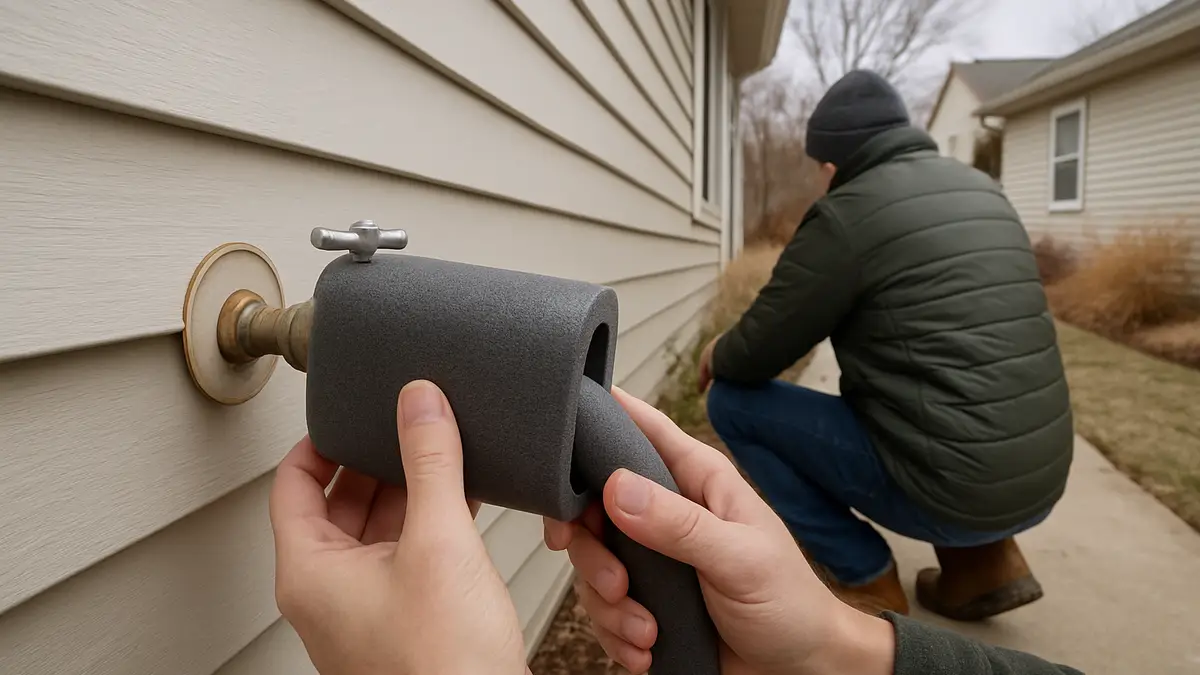
Protecting outdoor plumbing means insulating exposed pipes, draining hose bibs before the first frost, testing sump pumps ahead of heavy rain, and checking exterior drains each season for debris or slope problems. A handful of preventive habits, repeated roughly every three months, keep hose bibs, irrigation lines, and outdoor drains free of leaks, pressure loss, and freeze damage all year long.
Key Takeaways
- Disconnect and drain garden hoses before overnight temperatures drop near freezing
- Insulate exposed pipes, hose bibs, and any lines running through unheated spaces
- Test sump pumps and clear discharge lines before spring and storm season
- Watch for warning signs such as low pressure, damp patches in the yard, or slow-draining gutters
- Schedule a seasonal walk-around instead of waiting for a pipe to fail
What Counts as "Outdoor Plumbing"?
Outdoor plumbing covers every water line, fixture, and drain positioned outside the conditioned envelope of a house. That includes hose bibs (also called spigots or sillcocks), irrigation and sprinkler lines, sump pump discharge pipes, exterior floor drains, downspout drainage tied into the sewer system, and any backflow prevention devices required by local code. Because these components sit outside, exposed to sun, frost, and ground moisture, they age faster than the plumbing inside a home and need their own maintenance calendar.
Why Seasonal Swings Are Hard on Outdoor Pipes
Water expands roughly nine percent when it freezes, and that pressure is enough to split copper, PVC, or even galvanized steel. Summer heat has the opposite effect, softening some plastics and accelerating UV damage to exposed hose material. Heavy spring rain and late-summer downpours stress sump pumps and exterior drains, while fall's falling leaves and debris clog low-lying drains just as the ground begins to saturate. Each season introduces a different kind of stress, which is why a single winterizing routine isn't enough on its own.
Spring: Inspecting and Reawakening the System
Spring is the best time for a hands-on outdoor pipe inspection after winter, since frost damage that occurred in January or February often doesn't show up until water starts flowing through the line again.
- Turn outdoor faucets on slowly and check for drips, hissing, or weak flow
- Walk the yard looking for soggy patches that could indicate a buried leak
- Reconnect hoses only after confirming the hose bib holds steady pressure
- Test the sump pump by pouring a bucket of water into the pit
- Inspect irrigation heads and lines for cracks left by winter freezing
Anyone renovating a patio, deck, or garden bed this season should also think through exterior fixture layout planning before pouring concrete or trenching new lines, since relocating a hose bib after installation is far more expensive than planning its position up front.
Summer: Managing Heat, Pressure, and Heavy Use
Summer puts outdoor plumbing to its heaviest test, with lawn irrigation, pool fill-ups, and daily hose use straining fixtures that sat dormant all winter. A sudden drop in flow is one of the more common outdoor faucet water pressure issues homeowners notice this time of year, and it often traces back to the same mineral buildup or debris that slows an indoor drain.
- Store hoses off the ground and out of direct sun to slow UV breakdown
- Check for pooling water near sprinkler heads, a sign of a cracked line
- Clean the aerator or screen inside a hose bib if flow feels weak
- Watch the water bill for unexplained spikes, a common early leak indicator
Fall: Preparing for the First Freeze
Fall is when most homeowners begin to winterize outdoor plumbing, and starting early gives enough time to catch problems before the first hard freeze arrives.
- Disconnect and fully drain every garden hose
- Shut off any interior valve that feeds outdoor faucets, then open the spigot to release remaining water
- Clear gutters and downspouts so runoff doesn't pool near the foundation
- Insulate exposed pipes in crawl spaces, garages, and along exterior walls
- Cover hose bibs with foam or insulated covers rated for the local climate
Winter: Preventing Freeze Damage
Once temperatures stay below freezing for extended periods, the goal shifts from maintenance to protection. Any water left inside an exposed pipe or hose bib is a liability, since it has nowhere to expand except against the pipe wall itself.
How to Winterize an Outdoor Faucet in 5 Steps
- Disconnect the garden hose completely
- Locate and close the interior shutoff valve for that faucet, if one exists
- Open the outdoor faucet to release trapped water and relieve pressure
- Leave the faucet open slightly through winter so residual moisture can escape
- Install an insulated faucet cover over the spigot itself
Homes with older, standard hose bibs may also want to discuss frost-free hose bib installation with a plumber, since these fixtures place the shutoff valve deep inside the heated wall cavity, well away from freezing temperatures.
Seasonal Outdoor Plumbing Checklist
| Season | Priority Task | Why It Matters |
|---|---|---|
| Spring | Inspect pipes and test the sump pump | Freeze damage from winter often shows up only once water is flowing again |
| Summer | Monitor pressure and protect hoses from UV | Peak usage exposes weak fittings and sun-damaged hose material |
| Fall | Drain, disconnect, and insulate before frost | Reduces the risk of freeze-related pipe bursts |
| Winter | Keep faucets slightly open and watch for ice | Limits the pressure buildup that cracks trapped, frozen water lines |
Warning Signs Your Outdoor Plumbing Needs a Professional
A few habits catch most problems early, but certain signs call for expert attention right away:
- Sudden, unexplained loss of water pressure at an outdoor fixture
- Water pooling near the foundation with no recent rain
- A sewer smell lingering near an exterior drain
- A sump pump running constantly without draining the pit
- Visible corrosion, bulging, or discoloration on exposed pipe
None of these signs is an emergency on its own, but if a pipe bursts or a backup starts flooding the yard, a licensed emergency plumber can shut off the water and limit the damage before it reaches the house.
The Role of Sump Pumps in Outdoor Water Management
A sump pump's discharge line runs outdoors, which means it faces the same freeze and debris risks as any other exterior pipe. A frozen discharge line can force water back into the pit, while a clogged one leaves a basement vulnerable during the next heavy storm. Homeowners whose discharge line freezes solid every winter, or whose pump can't keep pace with spring rain, are often better served by a proper sump pump installation service rather than a temporary patch.
Keeping Exterior Drains and Downspouts Clear
Exterior floor drains, downspout extensions, and yard drains all rely on a clear, properly sloped path to move water away from the foundation. Leaves, silt, and landscaping debris are the most common culprits when a drain slows down. A slow exterior drain rarely fixes itself; scheduling an outdoor drain cleaning service before fall's heavy leaf drop keeps water moving away from the house instead of pooling against it. Outdoor drain grading and slope is also worth a second look if standing water keeps returning to the same spot after every storm.
Maintain a Reliable Outdoor Plumbing System
Outdoor plumbing rarely fails all at once. It wears down gradually through freeze cycles, UV exposure, and seasonal neglect until a small leak turns into a major repair. A simple quarterly walk-around, paired with the seasonal habits above, is usually enough to keep hose bibs, irrigation lines, sump pumps, and exterior drains working reliably year-round.
For inspections, repairs, or a second opinion on any outdoor plumbing concern, FKRIV Plumbing & Heating Inc has served Bucks and Montgomery County homeowners since 1999 with the same hands-on approach outlined in this guide.
Frequently Asked Questions
How often should outdoor faucets be inspected?
At minimum twice a year: once in spring to confirm no freeze damage occurred, and once in fall before winterizing.
What temperature causes outdoor pipes to freeze?
Pipes can begin freezing once outdoor temperatures drop into the mid-20s Fahrenheit for several consecutive hours, especially in pipes with little or no insulation.
Can I leave a hose connected to the faucet during winter?
No. A connected hose traps water in the bib and the pipe behind it, which can freeze, expand, and crack the fixture even on a frost-free faucet.
How do I know if my sump pump discharge line is frozen?
Water backing up in the pit, the pump running constantly without draining, or visible ice at the outdoor discharge point are the clearest signs.
Are frost-free hose bibs worth installing?
For homes in freeze-prone regions, yes. The shutoff valve sits several inches inside the heated wall, which greatly reduces freeze risk compared with a standard bib.
What causes low water pressure at an outdoor faucet?
Mineral buildup inside the fixture, a partially closed shutoff valve, or a small leak further down the line are the most common causes.
How much damage can a burst outdoor pipe cause?
A cracked hose bib or buried line can lose hundreds of gallons before anyone notices, leading to foundation erosion, landscaping damage, or a flooded basement if the leak sits close to the house.
When should I call a plumber instead of handling it myself?
Any time water can't be shut off, a pipe has visibly burst, or a sump pump failure is actively flooding a space, professional help is the safer and faster option.