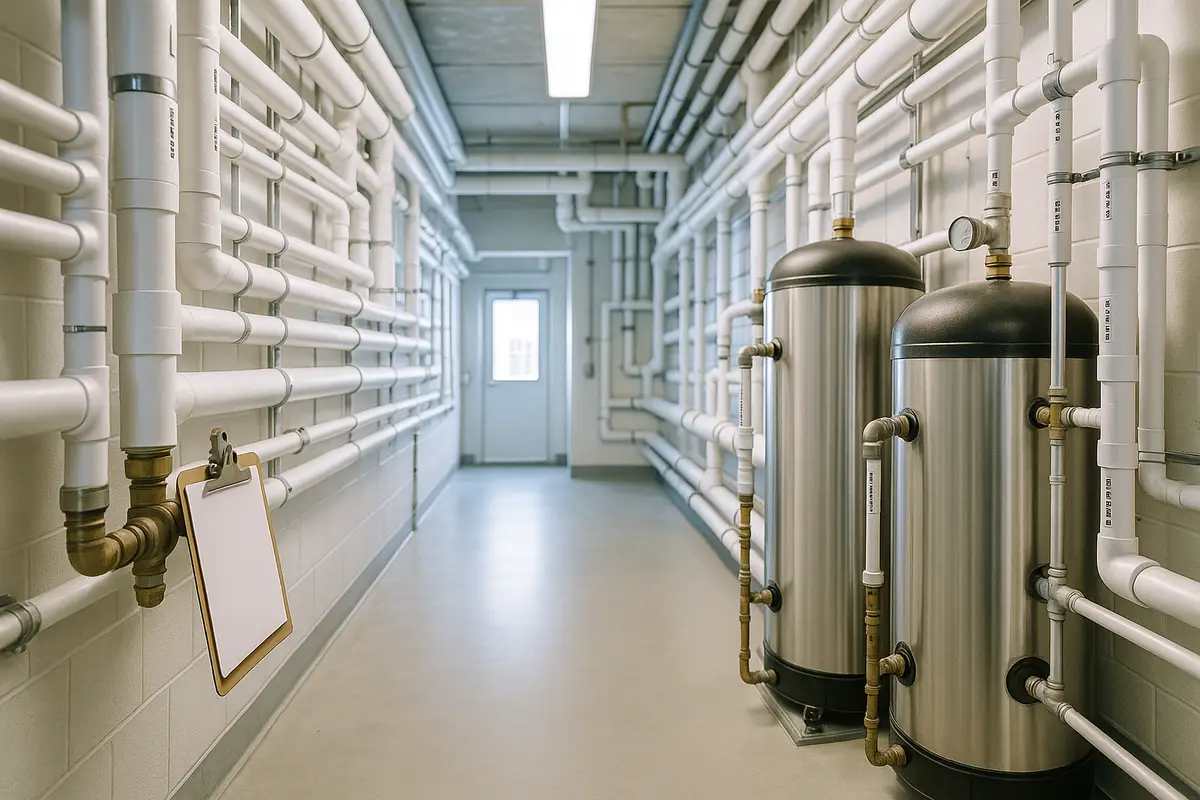
Commercial plumbing maintenance is the routine inspection and upkeep of a building's water supply, drainage, and fixture systems to prevent leaks, clogs, and equipment failure before they disrupt business operations. Most business owners don't think about plumbing until something goes wrong, but by then, you're usually looking at an emergency repair bill instead of a planned one.
A well-maintained system keeps your building running the way it should. Your tenants and customers stay comfortable, your daily operations don't get interrupted, and you avoid the kind of surprise breakdown that shuts down a kitchen or floods a retail floor. Skip that upkeep, and you're gambling with expensive repairs, water damage, and in some cases, code violations that can put your business at risk.
This matters no matter what kind of property you run, whether it's a restaurant, an office building, a retail space, or a multi-unit rental. Below, we'll walk through the maintenance tips and best practices that keep commercial plumbing systems reliable, and help you catch small problems before they turn into costly ones.
Why Commercial Plumbing Maintenance Matters
Commercial plumbing systems are far more complex than residential ones. They handle higher volumes of water, serve more people daily, and involve more components — from grease traps and industrial water heaters to backflow prevention devices and floor drains. That complexity means there are more points of potential failure.
Routine maintenance helps you catch small issues — a slow drain, a minor leak, a drop in water pressure — before they escalate. It also extends the lifespan of your equipment, improves energy efficiency, and ensures your property remains compliant with local codes and inspections. Companies that rely on
professional plumbing services for scheduled maintenance consistently avoid the disruption and cost of emergency repairs.
Top Commercial Plumbing Maintenance Tips
Build a Seasonal Maintenance Calendar
Commercial plumbing needs vary by season. Here's a general framework to help you stay proactive:
- Spring: Inspect pipes for freeze damage, check outdoor faucets and irrigation systems, test sump pumps before heavy rains.
- Summer: Monitor for increased demand on water heaters, inspect cooling tower water lines, check for signs of leaks in high-use areas.
- Fall: Flush water heaters, inspect boilers and heating systems, insulate exposed pipes before temperatures drop.
- Winter: Monitor for frozen pipes, keep heat on in unoccupied areas, check water heater performance.
For a comprehensive seasonal checklist, our blog on seasonal plumbing maintenance for property owners is an excellent resource to bookmark and revisit throughout the year.
Work with a Licensed Commercial Plumbing Team
Commercial plumbing systems are complex and require proper knowledge, equipment, and attention to local plumbing requirements. While a simple DIY fix may work for a minor household problem, commercial plumbing repairs and maintenance are better handled by licensed professionals. Improper repairs can lead to additional damage, code issues, or more expensive problems.
FKRIV Plumbing & Heating Inc. provides commercial plumbing services for businesses throughout the region. Our licensed and insured team can help with routine maintenance, repairs, replacements, and commercial plumbing installations.
Ready to Schedule Your Commercial Plumbing Maintenance?
Don't wait for a plumbing emergency to take action. FKRIV Plumbing & Heating Inc. is here to help commercial property owners and managers across the region keep their systems running at peak performance.
Contact us today to schedule an inspection, discuss a maintenance plan, or get a no-obligation quote. Reach our team by visiting our contact page or calling us directly at (215) 874-0592. We also offer flexible financing options to make quality plumbing maintenance accessible for every budget.
Service Areas: Serving commercial properties in Bristol, Willow Grove, Warminster, Yardley, and surrounding communities in Pennsylvania.
Frequently Asked Questions (FAQ)
How often should commercial plumbing be inspected?
Most commercial buildings benefit from at least two professional inspections per year. High-traffic facilities such as restaurants, gyms, or hotels may need quarterly visits. Regular inspections help catch early warning signs like minor leaks, pressure drops, or corrosion before they become serious problems.
What are the most common commercial plumbing problems?
The most frequent issues in commercial plumbing include clogged or slow-draining pipes, running toilets, water heater failures, leaking fixtures, low water pressure, and backflow contamination. Many of these problems can be prevented with a proactive maintenance routine.
What is a backflow preventer and why does my business need one?
A backflow preventer is a device that stops contaminated water from flowing backward into your clean water supply. It protects both your business and the public water system. Many municipalities require annual testing and certification of these devices for commercial properties.
How can I tell if my commercial building has a hidden water leak?
Common signs of a hidden leak include unexplained increases in water bills, damp or discolored walls and ceilings, mold or musty odors, and reduced water pressure. A licensed plumber can use camera inspections and pressure testing to locate leaks without unnecessary demolition.
When should I call an emergency plumber for my commercial property?
Call an emergency plumber immediately if you experience a burst pipe, sewage backup, flooding, or a complete loss of water service. Delaying response to these issues can result in structural damage, health hazards, and costly repairs. FKRIV offers responsive emergency services to minimize disruption to your business.
Is it worth investing in a preventive maintenance contract for commercial plumbing?
Absolutely. A preventive maintenance plan provides scheduled inspections, priority service, and often reduces long-term repair costs. It ensures your system is regularly evaluated by professionals, giving you peace of mind and helping you avoid unexpected breakdowns during peak business hours.