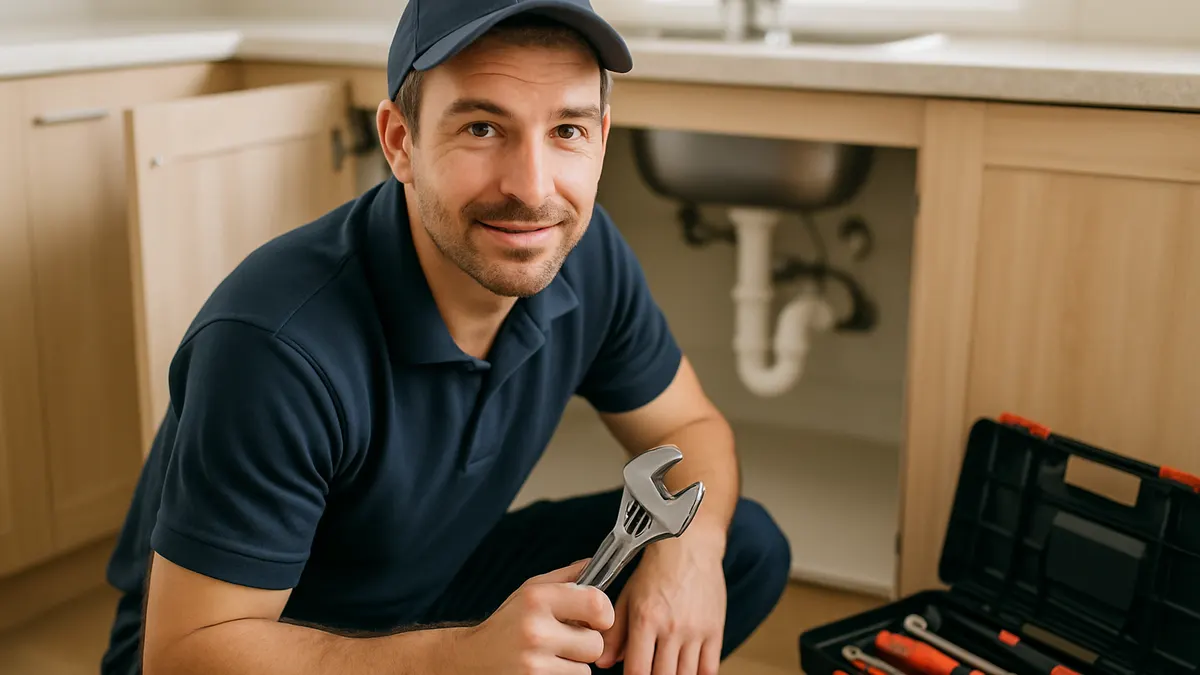
Most homeowners only think about plumbing when something goes wrong — a slow drain, a cold shower, a puddle spreading across the basement floor. But the professional who shows up does far more than tighten a fitting and write an invoice.
A residential plumber is a licensed tradesperson responsible for the whole network of pipes, drains, valves, vents, and appliances that move water and gas through your house. Here's what that work involves, how it differs from commercial plumbing, and how to spot a qualified professional.
Quick Answer: What a Residential Plumber Does
A residential plumber installs, repairs, and maintains the water supply, drainage, venting, and gas piping systems inside homes. The work falls into five categories:
- Repair — leaking pipes, dripping faucets, running toilets, failed shut-off valves, low water pressure
- Installation — water heaters, sinks, toilets, tubs, showers, dishwashers, laundry hookups, gas lines
- Drain and sewer service — clearing blockages, camera inspections, root removal, line repair
- Replacement and upgrades — repiping, fixture updates, pressure regulators, backflow devices
- Preventive maintenance — inspections, water heater flushes, sump pump testing, code compliance checks
The short version: if water flows into it, drains out of it, or heats up inside it, a residential plumber handles it.
What Is a Residential Plumber?
A residential plumber specializes in the systems found in single-family homes, townhouses, condominiums, and small multi-unit buildings. That specialization matters. Home plumbing has its own quirks — galvanized supply lines in mid-century houses, cast iron drain stacks, tight crawl spaces, and finished basements where one leak ruins drywall, flooring, and years of stored belongings.
In Pennsylvania and most states, plumbers earn credentials through a structured path: years of apprenticeship under a licensed plumber, classroom instruction in code and theory, and a journeyman exam. Master plumbers complete further field experience and testing. That training is why an experienced plumber can look at a stained ceiling and narrow the cause to two or three possibilities before opening a wall.
The Five Core Jobs of a Residential Plumber
1. Finding and Fixing Leaks
Leak repair is the most common reason homeowners call a plumber, and it is rarely as simple as swapping a washer. Many leaks are hidden entirely — inside walls, beneath slabs, under flooring, or underground between the meter and the house.
Plumbers rely on pressure testing, acoustic listening equipment, thermal imaging, and moisture meters to pinpoint a source before cutting into anything. The walkthrough on how plumbers detect hidden water leaks in homes explains each tool and the reasoning behind choosing one over another.
From there the fix might be a replacement section of pipe, a new valve, a resoldered joint, or — in older homes with recurring pinhole failures — partial repiping.
2. Installing and Replacing Fixtures and Appliances
Installation work runs from a single kitchen faucet to a full bathroom rough-in: toilets, sinks, tubs and showers, disposals, dishwashers, laundry boxes, hose bibs, and filtration systems.
The visible fixture is the easy half. The harder half sits behind the wall — correct pipe sizing, proper venting, secure connections, and a drain slope that actually carries waste away. Get the venting wrong and the drain gurgles, empties slowly, and pulls sewer gas back into the room.
Smaller repairs live here too. A toilet that never stops refilling can waste hundreds of gallons a day, and the fix is usually a flapper, fill valve, or float adjustment — covered step by step in this guide to fixing a toilet that keeps running.
3. Clearing Drains and Sewer Lines
Every home eventually deals with a clog. Kitchen lines collect grease, bathroom lines collect hair and soap scum, and main sewer lines collect all of it plus tree roots pushing in from outside.
Plumbers use motorized augers, hydro jetting, and video camera inspection to clear and diagnose blockages. Camera work matters because a clog that keeps returning usually isn't a clog at all — it's a bellied pipe, root intrusion, or a collapsed section that keeps backing up until it's repaired. Many Lower Bucks County homeowners now schedule drain cleaning services in Levittown as annual maintenance rather than waiting for a backup.
Warning signs worth acting on quickly:
- More than one fixture draining slowly at the same time
- A toilet gurgling when the washing machine drains
- Water backing up into a tub, shower, or floor drain
- Sewage odor near drains, in the basement, or out in the yard
4. Managing Hot Water Systems
Water heaters get noticed only when they stop working. Plumbers install, repair, and replace tank and tankless units — sizing them to household demand, setting safe delivery temperatures, fitting expansion tanks and pressure-relief valves, and flushing the sediment that shortens equipment life.
A tank heater typically lasts eight to twelve years; tankless units run longer with annual descaling. Rusty hot water, popping from the tank, inconsistent temperatures, or moisture around the base all point to a unit near the end of its life. Following a water heater maintenance checklist for homeowners and replacing on your own schedule beats an emergency call after a tank splits.
5. Protecting the Home from Water Intrusion
Basements are where plumbing problems get expensive. Sump pumps, ejector pumps, backwater valves, and correctly routed discharge lines are the difference between a damp corner and a flooded finished basement.
A plumber sizes the pump to the pit and water table, verifies the check valve, adds battery backup where outages are common, and confirms the discharge ends far enough from the foundation that water doesn't circle back. Given the clay-heavy soil and heavy spring rain across Bucks County, sump pump installation in Levittown PA is one of the most practical investments a homeowner here can make.
Residential vs. Commercial Plumbing: What Actually Differs
Both trades handle water, waste, and gas, but the systems and constraints differ:
| Factor | Residential Plumbing | Commercial Plumbing |
|---|---|---|
| System scale | One to three stories, single water service | Multi-floor, multiple risers, high demand |
| Typical pipe size | ½" to 4" | 4" and larger |
| Usage pattern | Peaks morning and evening | Heavy and near-constant all day |
| Code focus | Residential code and permits | Commercial code, health, and accessibility rules |
| Scheduling | Daytime, homeowner present | Often nights or weekends to avoid downtime |
| Common jobs | Fixtures, water heaters, drain clogs | Boilers, grease interceptors, backflow assemblies |
Many companies handle both, but the instincts differ. A residential specialist knows what a 1950s Levittown ranch is likely hiding behind its walls, and that saves real time on a call.
What a Typical Residential Service Call Looks Like
Knowing the sequence makes the visit less stressful — and makes a skipped step easier to catch.
- Intake and triage. You describe the symptom by phone; the dispatcher decides whether it's an emergency — flooding, no water, gas odor — or can wait for a scheduled visit.
- On-site assessment. The plumber locates your main shut-off, inspects the affected area, and checks related systems.
- Diagnosis. Cameras, pressure gauges, and moisture meters come out. The goal is the root cause, not the most visible symptom.
- Written estimate. Scope, parts, and pricing before work starts — nothing proceeds without your approval.
- The repair. Water is shut off to the working section, the fix is made to code, and permits are pulled where required.
- Testing. The system is pressurized and run through a full cycle, with drains tested under real flow.
- Cleanup and explanation. The area is left clean and the plumber explains what failed, what was replaced, and what to watch for.
Licensing, Insurance, and Why They Matter
Plumbing is one of the few trades where poor work can make people sick. Cross-connections pull contaminated water into a drinking supply, an unvented drain releases sewer gas indoors, and a mishandled gas line is a life-safety issue. Confirm three things before hiring:
- License — current, verifiable, and valid for the municipality where the work will happen
- Liability insurance and workers' compensation — protects you if property is damaged or someone is injured on site
- Permits — required for water heater replacements, repiping, gas work, and most new fixture rough-ins
Unpermitted work surfaces at the worst possible time — during a sale, an insurance claim, or an inspection. Understanding what a plumbing inspection covers before you buy a house is worth knowing well before you list or purchase.
When You Can DIY — and When You Really Shouldn't
Some plumbing tasks are genuinely homeowner-friendly. Others carry consequences that dwarf the cost of a service call.
| Reasonable DIY | Call a Licensed Plumber |
|---|---|
| Plunging a single slow drain | Multiple fixtures backing up at once |
| Replacing a showerhead or aerator | Any work involving gas lines |
| Swapping a toilet flapper or fill valve | Water heater installation or replacement |
| Insulating exposed pipes | Suspected leak inside a wall, ceiling, or slab |
| Cleaning a sink trap | Sewer clogs, odors, or root intrusion |
| Testing a sump pump by pouring water in the pit | Sump pump replacement or discharge rerouting |
One rule of thumb: chemical drain cleaners are rarely worth it. They seldom reach the true blockage, and repeated use degrades older pipes and seals from the inside.
How to Choose a Residential Plumber
The more valuable outcome is a plumber you can call again without hesitation. Look for:
- Transparent, upfront pricing, with the estimate in writing before work begins
- Local experience with the housing stock, soil, and municipal codes in your area
- Emergency availability, because burst pipes don't respect business hours
- Clear communication — the willingness to explain the cause in plain language
- Verifiable reviews from homeowners in nearby neighborhoods
A company offering the full range of plumbing services in Levittown, PA can handle a leaking faucet today and a water heater replacement next winter — meaning whoever diagnoses your system already knows its history. That continuity is worth more than the lowest quote on a single job.
Ask about seasonal preparation too. In this climate, knowing how to prevent frozen pipes during a Pennsylvania winter and spotting the signs your home needs whole-house repiping heads off the two costliest failures homeowners face.
Dependable Plumbing Solutions for Every Home
A residential plumber does much more than stop drips. The role covers diagnosing hidden failures, installing systems that run safely for decades, keeping drains and sewer lines clear, protecting basements from water, and making sure all of it meets code.
When you need a team that brings all of that to a home in Levittown, Yardley, Jamison, Warminster, or anywhere in Bucks County, FKRIV Plumbing & Heating Inc is ready to help — from a routine inspection to the emergency call you hoped you'd never make.
Frequently Asked Questions
What is the difference between a plumber and a residential plumber?
"Plumber" is the general trade. A residential plumber focuses on homes — supply lines, drains, vents, water heaters, and fixtures sized for household use. Commercial plumbers work with larger systems, higher demand, and different code requirements.
How much does a residential plumber cost?
Most companies charge a flat rate per job or an hourly rate plus a service call fee. Simple repairs such as a running toilet sit at the low end; water heater replacements, repiping, and sewer work cost considerably more. Always request a written estimate first.
Do plumbers fix water heaters?
Yes. Licensed plumbers install, service, and replace tank and tankless water heaters, including venting, gas or electrical connections, the expansion tank, and the pressure-relief valve. Most jurisdictions require a permit for replacement.
How often should a home's plumbing be inspected?
Every one to two years is reasonable for most homes. Houses over 40 years old, properties on well or septic systems, and any home with a history of leaks or backups benefit from annual checks.
Can a plumber find a leak without breaking the wall?
In most cases, yes. Thermal imaging, acoustic equipment, moisture meters, and pressure testing narrow a leak to a small area before any wall is opened — usually a patch instead of a rebuild.