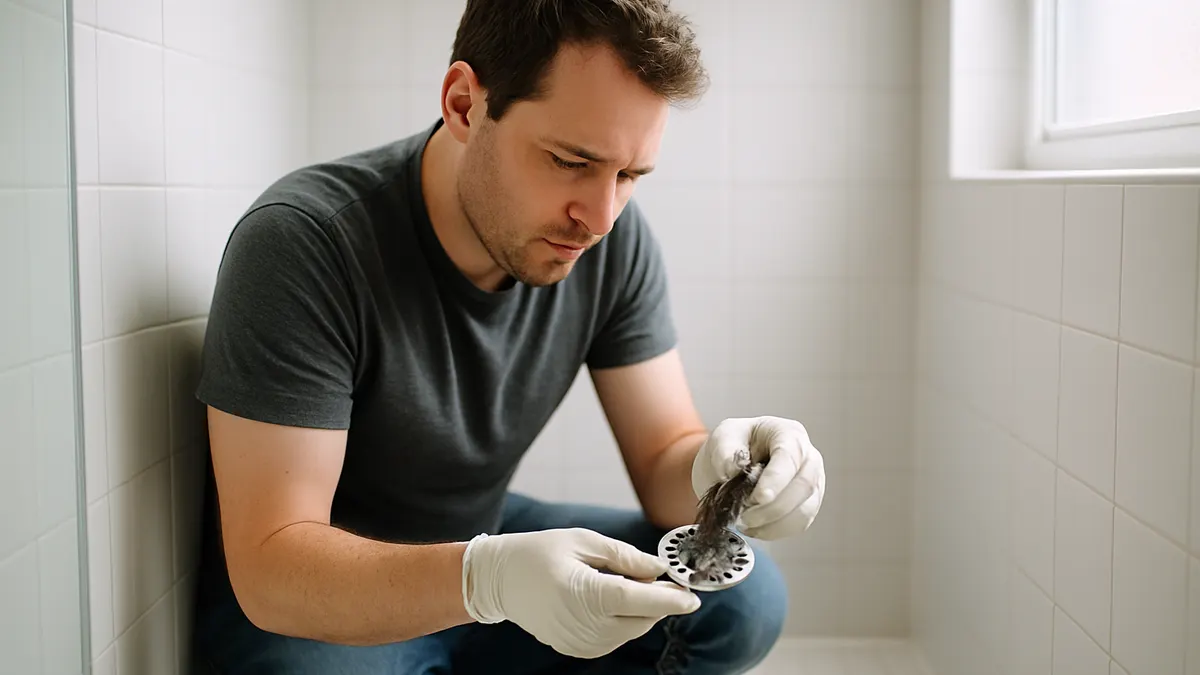
There is nothing pleasant about standing in a puddle of shower water because the drain will not keep up. Maybe the water pools around your feet a little longer each day, or it slowed to a trickle overnight. Either way, it usually means your drain needs attention.
Shower drains collect hair, soap residue, shampoo film, and skin debris every time you shower. Over time, that buildup tightens its grip on the pipe and slows the water down. The good news is you can clean a shower drain yourself in about twenty minutes with a few basic tools. Here is a simple walkthrough of what to do, what to avoid, and when to call in help.
Why Does a Shower Drain Get Dirty or Clogged?
A shower drain rarely clogs from one event. It is almost always slow buildup from everyday things: hair, soap scum left behind as soap and body wash rinse away, shampoo and conditioner residue, dirt and skin cells, and mineral buildup in homes with hard water.
Hair is usually the main culprit. It collects near the opening and forms a net that traps soap scum and debris, narrowing the pipe a little more each week.
Signs Your Shower Drain Needs Cleaning
You do not need a plumbing background to notice these signs:
- Water drains noticeably slower than usual
- Water pools around your feet while you shower
- A musty or sour smell from the drain
- Gurgling as the water goes down
- Hair or debris visible around the cover
Any one of these is worth a quick cleaning; a few together usually mean buildup has been forming for a while.
What You Need to Clean a Shower Drain
Most of these are already in your home: rubber gloves, a screwdriver, an old toothbrush, a paper towel, a hair removal tool or drain snake, baking soda, white vinegar, and warm water. Light buildup needs only a quick scrub, while a slow or clogged drain calls for the hair removal tool.
How to Clean a Shower Drain Step by Step
1. Remove the Drain Cover
Most shower drain covers lift out or twist off by hand. Some are held down with a small screw at the center or edge. Set the cover aside so it does not slide back into the drain.
2. Remove Visible Hair and Debris
Put on gloves and pull out any hair, soap buildup, or debris around the opening. This alone often helps, since surface hair is usually what traps everything below it.
3. Scrub the Drain Cover
While the cover is off, clean it with warm water, mild soap, and an old toothbrush. Soap scum builds up along the grooves, and a quick scrub keeps water flowing evenly.
4. Use a Drain Snake for Deeper Hair Buildup
If water is still slow, a hair removal tool or drain snake can reach buildup just below the opening. Insert it gently, turn slowly, and pull out whatever it catches rather than forcing it further down. For comparison, review these drain cleaning methods, or follow this guide to snaking a bathtub drain if your shower uses a tub drain.
5. Flush the Drain
Flush the drain with warm to appropriately hot water to clear loosened residue. Boiling water is not always a safe blanket recommendation, since pipe materials vary, and current guidance cautions against boiling water with PVC plumbing specifically, as it can soften or warp the pipe. When in doubt, use hot tap water instead.
6. Try Baking Soda and Vinegar for Light Buildup
For routine maintenance, pour half a cup of baking soda down the drain, add half a cup of white vinegar, let it fizz for ten minutes, then rinse with warm water. This helps with soap scum and minor buildup, but is not dependable for a real hair clog, where physical removal works better.
How to Clean a Shower Drain That Smells
A smelly drain usually comes from trapped hair, soap film, and skin cells breaking down, along with bacteria growing in that damp environment. Standing water just below the opening can also hold odors in place.
Clearing hair and debris, scrubbing the cover, and flushing with warm water resolves most everyday odor issues. Baking soda and vinegar can help freshen things up, but will not eliminate every odor. A smell that keeps returning after cleaning often points to something further down the line.
What Not to Do When Cleaning a Shower Drain
A few habits can turn a simple cleaning into a bigger problem. Do not ignore slow drainage that keeps coming back, and do not force a tool aggressively into the pipe. Avoid mixing different chemical cleaners, and never mix bleach with vinegar, since this creates harmful fumes. Do not rely only on chemicals for a hair clog, or use harsh chemicals repeatedly without knowing whether they suit your plumbing.
How to Prevent Shower Drain Clogs
A little routine upkeep goes a long way. Use a hair catcher, remove visible hair after a shower, clean the cover every few weeks, and flush periodically with appropriately hot water. Treating regular drain maintenance as normal bathroom upkeep keeps clogs from forming in the first place.
When Should You Call a Professional Plumber?
DIY cleaning handles most everyday buildup, but a few situations call for outside help: the drain stays clogged after cleaning, water backs up repeatedly, multiple fixtures drain slowly at once, a foul odor persists, or the same clog keeps returning. These signs often point to a deeper issue in the drainage line. At that point, professional drain cleaning services can find what is happening further down the pipe and clear it properly.
Keep Your Shower Drain Flowing Freely
Cleaning a shower drain is easier than waiting for a full clog to form. Remove the cover, clear out the hair and debris, scrub the cover, use a drain tool if buildup goes deeper, flush, and keep up with it regularly. A few minutes every few weeks is usually all it takes, and it saves you from a bigger, messier problem later on. Homeowners throughout Horsham, Feasterville, Doylestown, Warminster, and Jamison deal with this same everyday buildup, and FKRIV Plumbing & Heating Inc is always available if a drain needs more attention than a home cleaning can give it.
Frequently Asked Questions
How often should you clean a shower drain?
Every two to four weeks for most households, though homes with longer hair may need to check more often.
What is the best way to remove hair from a shower drain?
Pull out visible hair by hand with gloves on, then use a hair removal tool or drain snake below the opening. Manual removal usually beats liquid cleaners.
Can baking soda and vinegar unclog a shower drain?
It helps with light soap scum, but is not reliable for a real hair clog, where physical removal works better.
Why does my shower drain smell even after cleaning?
A lingering smell usually means buildup remains further down the pipe, or standing water is holding odors in place.
How can I prevent my shower drain from clogging?
Use a hair catcher, remove hair regularly, clean the cover often, and flush periodically with warm water.
When should I call a plumber for a clogged shower drain?
If the clog returns after cleaning, multiple drains run slow at once, or you notice gurgling and persistent odor.