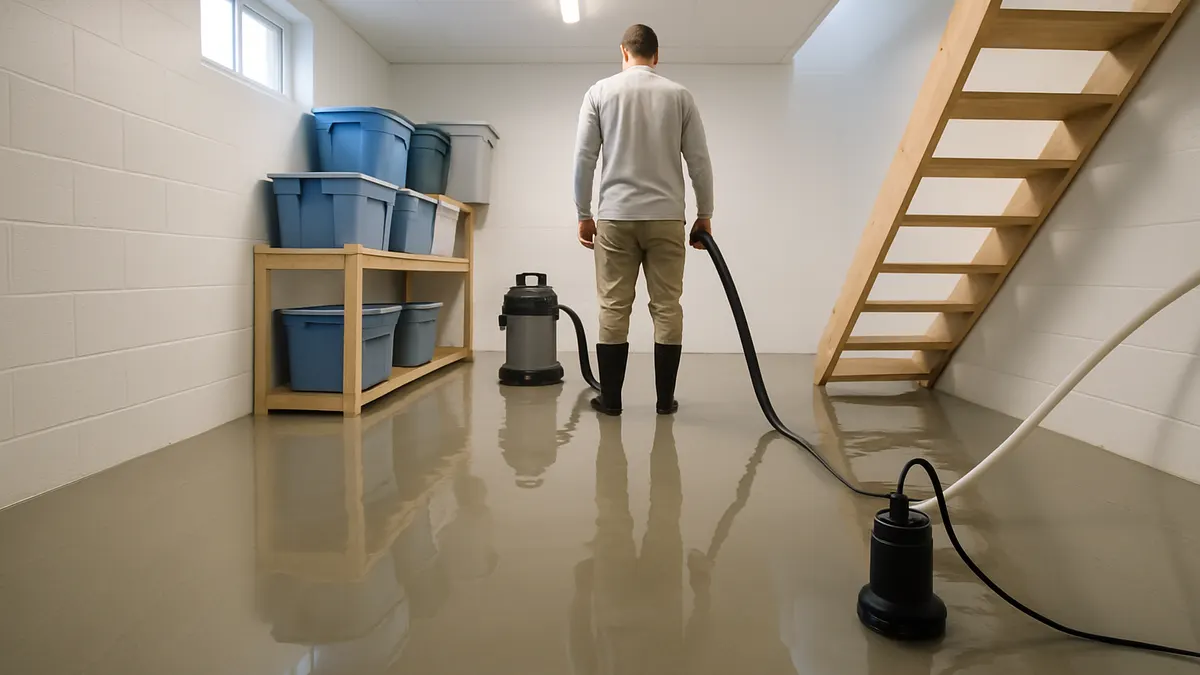
If your basement floods, stay out of the water if it could be near outlets, cords, or appliances, because it can carry electricity. Once it's safe, shut off the water source and call a plumber to find the cause. Get the water out and start drying within 24 to 48 hours so mold doesn't have time to grow.
Standing water can create electrical hazards, ruin drywall and flooring, feed mold growth, and weaken parts of your home over time. Your first priority is safety. After that, stop the water source if you can and start proper cleanup. This guide walks you through each step in plain language.
What to Do First When Your Basement Floods
Follow these three steps in order. They help you avoid the most common and costly mistakes.
1. Stay Safe and Avoid Standing Water
Water and electricity are a dangerous mix. If standing water reaches outlets, cords, appliances, or your electrical panel, stepping into it can be deadly. Do not walk through it if any of those may be affected.
If you are unsure, stay out. Leave the area and call a professional. Water from a sewer backup can also carry bacteria, so it is never something to wade through.
2. Find and Stop the Water Source
Once it is safe, look for where the water is coming from. Common sources include:
- A burst or leaking pipe
- A failed sump pump
- Heavy rain
- Sewer backup
- Foundation leaks
- A leaking water heater or appliance
If a pipe or appliance is the cause, shut off the water to that fixture or at the main valve. Only do this if you can reach it without stepping into water. If the source is not obvious, it helps to know how plumbers find hidden water leaks behind walls and under floors.
3. Contact the Right Professional
Who you call depends on what went wrong:
- Plumber: for burst pipes, leaking fixtures, water heater leaks, or sewer backup
- Water damage restoration company: for large amounts of water, drying, and cleanup
- Electrician: if water has reached outlets, wiring, or the panel
- Waterproofing professional: for foundation leaks or repeated seepage
If you are not sure, start with a plumber. They can usually tell you which other help you need.
Common Reasons for Basement Flooding
Most basement floods trace back to a handful of causes. Knowing yours helps you fix the real problem instead of mopping up again next month.
- Heavy rainfall and storms that overload the ground around your home
- Sump pump failure, often from a power outage, a stuck float, or age
- Clogged or damaged drains that let water back up
- Burst plumbing pipes, especially after freezing weather
- Sewer backups during heavy rain or from blocked lines
- Foundation cracks that let groundwater seep in
- Poor drainage, such as soil sloping toward the house
- Gutter or downspout problems that dump stormwater beside the foundation
Nearly all of these come down to water intrusion from outside or a plumbing leak from inside. Recurring Slow draining drains deserve attention early, before a heavy storm makes them worse.
How to Remove Water From a Flooded Basement
Remove Standing Water Safely
The method depends on how much water you have and where it came from. A few inches may be handled with a wet and dry vacuum or a small submersible pump. Deeper water, or anything involving sewage, calls for professional water extraction.
Turn off power to the basement first if you can reach the panel from a dry spot, and never plug in equipment while standing in water. Electrical safety comes first.
Move Furniture and Belongings to a Dry Area
When it is safe, carry items out of the wet area. Sort them into things you can save and things that are heavily damaged. Take photos or video of everything before you throw anything away. This documentation helps with insurance claims.
Dry the Basement Thoroughly
Removing visible water is only half the job. Moisture hides in walls, carpet padding, and insulation.
- Open windows and doors when the weather allows
- Run fans to keep air moving
- Use dehumidifiers for moisture control
- Remove soaked drywall, carpet, and insulation that cannot dry
- Check corners and behind walls for hidden dampness
Drying can take days. Rushing it is how mold gets a start.
Why You Should Act Quickly After Basement Flooding
Water does more damage the longer it sits. Mold growth can begin within 24 to 48 hours in damp conditions, and other problems follow close behind:
- Musty odors that spread through the house
- Damaged drywall and flooring
- Warped or rotting wood
- Wet insulation that stops working properly
- Electrical risks from wet wiring
- Structural concerns if water keeps pressing on the foundation
- Long term basement moisture problems
Fast action limits the damage and usually lowers the repair bill.
When Should You Call a Professional for Basement Flooding?
DIY cleanup is fine for a small spill of clean water. Call a professional if you notice any of these:
- Large amounts of standing water
- Sewage contaminated water
- Repeated basement flooding
- Water near electrical systems
- An unknown source of water
- Water coming through foundation walls
- A failed sump pump
- Visible structural damage
- Moisture that lingers after cleanup
A professional can find the true source, fix it, and help keep the same problem from coming back.
How to Prevent Future Basement Floods
Basement floods are often preventable with a little regular attention.
Maintain Your Sump Pump
A sump pump doesn't need much, but it does need a little attention. Pour some water into the pit a few times a year to make sure the pump kicks on and empties it. Keep the discharge line clear of dirt and debris, and think about a battery backup in case the power goes out during a storm. Not sure if yours is working the way it should? This quick guide on how to test a sump pump shows you what to check before the next heavy rain arrives.
Check Gutters and Downspouts
Keep gutters clear of leaves. Make sure downspouts release water several feet away from the foundation.
Inspect Your Foundation
Look for cracks and damp spots. Fix recurring leaks instead of cleaning up after them again and again.
Improve Drainage Around Your Home
Soil should slope away from the house so rainwater moves away from the foundation. Fill in low spots near the walls and regrade them if needed.
Watch for Early Warning Signs
- Damp walls
- Musty smells
- Water stains
- White, chalky residue called efflorescence
- Cracks in walls or floors
- Condensation
- Recurring puddles
What Not to Do After a Basement Flood
- Do not walk through standing water when electrical hazards may be present.
- Do not ignore sewage contaminated water.
- Do not cover damp materials before they are completely dry.
- Do not assume the problem is fixed just because the visible water is gone.
- Do not ignore recurring basement leaks.
- Do not delay addressing mold or persistent moisture.
Take Action Quickly When Your Basement Floods
The process is easy to remember. Stay safe, find the water source, stop it if it is safe, remove the water, dry the area, check for damage, fix the underlying problem, and take steps to prevent a repeat.
If you are dealing with a flood or a problem that keeps coming back, a licensed team that handles plumbing repair and maintenance can find the cause and fix it properly. Homeowners in Bensalem, Feasterville, Doylestown, Warminster, Jamison, and Langhorne can get local help with basement water problems, and calling early is always easier than waiting.
Frequently Asked Questions About Basement Floods
What should I do first when my basement floods?
Make sure everyone is safe first. Stay out of the water if outlets, cords, or appliances may be wet, then shut off the water source if you can reach it safely and call a professional.
Is it safe to walk into a flooded basement?
Not always. Standing water can carry electricity and, if it came from a sewer backup, harmful bacteria. If you are unsure, stay out and have the power shut off before anyone goes in.
What are the most common causes of basement flooding?
The most common causes are heavy rain, sump pump failure, clogged drains, burst pipes, sewer backups, foundation cracks, and poor drainage around the home.
How quickly should you remove water from a flooded basement?
As soon as it is safe, ideally within a day or two. The sooner water is removed and the space starts drying, the lower the risk of mold and lasting damage.
Can a flooded basement cause mold?
Yes. Mold can start growing in damp carpet, drywall, and stored boxes within 24 to 48 hours. Fast drying is the best way to stop it.
How can I prevent my basement from flooding again?
Keep your sump pump working, clean your gutters, send downspouts away from the house, seal foundation cracks, and fix drainage problems around your home. Repairing small leaks early prevents bigger ones.