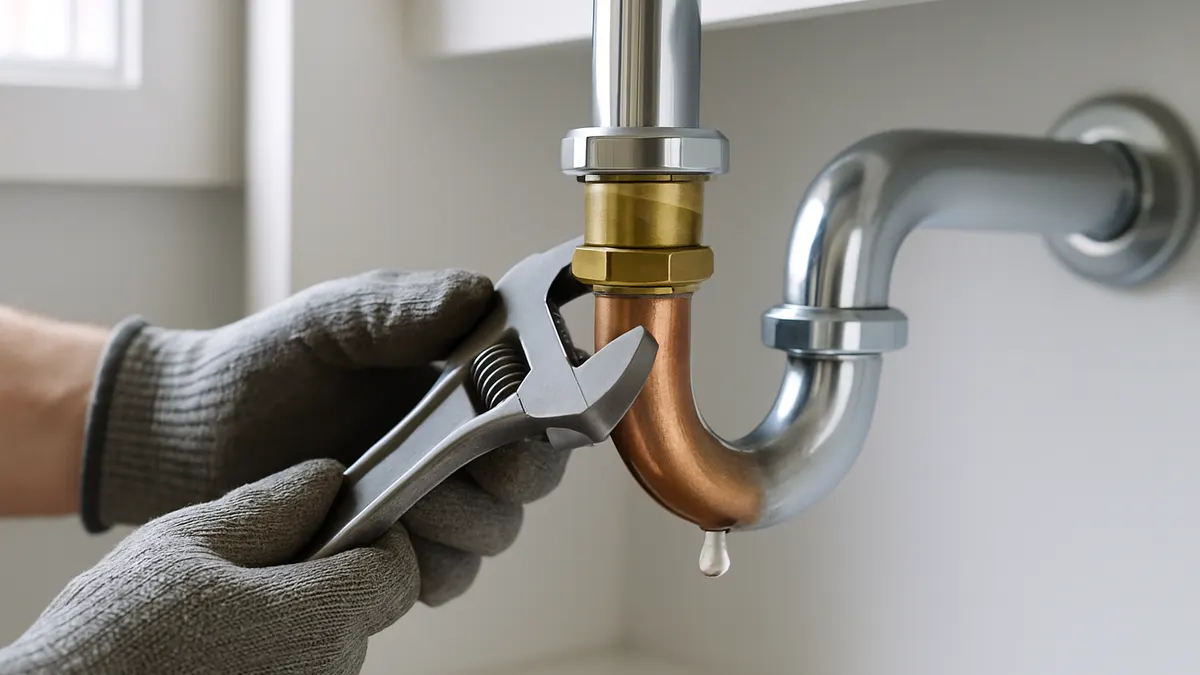
Pipe joints usually leak because of loose connections, worn seals or washers, corrosion, high water pressure, poor installation, pipe movement, or damaged fittings. Find the exact spot where the water is coming from, dry it, and watch where the drip returns. A simple tightening or a new washer fixes many leaks, but if the joint is corroded, cracked, or keeps leaking, call a plumber.
Why Do Plumbing Pipe Joints Leak?
A joint is any point where pipes connect, change direction, or meet a fixture. It depends on tight alignment, clean pipe threads, and a good seal to keep water inside. Think of the lid on a jar. If the lid is crooked or the rubber ring is worn, water finds a way out.
Joints also sit under constant water pressure. Even a tiny weakness can turn into a slow drip that grows over time.
7 Common Causes of Leaks Around Plumbing Pipe Joints
1. Loose Pipe Connections
Pipes vibrate every time water runs. Over the years, that movement can loosen a connection, especially under sinks. Poor tightening adds to it. But more force is not always the answer. Overtightening can strip pipe threads or crack fittings.
2. Worn or Damaged Washers and Seals
Washers, O rings, and seals create the watertight barrier inside a joint. They can turn brittle, flatten, or crack with age. A damaged seal can leak even when the connection feels tight. Replacing the part is the real fix.
3. Corrosion Around the Joint
Corrosion slowly weakens metal pipes and fittings, and joints are often hit first. Watch for:
- Green or blue deposits on copper
- Rust colored stains
- White, crusty mineral buildup
- Flaking or thinning metal
Once corrosion damages the joint itself, tightening will not help. Aging, damaged copper pipes can also develop tiny pinhole leaks near fittings.
4. High or Fluctuating Water Pressure
Water pressure pushes against every joint in your system. When it runs too high or swings up and down, weak joints take the stress. A loud bang when a faucet shuts off is a warning sign. A plumber can check your pressure with a simple gauge.
5. Poor Installation or Incorrect Fittings
Leaks can start when pipes are misaligned, the wrong fitting is used, threads are damaged, or a connection is not sealed well. A joint may look fine on install day and fail months later.
6. Pipe Movement and Temperature Changes
Pipes expand a little with hot water and shrink as they cool. Poorly supported pipes also shift when water flows, and building movement adds more stress. Over time, this motion works on a joint like bending a paper clip back and forth.
7. Cracked or Damaged Fittings
Fittings can crack from age, corrosion, freezing, impact, or too much force. A loose connection or worn seal can often be repaired. A cracked fitting usually needs to be replaced.
What Are the Signs of a Leaking Pipe Joint?
Check for these signs of a pipe leak:
- Small drops of water around a connection
- Dampness beneath pipes
- Water stains or wet cabinets and flooring
- Mineral deposits, rust, or corrosion near fittings
- Musty smells
- A higher water bill with no change in use
- Lower water pressure at some fixtures
- Dripping sounds when nothing is running
Leaks around plumbing pipe joints can stay hidden for a long time, especially inside walls or under floors. Professional hidden leak detection can find them before they cause serious water damage.
How to Check Where a Pipe Joint Is Leaking
Step 1: Dry the Area
Wipe the pipe and fitting completely dry with a clean towel.
Step 2: Watch the Connection
Turn on the related fixture and watch the joint closely.
Step 3: Look for Fresh Moisture
See if water appears right at the fitting or comes from somewhere above it.
Step 4: Check Nearby Connections
Water travels along pipes, so the wet spot may sit below the real source.
Can You Fix a Leaking Pipe Joint Yourself?
Sometimes. An easy to reach leak may come from a loose connection or a worn washer, but the right repair depends on the pipe and fitting type. Before you start:
- Turn off the water first
- Do not overtighten
- Replace worn seals instead of reusing them
- Replace a damaged fitting instead of tightening it again and again
Tape and sealant may slow a leak for a short time, but they are not permanent fixes. They cannot repair a cracked fitting or a seal that has lost its shape. Many repeat leaks come from the plumbing mistakes homeowners make, like overtightening or using the wrong parts.
When Should You Call a Professional Plumber?
Call a plumber if:
- The leak continues after a basic repair
- The joint is badly corroded or cracked
- The leak is inside a wall or ceiling
- Several joints are leaking
- There is significant water damage
- The main water line is involved
- You cannot find the source
- The leak suddenly gets worse
Visible joint leaks are often simple to fix. Hidden leaks and badly corroded, hard to reach pipes need more skill and the right tools. Professional plumbing repair also finds the cause, not just the drip.
Stop a Leaking Pipe Joint Before It Gets Worse
Leaks around plumbing pipe joints usually come from loose connections, damaged seals, corrosion, pressure, poor installation, pipe movement, or cracked fittings. A small drip should not be ignored. Over time it can damage cabinets, flooring, and walls.
If the source is unclear, hard to reach, or keeps coming back, schedule a plumbing inspection. Homeowners in Bensalem, Feasterville, Doylestown, Warminster, and Holland can count on FKRIV Plumbing & Heating, a residential plumbing company that will find the cause and fix it right.
Frequently Asked Questions
1. Why do plumbing pipe joints start leaking?
Most joints leak because of loose connections, damaged seals, corrosion, high pressure, or aging fittings. Poor installation and pipe movement also play a part.
2. Can a loose pipe joint cause a major water leak?
Yes, it can. A small drip can grow fast because the connection sits under constant water pressure, especially if the fitting is already damaged.
3. Should I tighten a leaking pipe joint?
Only gently. A light turn may help a loose connection, but overtightening can damage threads, fittings, and seals.
4. How can I tell if a pipe joint is leaking behind a wall?
Look for damp spots, stains, musty odors, an unexplained rise in water use, or the sound of running water. A professional can locate the leak without opening the whole wall.
5. Are corroded pipe joints repairable?
Minor connection problems can sometimes be repaired. Badly corroded or damaged fittings usually need to be replaced.
6. When should I call a plumber for a leaking pipe joint?
Call one when a leak keeps coming back, hides in a wall, involves a cracked fitting or heavy corrosion, causes water damage, or you cannot safely find or fix it.