Most homeowners assume a clogged drain means hair, grease, soap, or food scraps. That is usually true. But there is another culprit that rarely gets blamed until the problem keeps coming back: dirt, soil, sand, and sediment.
These particles do not belong in a drainage system, yet they find their way in more often than people realize, especially when pipes are damaged, joints have separated, or heavy rain pushes runoff toward vulnerable areas.
So can a small amount of dirt really turn into a serious drain blockage? Yes, particularly when sediment keeps entering the same pipe and building up over time. Here is how it happens, what to watch for, and what to do about it.
Can Dirt and Sediment Really Block a Drain?
On their own, a few grains of sand or a bit of mud rinsed off a boot seem harmless. The problem is what happens after they enter a pipe. Particles settle at low points and collect with whatever else passes through, including small stones or grit, organic debris, grease, mineral deposits, and tree roots.
That combination matters. A temporary obstruction, like a toy stuck in a pipe, is usually a onetime event a plumber clears in minutes. A sediment buildup is different. It grows a little at a time, often unnoticed, until the pipe opening is significantly narrower than it should be. That is when slow drains and recurring clogs start showing up.
How Does Soil Get Into a Home's Drainage System?
Underground pipes are surrounded by soil, so it does not take much for that soil to find its way in once a pipe's protective barrier is compromised.
Damaged or Cracked Pipes
A crack, even a small one, gives surrounding dirt a direct path into the pipe. Every time it rains or groundwater shifts, more soil can wash in.
Loose Pipe Joints
Pipes are connected at joints meant to stay sealed. When a joint separates slightly, whether from age or ground movement, it creates a gap where soil and debris can enter the line.
Heavy Rain and Runoff
A downpour moves a surprising amount of dirt across a property. That runoff can carry soil toward outdoor drains or underground pipes that already have a weak spot.
Tree Root Intrusion
Roots are drawn to the moisture inside drain lines and can work their way into even a tiny opening. Once a root breaches the pipe, soil and grit often start entering right alongside it.
Utility and Laundry Sinks
Not every source is underground. Rinsing muddy boots, gardening tools, or outdoor equipment in a utility sink sends dirt straight into household plumbing.
What Happens When Sediment Builds Up Inside Pipes?
Sediment buildup follows a pattern. Small deposits collect first, usually in low or flat sections of pipe, narrowing the space available for water. As that opening shrinks, drainage slows down, and slower drainage means more debris has a chance to catch instead of washing through. That is how a small deposit turns into a recurring clog, and eventually a backup, especially if the pipe already has limited capacity.
The rough, uneven surface sediment leaves behind also makes it easier for hair, grease, or other debris to catch, which is why a blockage that starts as sediment often ends up mixed with other materials.
Signs You May Have a Dirt or Sediment Related Drain Blockage
A few warning signs tend to show up before things get serious.
- Slow draining sinks or tubs. Water taking longer than normal to disappear can point to a narrowing pipe.
- Recurring clogs. A drain that clears temporarily but clogs again within weeks may have material building back up.
- Gurgling sounds. Air trapped behind a partial blockage often escapes as a gurgle when water tries to pass.
- Bad or unusual odors. Trapped organic material mixed with sediment can produce a musty smell.
- Multiple slow drains. When more than one fixture is affected at once, the issue may sit further down the line.
- Water backing up during heavy rain. This often points to an outdoor connection letting rainwater and soil in.
- Basement or floor drain problems. These sit at the lowest point and are often the first place a deeper blockage shows itself.
One slow drain by itself does not mean sediment is the cause. But when several drains are affected, or the same clog keeps returning, it is worth looking deeper.
Why Repeatedly Using Chemical Drain Cleaners May Not Solve the Problem
Chemical drain cleaners are built to break down organic material like grease, soap residue, and hair. They are not designed to dissolve soil, sand, or sediment, so pouring them into a pipe with a dirt buildup usually does very little.
Using them again after a clog returns often just delays the real fix. A drain snake can sometimes punch through the blockage, but that does not mean the material is gone. It may simply be pushed aside, ready to narrow the pipe again soon after. The better goal is figuring out why the blockage keeps coming back, not just reopening the drain one more time.
How Professionals Find and Remove Sediment Blockages
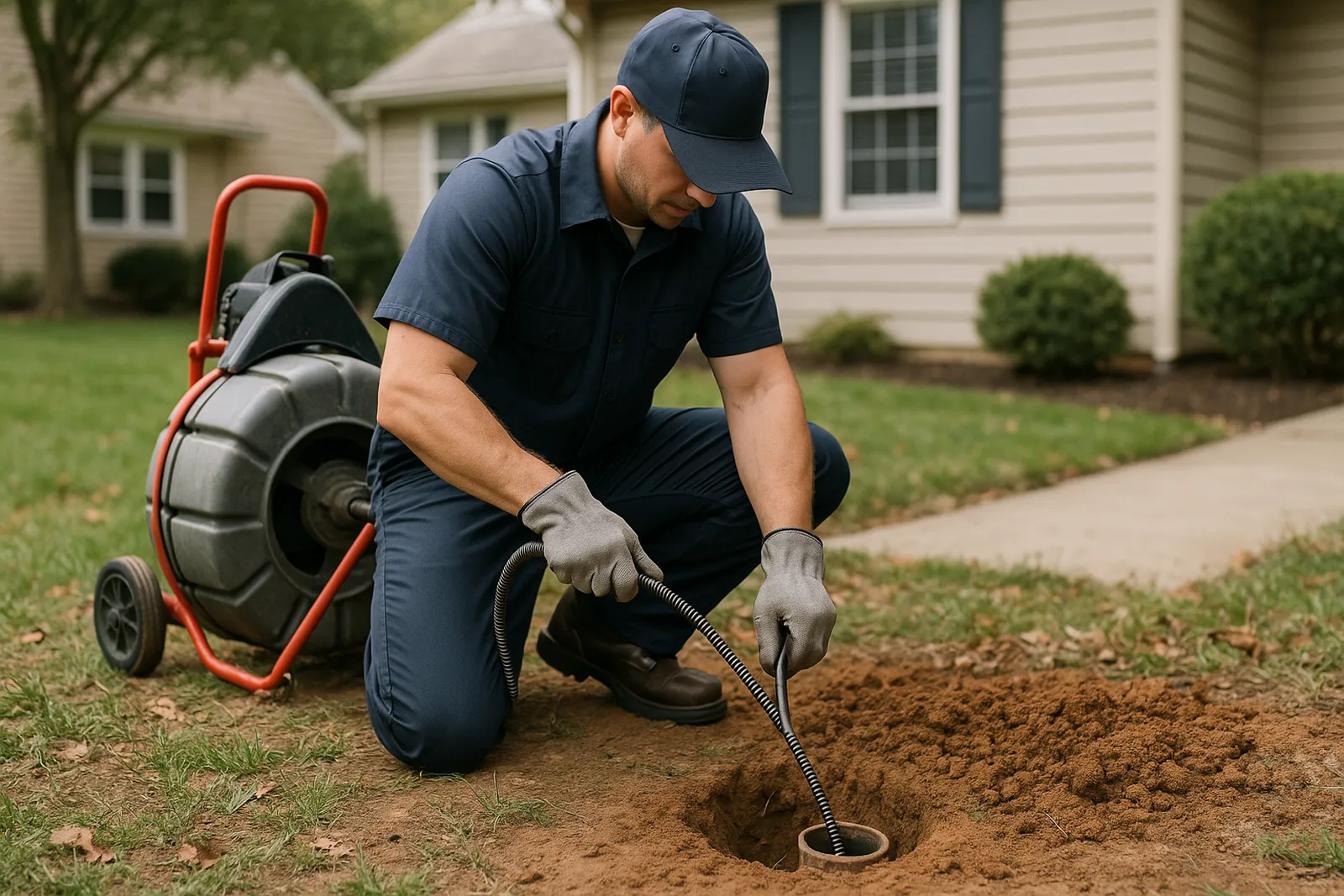
A licensed plumber has tools built for this kind of problem. The process usually starts with a drain inspection, followed by a video camera inspection run through the pipe to see what is inside and where the buildup or damage sits.
Depending on what the camera shows, a plumber may use drain snaking or mechanical cleaning to break up and remove material, or recommend professional drain cleaning suited to the pipe's condition. Hydro jetting is one option worth knowing about. It uses high pressure water to scour the inside walls of a pipe and clear buildup a standard snake might miss, while also confirming whether the underlying cause is a cracked section, a loose joint, or root intrusion.
Hydro jetting is not automatically right for every pipe, though. Older or more fragile lines may need a gentler approach, so the pipe's condition should guide the method a plumber recommends.
How to Prevent Dirt and Sediment From Blocking Your Drains
A few simple habits go a long way toward keeping soil and sediment out of your plumbing.
- Keep outdoor drains and catch basins clear of leaves, mud, and debris.
- Avoid washing large amounts of soil into household drains after gardening.
- Use drain screens where appropriate to catch grit before it enters the pipe.
- Keep gutters and downspouts clean so runoff drains away instead of pooling near the foundation.
- Direct runoff away from areas where underground pipes may already be vulnerable.
- Check for standing water around the property after storms.
- Address a recurring clog as soon as it becomes a pattern.
- Consider a professional inspection for older or repeatedly problematic drainage lines.
When Should You Call a Plumber?
Some situations call for a closer look than a homeowner can manage alone: multiple drains running slow, the same drain clogging no matter how often it gets cleared, water backing up repeatedly, or problems showing up after heavy rain. The same goes for signs of underground pipe damage, a persistent odor, or when DIY methods only fix things for a few days.
A professional inspection can determine whether a blockage is simple and isolated, or a sign of something deeper in the drainage line.
The Bottom Line: Do Not Ignore Recurring Sediment Buildup
Dirt and sediment may not seem like a serious threat, but repeated buildup can steadily reduce a pipe's usable diameter and lead to real drainage problems. Clearing the current clog matters, but understanding how the sediment got in there matters just as much.
If drains in your home keep slowing down or clogging for no clear reason, a professional drain cleaning visit can identify the real cause.
FKRIV Plumbing & Heating Inc proudly serves homeowners in Bensalem, Yardley, Warminster, and Jamison with dependable drain cleaning and plumbing services.
Frequently Asked Questions
- Can dirt and soil really clog household drains?
Yes. Soil, sand, grit, and sediment can accumulate inside drainage pipes and restrict water flow, especially when they enter through damaged pipes, loose joints, or runoff.
- How does sediment get into underground drain pipes?
Sediment can enter through cracks, separated pipe joints, root damaged sections, outdoor drainage connections, or other openings in underground pipes.
- What are the signs of a sediment blockage?
Common signs include slow drainage, recurring clogs, gurgling sounds, unpleasant odors, and water backing up in lower level drains.
- Can a drain snake remove soil and sediment?
A drain snake may break through or loosen some blockages, but it may not completely remove compacted sediment or address the reason it entered the pipe.
- Is hydro jetting good for sediment buildup?
Hydro jetting can be effective for certain sediment and debris buildups because high pressure water can clean the inside walls of a pipe. However, the pipe's condition should be considered before choosing this method.
- How can I prevent sediment from clogging my drains?
Keep outdoor drains clear, avoid washing large amounts of dirt into household drains, maintain gutters and runoff paths, and investigate recurring blockages before they become more serious.