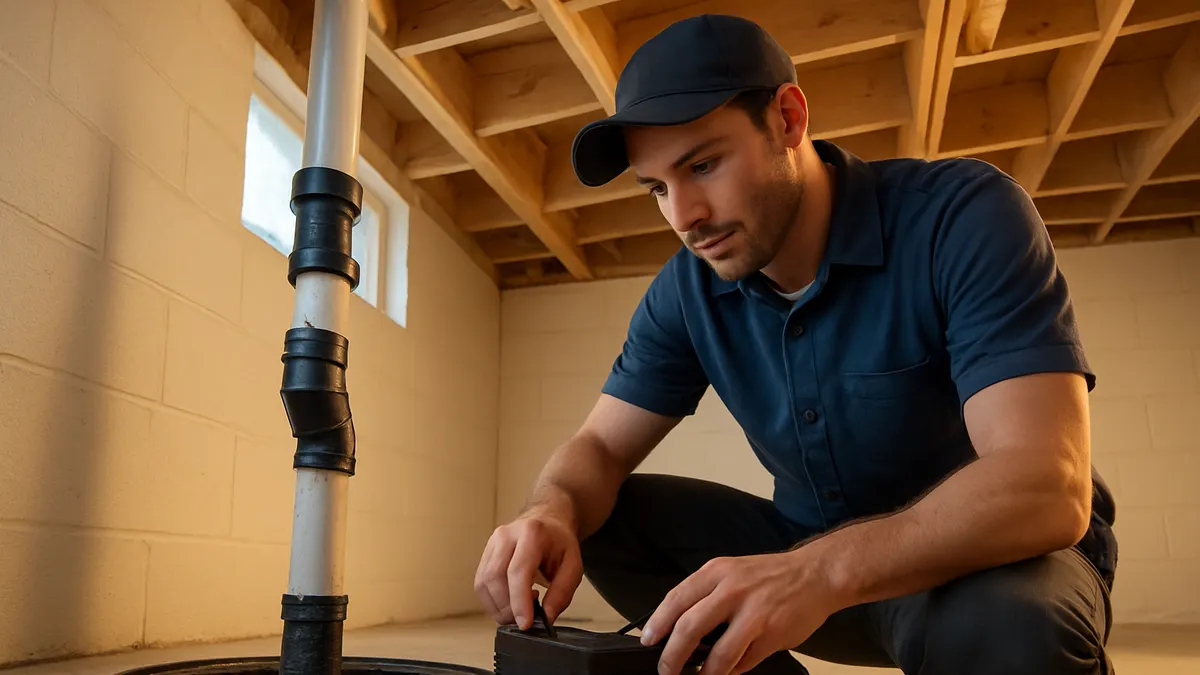
A backup sump pump is a secondary pump that activates automatically when your primary pump fails or loses electricity. It protects the basement during outages, breakdowns, and heavy rain that overwhelms one pump. The two types — battery-powered and water-powered — both sharply reduce the risk of flood damage, mold, and foundation problems.
A sump pump has one job, and it does that job out of sight — until the night it does not. The power drops during a storm, the motor falls silent, and water that should be moving away from your foundation starts collecting on the basement floor instead. By morning it is a cleanup, not a rainfall.
A backup sump pump system exists for exactly that scenario. It is a second, independent pump that takes over when the primary unit loses power or fails, and it is one of the most cost-effective protections available to any homeowner with a basement.
Key Takeaways
- Power outages are the leading cause of pump failure — and they hit exactly when the pump is needed.
- A backup engages automatically; no homeowner action required.
- Battery backups work in any home; water-powered units need municipal water pressure.
- Installation costs a fraction of basement water damage restoration.
- Backups still need testing twice a year to stay dependable.
What Is a Backup Sump Pump System?
A backup sump pump is a second pump installed in the same pit as your primary unit, mounted slightly higher and powered independently of household electricity. It sits idle under normal conditions. When water rises past the level the primary pump should have cleared, the backup's float switch trips and it takes over.
How a Backup Sump Pump Works, Step by Step
- Groundwater flows through the drain tile around your foundation into the sump pit.
- The primary pump's float rises and the pump discharges water away from the house.
- If that pump fails — no power, burned motor, stuck float, jammed impeller — water keeps rising.
- A few inches higher, the backup's float activates and it discharges through its own line or a shared line with a check valve.
- The system sounds an alarm or sends a phone alert so you know the backup ran.
That last step matters: a backup running silently can hide a dead primary pump for months.
Why Primary Sump Pumps Fail
A single pump is a single point of failure. The common causes:
- Power loss. Severe storms bring heavy groundwater and downed lines together.
- Motor burnout. Most residential pumps last seven to ten years, less under heavy use.
- Stuck float switch. A float pinned against the pit wall leaves the pump blind.
- Clogged intake or impeller. Silt, gravel, and iron ochre accumulate over time.
- Blocked or frozen discharge line. Water that cannot exit backs into the pit.
- Undersized capacity. Average-duty pumps get overwhelmed by record rainfall.
Discharge problems tend to recur rather than happen once. If your pit refills with sediment each season or the outflow backs up after storms, having the line professionally cleared and camera-inspected treats the cause rather than the symptom.
The Main Benefits of Installing a Backup Sump Pump System
1. Continuous Protection During Power Outages
Heavy rain and power failures are correlated — the same storm that overloads your drain tile takes down the neighborhood grid. A battery backup keeps pumping for hours after the lights go out; a water-powered unit runs as long as municipal pressure holds. The basement stays dry through the exact conditions that flood homes without one.
2. Coverage When the Primary Pump Simply Fails
Pumps rarely announce their decline. A motor seizes or a switch sticks, and the unit sits dead in the pit for weeks until water is on the floor. A backup covers mechanical failure as well as outages, doubling your margin for error.
3. Real Reduction in Water Damage Costs
A few inches of standing water in a finished basement can mean replacing flooring, drywall, insulation, and baseboards, plus professional drying — before counting furniture and stored belongings. Against a bill that size, a backup is inexpensive, and unlike insurance it prevents the loss rather than reimbursing it.
4. Protection for Your Foundation and Indoor Air
Persistent moisture does slower, quieter damage than a single flood. Hydrostatic pressure against foundation walls encourages cracking, and sustained humidity feeds mold that affects air quality throughout the house. Because that moisture rarely announces itself, technicians use the same tools that pinpoint dampness behind walls and beneath floors to confirm whether a wet basement is groundwater intrusion or something else.
5. Insurance and Resale Advantages
Standard homeowners policies usually exclude groundwater seepage unless you carry a water backup or sump overflow endorsement, and some carriers offer better terms when a backup is installed. At resale, it answers the question every buyer asks about a below-grade space: does this basement stay dry?
Battery Backup vs. Water-Powered Backup
Both do the same job by very different means. The right choice depends on your water source, your pit layout, and how long outages usually last where you live.
| Feature | Battery Backup Pump | Water-Powered Backup Pump |
|---|---|---|
| Power source | 12V or 24V deep-cycle battery | Municipal water pressure |
| Works in a blackout | Yes | Yes |
| Typical run time | 5–12 hours of continuous pumping | Unlimited while city water pressure holds |
| Requires city water | No | Yes — not an option on well systems |
| Ongoing upkeep | Battery testing; replacement every 3–5 years | Annual valve check and backflow device testing |
| Operating cost | Battery replacement only | Uses roughly 1–2 gallons of city water per gallon removed |
| Main limitation | Finite run time in a long outage | Depends on steady municipal supply and code approval |
A third option is a whole-home standby generator, which keeps the primary pump running instead of replacing it — the priciest route, and best suited to homeowners already weighing backup power for other reasons.
What Installation Involves
A straightforward retrofit into an existing pit usually takes a few hours:
- Measure the pit to confirm room for a second pump and float.
- Size the backup to your water intake rate and vertical lift.
- Mount it above the primary so it engages only when needed.
- Tie into the discharge line with a check valve, or run a separate line where code requires.
- Install the battery and charger, or connect the water-powered unit through an approved backflow preventer.
- Fill the pit and unplug the primary pump to verify changeover and alarm.
Two details matter most: sizing and code compliance. An undersized backup buys minutes instead of hours, and water-powered units require backflow protection so pumped water cannot contaminate the potable supply. Bringing in a licensed, insured crew that works on homes across Bucks County means both are handled correctly the first time.
What It Costs
Pricing varies with pump capacity, pit condition, and how much new plumbing or wiring the installation requires. Professionally installed battery backup systems and water-powered units both fall into a similar planning range, with battery replacement every three to five years being the main recurring cost to budget for.
Basement water damage restoration, on the other hand, routinely balloons once flooring, drywall, and contents are involved. The math favors prevention.
Keeping a Backup System Reliable
A backup only helps if it works the day it is needed. A short annual routine is enough for most homes:
- Pour a bucket of water into the pit each spring and fall; confirm both pumps cycle.
- Check the battery indicator quarterly; replace it every three to five years.
- Clear silt, gravel, and debris from the bottom of the pit.
- Inspect the outdoor discharge line for blockages, ice, and grading away from the house.
- Verify the alarm still sounds and phone alerts still reach you.
These checks slot easily into a season-by-season upkeep schedule for the rest of the system, alongside water heater flushing and outdoor spigot shutoffs. Grouping them in spring and fall makes the list easier to remember.
Signs Your Home Needs a Backup System
A backup is worth prioritizing if any of these apply:
- Your primary pump runs during moderate rain, not just heavy storms.
- Your basement is finished, or stores anything you would hate to lose.
- Your neighborhood loses power more than once or twice a year.
- The house sits at the bottom of a slope or on slow-draining clay soil.
- Your pump is more than seven years old, or you have had water on the floor even once.
Chronic seepage is a separate problem — exterior grading, gutter extensions, and drain tile condition all play a role. A backup manages water that reaches the pit; it does not stop water from arriving.
Protecting Your Basement Before the Next Storm
A sump pump is one of the few things in a house that has to work perfectly on the rare occasion it is needed, usually under the worst conditions. A second pump removes that all-or-nothing risk, and it costs far less than a flooded basement.
The best time to install one is on a dry, ordinary weekday, not while water is rising and every plumber in the county is booked. A licensed technician can assess your pit, size the right capacity, and recommend the system that fits your home. To schedule an evaluation, reach out to FKRIV Plumbing & Heating Inc. at (215) 874-0592.
Frequently Asked Questions
Do I really need a backup sump pump?
If your basement depends on a sump pump to stay dry, yes. Power outages are the most common cause of pump failure, and they occur during the same storms that produce the most groundwater. Without a backup, an outage leaves the basement unprotected.
How long does a battery backup sump pump run during an outage?
Most deep-cycle battery systems provide roughly 5 to 12 hours of continuous pumping, and longer when the pump cycles intermittently. Run time depends on battery capacity, pump size, and how fast water enters the pit.
What is the difference between a battery backup and a water-powered backup?
A battery backup runs on a deep-cycle battery and works in any home. A water-powered backup uses municipal water pressure and needs no battery, but it only works on city water and consumes water while running.
Can a backup sump pump replace my primary pump?
No. Backup pumps are built for intermittent emergency use and move less water per minute than a primary unit. They supplement the main pump rather than carry the daily load.
How often should a backup sump pump be tested?
At least twice a year, ideally early spring and fall. Pour water into the pit until the backup float engages, and unplug the primary pump to confirm the changeover works.
Will homeowners insurance cover a sump pump failure?
Usually not under a standard policy. Groundwater seepage and pump failure generally require a separate water backup or sump overflow endorsement. Check your policy language and ask your agent how a backup affects coverage.