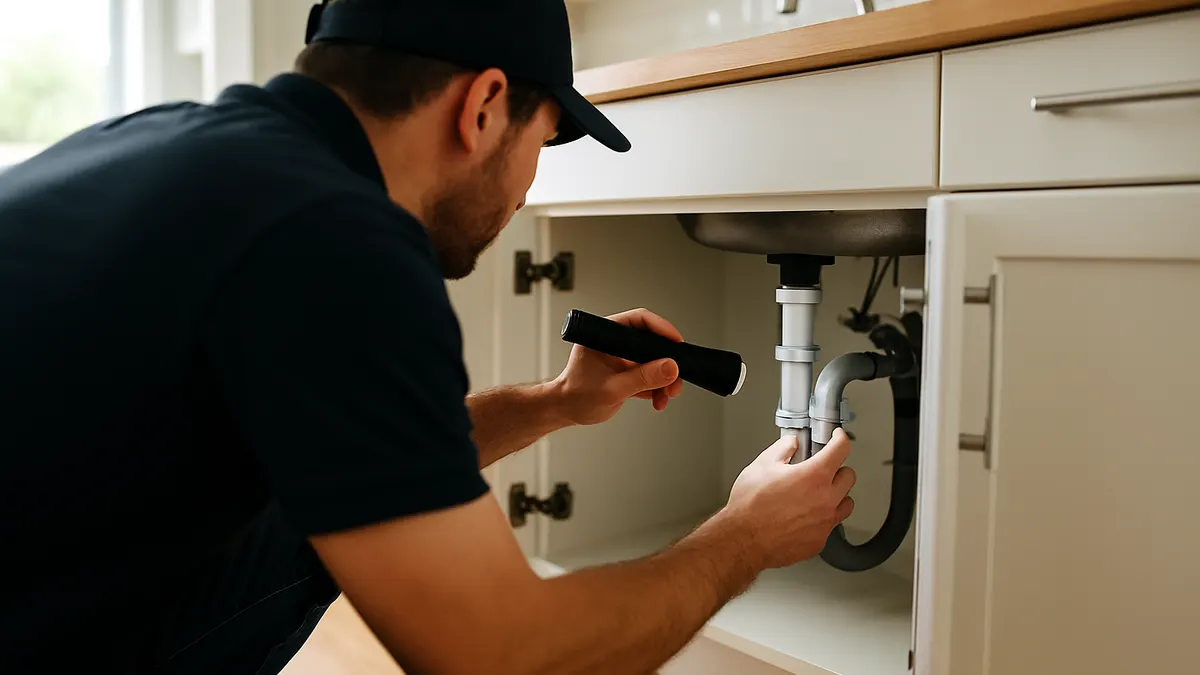
Kitchen plumbing problems can start with something as simple as a slow drain, a dripping faucet, or a small leak under the sink. Since the kitchen sink and other fixtures are used every day, small plumbing issues can quickly become a regular annoyance. Grease, food scraps, worn parts, and normal wear can all cause problems over time. Knowing the early warning signs and taking care of small issues early can help prevent bigger and more costly plumbing repairs.
1. Clogged Kitchen Sink Drains
A clogged kitchen sink is probably the most common complaint homeowners deal with. It builds up gradually as grease, coffee grounds, food scraps, and soap residue stick inside the pipe until water can barely get through.
Warning signs:
- Slow drainage after washing dishes
- Standing water in the sink basin
- Gurgling sounds from the drain
- A lingering odor near the sink
Prevention tips:
- Use a sink strainer to catch food particles
- Never pour grease or cooking oil down the drain — let it cool and toss it out
- Scrape plates before rinsing, and clean the drain regularly
Catching a slow drain early is much easier than clearing a full blockage later. If buildup is already an issue, this guide on how to clean a kitchen sink drain covers safe ways to clear it yourself.
2. Leaking Faucets
A dripping kitchen faucet might seem minor, but it shouldn't be ignored. Internal washers, seals, or cartridges wear down over time, and even a small leaking sink faucet wastes water and adds strain to the fixture. Watch for pooling around the base, dripping after shutoff, or reduced pressure.
Prevention tips:
- Avoid excessive force when turning the handle
- Check connections underneath occasionally
- Address a dripping faucet as soon as you notice it
- Replace worn components before they fail
A faucet repair is usually quick and inexpensive when caught early.
3. Leaks Under the Kitchen Sink
A leak under the kitchen sink can easily go unnoticed because it is often hidden inside the cabinet. Small leaks from loose connections, damaged supply lines, worn seals, or drain pipes can slowly cause dampness and water damage. Check for water stains, musty odors, warped cabinet wood, or puddles under the sink.
Prevention tips:
- Check the area under your sink every few months.
- Keep pipes and plumbing connections clear and easy to access.
- Fix small leaks as soon as you notice them.
- Avoid storing items in a way that puts pressure on the pipes.
If you notice signs of a hidden leak, learning about professional water leak detection methods can help you understand how plumbers find problems that are not easy to see.
4. Garbage Disposal Problems
If your kitchen has a garbage disposal, expect the occasional jam, odor, slow drainage, or leak around the base.
Prevention tips:
- Run cold water while it's on and for a few seconds after
- Avoid grease, fibrous foods, bones, and other hard materials
- Don't overload it, and clean it regularly to cut down on odors
5. Low Water Pressure at the Kitchen Faucet
Low water flow at the kitchen faucet does not always mean there is a major plumbing problem. Mineral buildup in the faucet aerator, debris inside the faucet, or a restricted water supply line can reduce the flow. Cleaning the aerator every few months can help maintain proper water flow.
Also, check whether the low pressure is limited to the kitchen faucet or affects other fixtures in your home. If the problem continues after basic cleaning, it may be worth having the plumbing checked to find the underlying cause.
6. Bad Odors Coming From the Kitchen Drain
A smelly kitchen drain is usually caused by food residue, grease, or organic material trapped inside the pipe, or buildup inside the garbage disposal.
Prevention tips: keep food scraps out of the drain, clean the sink and drain area regularly, flush with hot water after use, and keep the garbage disposal clean.
7. Running or Constantly Refilling Fixtures
If water at the sink runs longer than it should, or a fixture keeps refilling on its own, that usually signals a worn component. Watch for unusual water flow or visible leaks, and have persistent issues inspected rather than repeating the same temporary fix.
Simple Ways to Prevent Kitchen Plumbing Problems
Good kitchen plumbing maintenance doesn't take much time — it's mostly about a few habits:
- Never pour grease or cooking oil down the drain
- Use drain strainers and check under-sink plumbing every few months
- Fix dripping faucets promptly, without forcing or overtightening handles
- Use the garbage disposal properly and avoid overloading it
- Clean faucet aerators when water flow decreases
- Pay attention to slow drainage and unusual odors
- Know where your kitchen's water shutoff valve is located
- Schedule a plumbing inspection when a problem keeps returning
These small habits are what separate homeowners who prevent plumbing problems from those facing a bigger repair.
When Should You Call a Professional Plumber?
Plenty of kitchen plumbing issues are manageable with basic maintenance. Other situations call for a professional plumber instead:
- A drain that keeps clogging no matter how often you clear it
- A pipe that's actively leaking, or water pooling inside the cabinet
- A sudden, unexplained drop in water pressure
- A leak coming from a pipe you can't easily reach
- Visible signs of water damage, or DIY fixes that haven't solved the problem
Catching these early can prevent costly water damage — it's worth learning the hidden signs of plumbing damage to watch for around your home. If you're dealing with any of the situations above, searching for plumbing services near me and bringing in a licensed plumber is a smart next step rather than waiting it out.
Need Help With a Kitchen Plumbing Problem?
Small kitchen plumbing issues can turn into bigger repairs if they are ignored. A slow drain, recurring clog, leak under the sink, or unusual odor is often an early sign that something needs attention. Taking care of these problems early can help prevent water damage and keep your plumbing working properly.
If your kitchen drain is slow or keeps clogging, professional help can make a difference. Homeowners looking for reliable plumbing services can turn to FKRIV Plumbing & Heating Inc. for experienced service and practical solutions. Contact our team to discuss your plumbing concerns and schedule the right service for your home. FKRIV Plumbing & Heating provides kitchen plumbing services throughout Bensalem, Doylestown, Bristol , and Jamison, PA.
FAQs About Kitchen Plumbing Problems
What are the most common kitchen plumbing problems?
Clogged drains, leaking faucets, under-sink leaks, garbage disposal problems, low pressure, and drain odors — most start small and worsen without maintenance.
What should you never put down a kitchen sink drain?
Grease, cooking oil, coffee grounds, and large food scraps — they stick to pipe walls and build up into a blocked sink or full clog.
Why is my kitchen sink draining slowly?
Usually grease or food buildup inside the pipe. If cleaning it doesn't help, it may be a deeper blockage best handled by a professional.
How can I prevent kitchen sink clogs?
Use a sink strainer, avoid pouring grease down the drain, scrape food scraps into the trash first, and clean the drain regularly.
Why is water leaking under my kitchen sink?
Often loose connections, worn seals, damaged supply lines, or a drain pipe leak. Check the cabinet regularly and address dampness right away.
When should I call a plumber for a kitchen plumbing problem?
For recurring clogs, active leaks, persistent low pressure, hidden leaks, or any issue DIY repairs haven't been fixed — addressing it early prevents worse water damage.