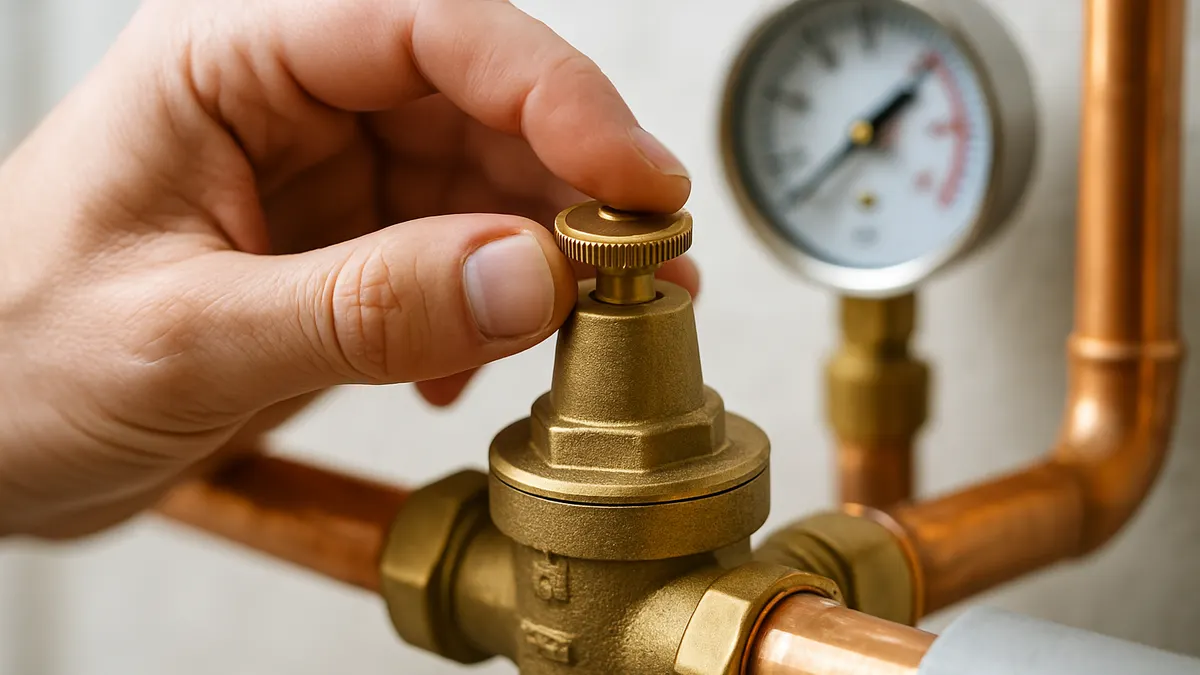
Water pressure affects every shower, faucet, and appliance in your home. Too little is frustrating. Too much can quietly wear down your plumbing.
High water pressure in house plumbing often goes unnoticed. A strong shower feels like a perk, so many homeowners never question it. Meanwhile, the extra force keeps stressing pipes, fixtures, and appliances. Spotting it early can prevent leaks and costly repairs.
This guide explains what counts as high pressure, the warning signs, common causes, how to test it, and how to fix it.
What Is Considered High Water Pressure in a House?
Water pressure is the force that pushes water through your pipes. It is measured in pounds per square inch (psi).
Most home water pressure falls between 40 and 80 psi. Pressure that stays above 80 psi is generally considered too high. Treat this as a guide, not a strict rule, because conditions vary from home to home.
A few things affect residential water pressure:
- Your municipal water supply and how the utility sets pressure
- Elevation, since homes at the bottom of a hill often get more pressure
- Your distance from the main water line
A short change during the day is normal. The concern is consistently high pressure that never settles.
Signs of High Water Pressure in Your Home
High water pressure at home usually shows up through small, repeated problems.
Banging or Noisy Pipes
When fast-moving water stops suddenly, pipes can shake and bang. Learn more about pipe noise problems and its other causes.
Leaking Faucets or Fixtures
Drips that return after a repair can mean seals and connections are under constant strain.
Running Toilets
Excess pressure can stop a fill valve from shutting off fully. If your tank refills on its own, see this guide on how to fix a running toilet.
Water Heater Problems
Heated water expands. When pressure is already high, the water heater has less room to cope, and its relief valve may drip.
Shorter Fixture Lifespan
Faucets, valves, and appliances may wear out sooner than expected.
Unusually Strong Water Flow
A shower that feels like a power washer can be a clue. Strong flow alone does not prove a problem, but it is worth checking.
What Causes High Water Pressure in a House?
The cause decides the fix, so it helps to know the common ones:
- High municipal water pressure: Some utilities supply water at a high pressure.
- Elevation: Homes at lower points get more pressure from the water supply.
- A failing pressure reducing valve (PRV): This valve lowers incoming pressure. When it wears out, pressure can climb.
- An incorrectly adjusted pressure regulator: A regulator set too high lets too much pressure through.
- Thermal expansion: In a closed plumbing system, heated water has nowhere to go, so pressure rises.
- Local supply changes: Utility upgrades can shift pressure in a neighborhood.
How to Test Water Pressure at Home
Water pressure testing is simple. A residential pressure gauge costs about $10 at a hardware store.
- Turn off all water use in the house, including the dishwasher and washing machine.
- Screw the gauge onto an outdoor faucet or hose connection.
- Open the faucet fully.
- Read the dial.
This reading is your static water pressure, meaning pressure when no water is moving. Pressure while water is running is usually lower, since open fixtures draw water away. Static pressure is the number that matters most for plumbing stress.
Check at different times of day, because pressure can change. Consistent readings above 80 psi suggest a problem.
What Problems Can High Water Pressure Cause?
High pressure does not mean a pipe will fail tomorrow. But constant excess pressure adds stress over time. It can lead to:
- Leaking plumbing connections and fittings
- Damaged faucets and valves
- Extra wear on toilets and water heaters
- Shorter appliance life
- More water use, since fixtures release more water per minute
- More frequent plumbing repairs
How to Fix High Water Pressure in a House
The right fix depends on the cause.
Adjust or Replace the Pressure Reducing Valve
A PRV sits where water enters your home and lowers incoming pressure. If it is set too high or worn out, a plumber can adjust or replace it.
Install a Pressure Regulator
If your home has no regulator and the supply pressure is high, one can keep incoming pressure at a safe level.
Address Thermal Expansion
When water heats up, it expands. In a closed system, a properly installed expansion tank gives that extra water somewhere to go.
Repair Faulty Plumbing Components
Defective valves or regulators may need professional repair or replacement.
Get Professional Plumbing Help
Call a plumber if pressure stays high, a regulator seems to be failing, leaks keep coming back, the water heater is affected, or you are unsure how to adjust the system safely. Skip complicated DIY repairs, as mistakes can cause leaks or damage.
How to Prevent High Water Pressure Problems
- Check your household water pressure a couple of times a year
- Watch for leaks and unusual pipe noises
- Have an aging pressure regulator inspected
- Fix small plumbing issues early
- Follow manufacturer guidance for your water heater
When Should You Call a Plumber?
Call a professional when:
- Pressure readings stay consistently too high
- A pressure regulator is not working correctly
- Fixtures leak again and again
- Pipes make unexplained noises
- Your water heater shows pressure problems
- You cannot find the source
If any of this sounds familiar, a plumber can test your pressure and find the cause. For persistent high pressure, leaks, or regulator trouble, FKRIV's team can help with plumbing repair company and get your system back to a safe pressure.
FKRIV Plumbing & Heating also serves Doylestown, Levittown , Horsham, Bristol, and Bensalem.
Frequently Asked Questions About High Water Pressure
What is considered high water pressure in a house?
Most homes run between 40 and 80 psi. Pressure that stays above 80 psi is usually considered high water pressure in house plumbing.
How do I know if my house has high water pressure?
Look for banging pipes, leaking faucets, running toilets, or a dripping water heater valve. A pressure gauge on an outdoor faucet confirms it.
Can high water pressure damage pipes?
Over time, yes. Constant excess pressure stresses pipes, fittings, fixtures, and appliances. It rarely causes sudden failure, but wear adds up.
How can I lower the water pressure in my house?
Usually with a pressure reducing valve or regulator, set or replaced by a plumber. The right option depends on the cause.
Does high water pressure increase my water bill?
It can. Fixtures release more water per minute, and leaks waste more. The effect varies from home to home.
When should I call a plumber for high water pressure?
Call when readings stay above 80 psi, leaks repeat, pipes bang, or your water heater is affected.