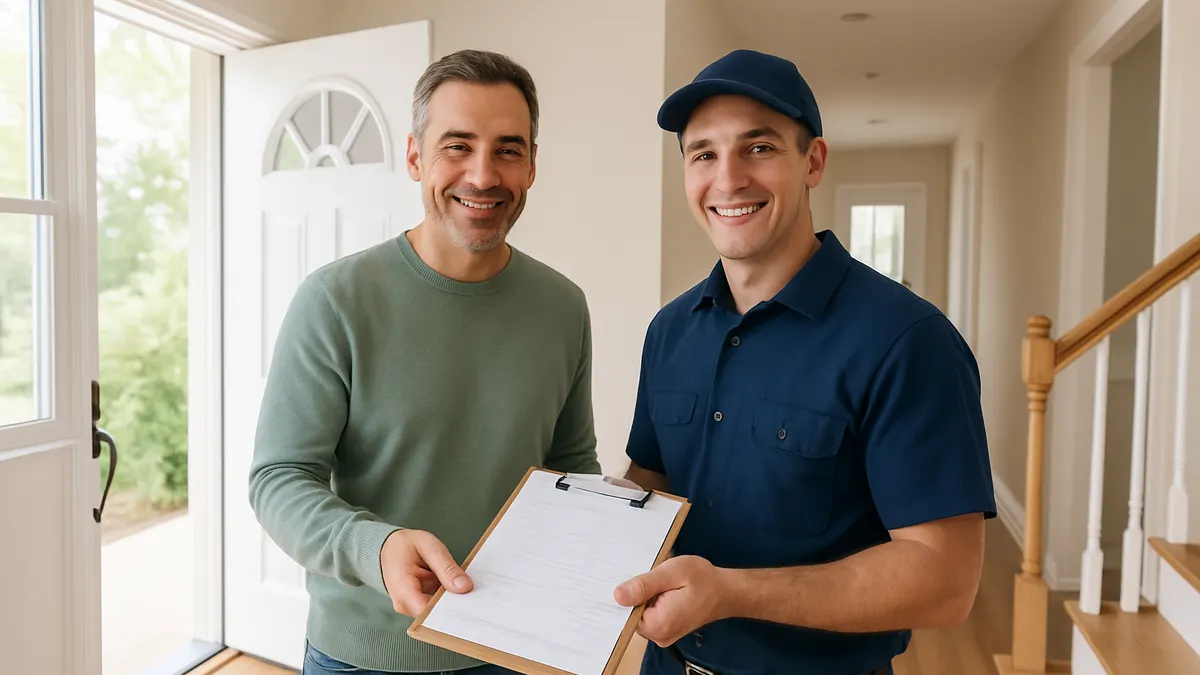
To choose the right plumber for your home, confirm the company is licensed, registered, and insured in your state; verify it has direct experience with your specific system; get a written estimate before any work begins; read recent reviews for patterns rather than star averages; and check that real emergency service is available. A company that does all five well is worth keeping for the next twenty years.
Nobody shops for a plumber on a good day. The search usually starts with water somewhere it should not be — under a sink, behind a wall, spreading across a basement floor — and the first company to answer the phone gets the job. That is how a lot of homeowners end up paying two different contractors to fix the same leak.
The better approach is to choose your plumber before you need one. This guide covers what actually separates a dependable plumbing company from a truck with a magnet sign on the door: how to verify credentials, how to match a plumber to the job, what a fair estimate looks like, and the warning signs that should end a conversation early.
What Makes a Plumber the “Right” Plumber?
The right plumber is not simply the lowest bid or the fastest arrival. It is the company that combines four things at once:
- Credentials — proper registration, insurance, and any licensing your municipality requires.
- Relevant experience — hands-on work with your specific system, whether that is a 1950s cast-iron drain stack or a modern tankless water heater.
- Transparency — clear pricing, written estimates, and honest guidance on what needs fixing now versus what can wait a season.
- Availability — a real human answering the phone at eleven o'clock on a Sunday night.
Miss any one of those four and the relationship eventually costs you money, either in repeat visits or in damage that could have been prevented.
Step 1: Verify Licensing, Registration, and Insurance
How plumbing credentials work in Pennsylvania
Pennsylvania regulates plumbing at the municipal and county level rather than through a single statewide plumbing license, so the exact requirements shift from township to township. What applies everywhere in the state is contractor registration: anyone performing home improvement work must be registered under the Home Improvement Consumer Protection Act, and that registration number belongs on estimates, contracts, and advertising.
Ask for the number, then look it up. A company that hesitates has already answered the question. There is a practical benefit, too, in hiring a firm that deals with township permit offices every week — inspections get scheduled sooner and jobs stall less often.
Insurance is not a formality
Two policies matter. General liability covers damage to your property if something goes wrong. Workers' compensation covers injuries that happen on your job site — and without it, an injured technician may have grounds to pursue a claim against you as the homeowner. Ask for a certificate of insurance sent directly from the insurance agency rather than a photocopy handed over at the door.
Step 2: Match the Plumber to the Job
Plumbing is a wide trade. The technician who is excellent at swapping fixtures is not automatically the right person to trace a slab leak or size a sump system. Use this table to decide what kind of specialist your situation actually calls for.
| If you need… | Look for a plumber who… |
|---|---|
| Routine repairs — leaky faucets, running toilets, failed shut-off valves | Offers flat-rate pricing and same-week scheduling |
| Recurring clogs and slow drains | Uses camera inspection and hydro jetting, not just a hand auger |
| Water heater replacement or service | Works on both tank and tankless units and pulls permits |
| Basement water, flooding, or a failing pit pump | Installs and services sump pumps, battery backups, and check valves |
| Whole-home repiping or a bathroom remodel | Carries commercial-grade tooling and coordinates with inspectors |
| Genuine emergencies | Answers live around the clock and dispatches from inside your service area |
That distinction matters more than most homeowners expect. A company that meets every clog with a hand auger will be back at the same drain twice a year. A company that sends a camera down the line before choosing a tool will find the root intrusion or bellied section causing the blockage and solve it once.
The same logic applies below grade. A homeowner with a flood-prone basement needs a contractor who works on pit pumps and battery backups week in and week out rather than occasionally, because sizing, discharge routing, and backup selection all take repetition to get right.
Step 3: Read Reviews the Right Way
A star average tells you almost nothing on its own. Patterns tell you everything. When you scan reviews, look for:
- The same technicians named repeatedly — low turnover usually means good training and a stable crew.
- How the company responds to criticism. Professional and specific is a good sign; defensive is not.
- Reviews describing the type of work you actually need, not just quick faucet swaps.
- Recency. A wall of five-star reviews from three years ago says little about the crew working today.
Check more than one platform, too. Google, the Better Business Bureau, and Angi each attract a different kind of reviewer, and the composite picture is more honest than any single source.
Step 4: Get a Written Estimate Before Anyone Picks Up a Wrench
Flat rate versus hourly
Flat-rate pricing quotes the entire job up front, so you know the number before work starts and the plumber absorbs the risk if the job runs long. Hourly pricing bills time plus materials, which can be cheaper on genuinely simple work but leaves the final figure open. Neither model is dishonest. What matters is that the company tells you which one it uses before the visit, not after.
What a complete estimate includes
- Scope of work written in plain language, not trade shorthand
- Parts and materials, with brands or grades named where it affects cost
- Labor cost and the payment schedule
- Permit fees, where the work requires them
- Warranty terms covering both parts and labor
- The contractor's registration number
Be cautious about firm quotes given over the phone without anyone looking at the system, and be more cautious about large deposits requested before materials have been ordered. If you are comparing figures across several companies, a breakdown of what plumbers charge by the hour and why the rates vary so widely is a useful next read.
Step 5: Ask How They Diagnose, Not Just How They Repair
Good plumbers diagnose before they quote. Leak detection is the clearest test of this. A company equipped with thermal imaging, acoustic listening gear, and pipe cameras can pinpoint a slab leak without opening four walls, while a company without that equipment will guess, cut, and guess again. Reading up on the equipment used to trace moisture behind finished walls makes it much easier to tell which approach you are being offered.
Ask one more question while you are at it: what happens if the diagnosis changes mid-job? A trustworthy company stops, explains the new finding, and gets your approval in writing before continuing. A less trustworthy one keeps working and presents the bill at the end.
Step 6: Confirm What “Emergency Service” Actually Means
A burst supply line can release hundreds of gallons in an hour, and a sewer backup is a health hazard long before it is an inconvenience. Twenty-four-hour availability is only useful if it is real, so ask three specific questions: Is the after-hours line answered by your own staff or by an outside call center? What is the typical response time to my ZIP code? Are emergency rates disclosed before dispatch?
Anyone who wants dependable same-day repair work should also confirm that crews are dispatched locally rather than routed in from two counties away. It is also worth knowing what to do in the first ten minutes of a plumbing emergency, because shutting the main valve before help arrives often determines whether you are drying a floor or replacing one.
Red Flags That Should End the Conversation
- Cash-only demands or a refusal to put anything in writing
- No verifiable physical business address
- Pressure to authorize additional work on the spot, today only
- A bid dramatically below every other quote you have received
- Vague or shifting answers about registration, insurance, or warranty
- Unmarked vehicles and technicians without company identification
Any one of these is reason enough to keep looking. None of them are worth the money you might save.
Step 7: Think in Decades, Not in Single Repairs
The real payoff from choosing carefully arrives years later. A plumber who has already seen your system diagnoses faster, remembers which valves are original to the house, and can tell you which aging component is likely to fail next winter. That institutional memory is worth more than any one discount.
Many homeowners who want one company handling everything from the water heater to the sewer line start with a single repair and stay with the same company for decades, precisely for that reason. Pairing that relationship with a seasonal upkeep routine you actually follow is what keeps small problems from turning into emergencies. If a renovation is on your horizon, it is also worth reading about choosing fixtures that match your existing supply lines before you buy anything.
In Summary
Choosing a plumber is a modest amount of homework that pays off for as long as you own the house. Verify credentials, match the specialty to the job, insist on a written estimate, ask how problems get diagnosed, and confirm that emergency help is genuinely available. Homeowners across Levittown, Yardley, Jamison, Warminster, and the wider Bucks County area rely on FKRIV Plumbing & Heating Inc for exactly that combination of licensed workmanship, straightforward pricing, and fast local response.
Frequently Asked Questions
How much does it cost to hire a plumber?
Most homeowners pay a service or diagnostic fee to get a technician on site, then either a flat rate for the job or an hourly rate plus materials. Simple repairs typically land in the low hundreds; water heater replacement, repiping, and sewer work run considerably higher. Always ask whether the diagnostic fee is credited toward the repair if you approve the work.
Should I get more than one quote?
For emergencies, no — stopping the damage comes first. For planned work over roughly a thousand dollars, two or three written quotes are worth the time. Compare scope and warranty alongside price, since the cheapest bid often excludes permits, haul-away, or parts warranty.
What is the difference between a plumber and a plumbing contractor?
A plumber is the individual tradesperson doing the work. A plumbing contractor is the licensed and registered business that employs plumbers, carries the insurance, pulls permits, and stands behind the warranty. For anything beyond a minor repair, you want to hire the contractor.
How do I check whether a plumber is properly credentialed in Pennsylvania?
Ask for the Home Improvement Contractor registration number and verify it through the Pennsylvania Attorney General's office. Then check with your township or borough code office, since plumbing licensing in Pennsylvania is issued locally rather than statewide.
Is a twenty-four-hour plumber worth paying more for?
For active leaks, sewage backups, or no water at all, yes. The after-hours premium is almost always smaller than the cost of water damage restoration. For a dripping faucet or a slow drain, wait for standard business hours and pay standard rates.
How long should a plumbing repair be under warranty?
One year on labor is a common baseline for repairs, with parts covered by the manufacturer's own warranty, often longer. Installations such as water heaters frequently carry multi-year coverage. Get the terms in writing, and confirm what would void them.