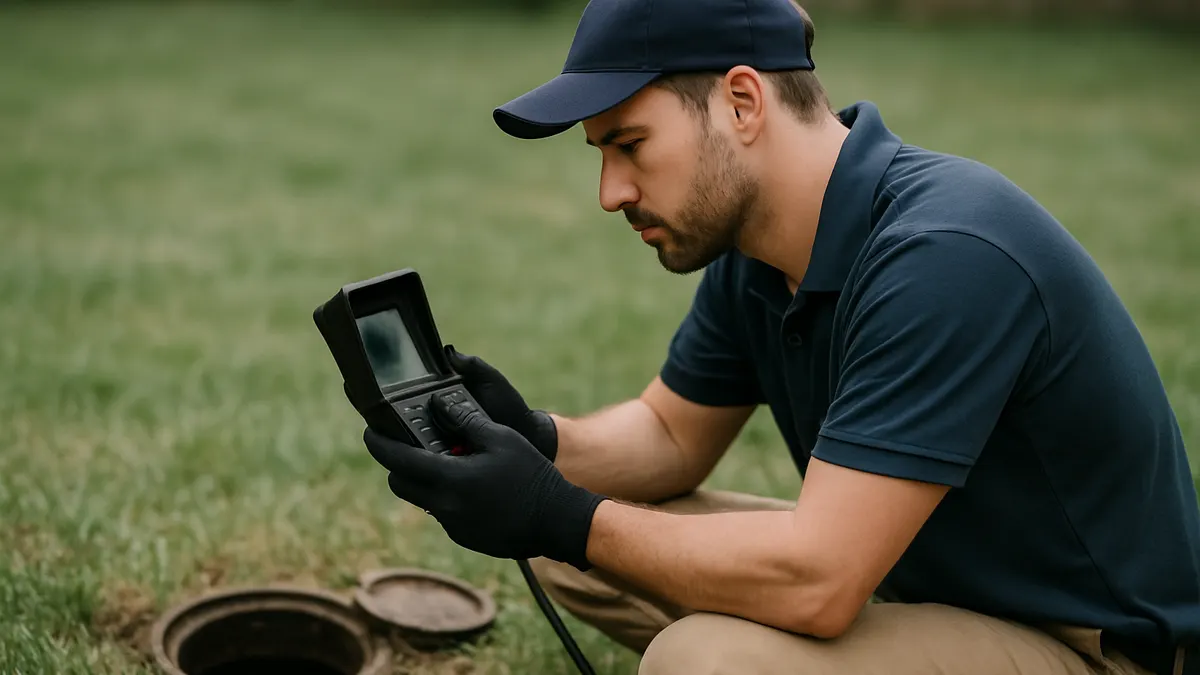
A failing sewer line is one of the few plumbing problems that can shut down an entire household. Drains back up all at once, the yard starts to smell, and suddenly you face a decision most homeowners have never had to make: patch the line, or replace it?
Repair your sewer line when the damage is isolated to one section and the surrounding pipe is still structurally sound. Replace it when the pipe is failing in several places, has corroded along its full length, or has reached the end of its material lifespan. A camera inspection is what turns that judgment call into a clear, evidence-based decision.
Essential Insights for Homeowners
- Repair is usually appropriate when damage affects roughly 30% or less of the line.
- Replacement makes more financial sense when the pipe is old clay, Orangeburg, or heavily corroded cast iron.
- A video camera inspection should always come before any quote — no exceptions.
- Trenchless methods can often solve the problem without tearing up your driveway or lawn.
- Chronic, repeating clogs often point to a structural failure underground.
Sewer Line Repair vs. Replacement: Quick Comparison
Here is how the two approaches compare in practice.
| Factor | Repair | Replacement |
| Best suited for | Damage isolated to one section or joint | Widespread deterioration or an aging pipe |
| Typical scope | Roughly 3 to 10 feet of pipe | The full line from the house to the city main |
| Time on site | A few hours to a single day | One to three days in most cases |
| Yard disruption | Minimal, especially with trenchless methods | Moderate to significant, depending on method |
| Expected lifespan | Limited by the condition of the surrounding pipe | 50 to 100 years with modern PVC or HDPE |
| Upfront cost | Lower | Higher, but eliminates repeat service calls |
| Long-term risk | Higher if the rest of the line is aging | Very low once complete |
What Your Sewer Line Actually Does
Your sewer line, or sewer lateral, is the single underground pipe carrying all wastewater from your home to the municipal main or septic tank. Every sink, shower, toilet, and washing machine eventually feeds into it.
Because it relies entirely on gravity and a consistent slope, it has little tolerance for shifting or sagging. A dip of even an inch creates a low spot where solids settle for years.
It is also the one pipe you never see, which is why the early signs of underground pipe damage are worth learning before you ever need them.
Why Sewer Lines Fail
Sewer lines rarely fail suddenly. They fail slowly, for reasons that are well understood:
- Tree root intrusion. Roots follow moisture into hairline cracks and loose joints, then expand until they block flow or split the pipe.
- Corrosion and age. Cast iron rusts from the inside out, clay turns brittle, and Orangeburg — a tar-and-paper pipe used into the mid-1900s — deforms and collapses.
- Ground movement. Freeze-thaw cycles, settling soil, and nearby construction shift pipes out of alignment, creating offset joints that catch debris.
- Bellies and sags. A section that settles lower than the rest holds standing water permanently.
- Grease and scale buildup. Years of accumulation narrow the pipe until normal use causes a backup.
Roots deserve extra attention in older neighborhoods, where a mature maple or willow can find a lateral from thirty feet away. Our breakdown of what tree roots do inside a sewer line explains why cutting roots without sealing the crack only buys a season or two.
Warning Signs You Should Not Ignore
Any one of these can be a routine clog. Two or more together usually point to the main line:
- Several drains running slowly at the same time
- Gurgling from a toilet when the washing machine drains
- Sewage odor in the basement, near a floor drain, or outdoors
- Wastewater backing up into a tub or shower — often the first fixture to show it
- A patch of lawn that is unusually green, soggy, or sunken
- Clogs that return within weeks of being cleared
That last point matters most: when a line clogs repeatedly in the same spot, something structural is catching debris. Snaking treats the symptom; a camera finds the cause.
How a Sewer Line Problem Gets Diagnosed
A credible recommendation follows a consistent process:
- Review the history. How old is the home, what is the pipe made of, and how often have backups occurred?
- Clear enough line to see. A blocked pipe cannot be inspected, so cabling or hydro jetting often comes first to open a path for the camera.
- Run a video camera inspection. A waterproof camera travels the full lateral, recording cracks, root masses, offsets, bellies, and scale.
- Locate and mark the damage. A transmitter in the camera head pinpoints the exact position and depth from the surface.
- Deliver written findings. You should receive footage, the location of each defect, and an explanation of your options — not just a price.
If your line is blocked to the point that a camera cannot pass, that first step is where the work begins. Scheduling drain cleaning in Richboro clears the obstruction so an accurate inspection is possible, which keeps you from paying for the wrong fix.
When Sewer Line Repair Is the Right Call
Repair is the better choice when the camera shows a healthy pipe with one clear problem area — a single cracked section, one offset joint, or root intrusion at a single point in a line that is otherwise smooth and correctly sloped.
Trenchless Repair Methods
Trenchless techniques restore a line with minimal digging, usually through one or two small access points:
- Cured-in-place pipe (CIPP) lining. A resin-saturated liner is pulled into the existing pipe and cured in place, forming a seamless new pipe inside the old.
- Pipe bursting. A head is pulled through the old line, fracturing it outward while drawing new HDPE pipe into the same path.
Both spare mature landscaping and driveways. Lining works when the host pipe still holds its shape; bursting is the option when it does not. Homeowners weighing the numbers often ask about trenchless sewer repair costs in Bucks County, since access, depth, and pipe diameter all move that figure considerably.
Traditional Spot Repair
When damage sits at a shallow depth in an accessible spot, digging out and replacing a few feet of pipe is often the fastest and least expensive fix.
When Replacement Is the Smarter Investment
Replacement stops being the expensive option and becomes the sensible one under these conditions:
- The camera reveals damage in three or more separate locations
- The pipe is Orangeburg, or clay showing widespread cracking
- Cast iron has corroded to the point that the interior is scaled and pitted throughout
- A section has collapsed or the line has separated at a joint
- There is a significant belly holding standing water
- You have already paid for two or more repairs on the same line
The math is often clearer than it looks: three repairs over five years, each with its own service call and yard restoration, frequently cost more than one warrantied replacement with a fifty-year service life. If you are weighing cast iron versus PVC sewer pipe for a full replacement, that choice affects both longevity and root resistance for decades.
What Drives the Cost of Either Option
Any plumber who quotes a sewer line without inspecting it is guessing. The variables that determine price are:
- Length of the run. Distance from your foundation to the city main.
- Depth. Deeper lines mean more excavation, shoring, and time.
- What sits above the pipe. Lawn is straightforward; a driveway, sidewalk, or mature tree is not.
- Pipe material and diameter. These determine which methods are possible at all.
- Permits and municipal requirements. Work in the public right-of-way carries its own approvals and inspections.
- Restoration. Restoring the yard or driveway is a real line item and should appear in your estimate.
Ask for the findings and estimate in writing. Working with a company offering full-service plumbing services in Richboro means the team that diagnoses the line is accountable for the repair and the result.
A Simple Way to Decide
With the camera footage in hand, run through four questions:
- How much of the line is damaged? Under 30% points toward repair.
- How old is the pipe, and what is it made of? A modern PVC line with one crack is worth repairing; a seventy-year-old clay line likely has more cracks forming.
- How many repairs has this line already had? A second or third is a signal.
- How long will you stay? Replacement is a transferable asset that shows well at resale.
If three of the four lean toward replacement, that is your answer.
Protecting the Line After the Work Is Done
A new or repaired line should serve you for decades. A few habits keep it that way:
- Flush only toilet paper — wipes labeled flushable do not break down.
- Keep cooking grease out of the drain entirely.
- Plant trees and large shrubs well clear of the sewer path.
- Use a kitchen strainer to catch food solids.
- Schedule a camera inspection every three to five years in older homes.
Many homeowners also set up a preventive drain maintenance schedule so buildups are cleared long before they become emergencies.
Getting a Straight Answer About Your Sewer Line
Both are legitimate solutions. The right one depends on facts you can only get from inside the pipe: how much is damaged, where, and what condition the rest of the line is in. Any recommendation without that information is a guess, and guesses are expensive underground.
If you are dealing with recurring backups, a persistent smell, or a wet patch in the yard that never dries, the next step is a camera inspection and an honest conversation about what it shows. FKRIV Plumbing & Heating Inc serves homeowners across Richboro, Levittown, Yardley, Warminster, and Bucks County with licensed, insured sewer line diagnosis and repair — and a clear explanation of your options before any work begins.
Frequently Asked Questions
How do I know if my sewer line is broken or just clogged?
A clog affects flow only until it is cleared. A broken line produces recurring backups, sewage odors, soggy or sunken spots in the yard, and multiple slow drains at once. Only a camera inspection confirms the difference.
How long does sewer line replacement take?
Most residential replacements take one to three days. Trenchless work is often done in a single day; traditional excavation takes longer when depth, driveways, or permit inspections are involved.
Is trenchless sewer repair as durable as full replacement?
Yes, when the method matches the pipe. A properly installed CIPP liner carries roughly a fifty-year expected life, and pipe bursting installs entirely new HDPE. A collapsed or badly misaligned pipe, however, may still require open excavation.
Does homeowners insurance cover sewer line repair?
Standard policies usually exclude gradual wear, root intrusion, and age, though many insurers offer a service line endorsement that does cover it. Check your policy before work begins.
Can tree roots be permanently removed from a sewer line?
Cutting roots restores flow, but they return as long as the crack that let them in remains. A permanent fix means sealing or replacing that section.
Should I get a sewer inspection before buying a home?
Yes — especially for homes built before 1980 or with mature trees near the sewer path. A standard home inspection does not scope the lateral, and a failing line found after closing becomes your responsibility.