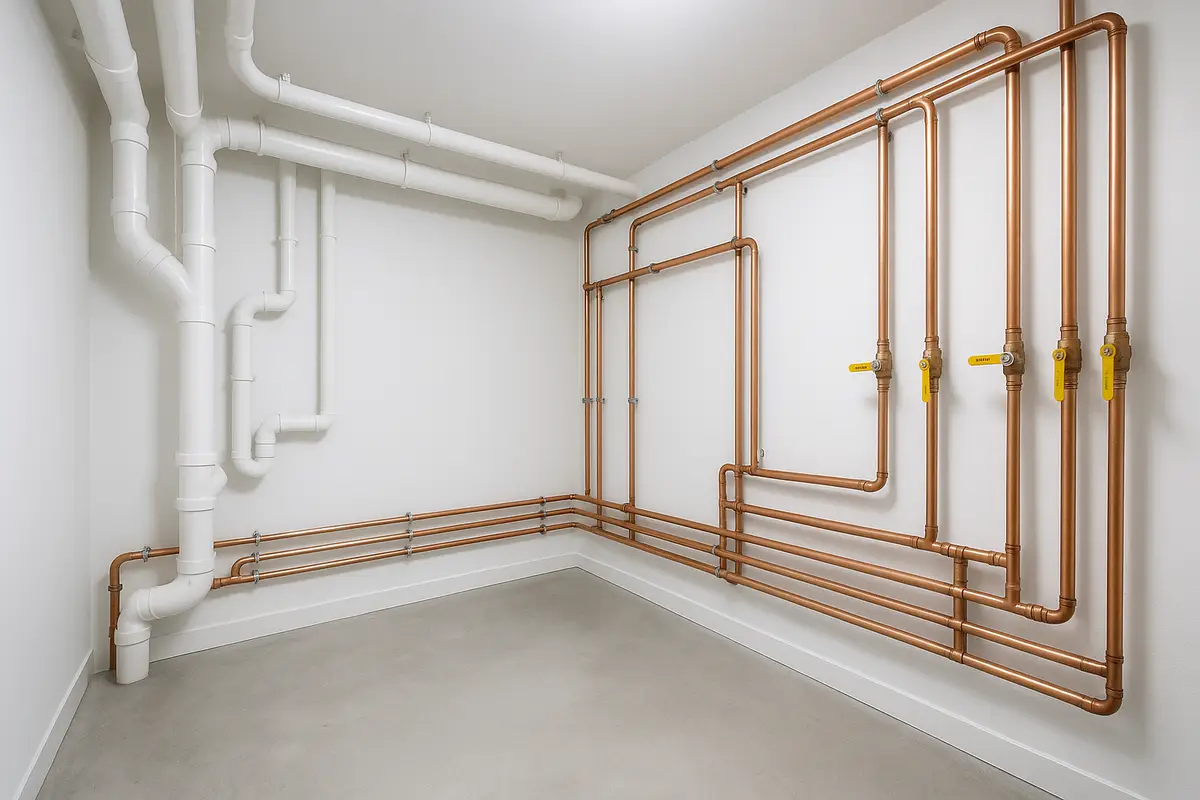
Most homeowners interact with their plumbing dozens of times a day — turning on the faucet, flushing the toilet, running the dishwasher — without giving much thought to what is actually happening behind the walls. That is perfectly normal. But when something goes wrong, even a basic understanding of how your home plumbing system operates can save you time, money, and a great deal of stress.
This guide breaks down the fundamentals of residential plumbing in plain language, so you can feel more confident as a homeowner and know when to call in a professional.
The Two Main Systems in Every Home
At its core, a residential plumbing system consists of two distinct networks that work together:
- The supply system — which brings fresh, pressurized water into your home
- The drain-waste-vent (DWV) system — which removes used water and waste safely
These two systems never mix. The supply side is always under pressure, while the drain side relies on gravity and venting. Understanding that distinction is the foundation of understanding how plumbing works.
How Your Water Supply System Works
Water enters your home from one of two sources: a municipal water main (city water) or a private well. From there, it travels through a main water line, past the main shutoff valve — the single most important valve in your home — and distributes to every fixture and appliance throughout the house.
Cold and Hot Water Paths
Cold water flows directly from the main supply line to every fixture that needs it: sinks, toilets, outdoor hose bibs, washing machines, and refrigerators.
Hot water takes a detour. A branch line from the cold supply feeds into your water heater, where the water is heated and then redistributed through a separate hot water line throughout the home. If you want to know more about how that process works and what to expect during installation, check out our Water Heater Installation Guide.
Water Pressure
Pressure is what drives water through your supply lines and out your faucets. Most homes operate between 40 and 80 PSI (pounds per square inch). Too low, and you get a weak trickle. Too high, and the excess pressure can damage pipes, joints, and appliances over time.
Low pressure is one of the most frustrating plumbing problems homeowners face. For practical solutions, the guide on improving water pressure covers the most common causes and how each one is addressed.
The Drain-Waste-Vent (DWV) System Explained
Once water has done its job — washing your hands, flushing the toilet, filling a pot — it needs a way out. That is the job of the DWV system, and it has three interconnected parts.
Drain Lines
Drain lines are the pipes inside your walls and floors that carry used water away from sinks, tubs, showers, and appliances. They slope downward at a calculated angle — typically 1/4 inch per foot — so gravity can do all the work without any pumps.
Waste Lines
Waste lines specifically carry solid waste and toilet water away from the home. They connect to the main drain stack, which runs vertically through the house and exits into either the municipal sewer system or a private septic tank.
Vent Lines
This is the part of the system most homeowners never think about — until something goes wrong. Vent lines run from your drain pipes up through the roof to the outside air. They serve two purposes: allowing sewer gases to escape safely and letting air into the drain system so water flows freely without creating a vacuum.
When vents get blocked, water drains slowly, toilets gurgle, and you may notice sewer odors in the house.
Sewer smells indoors are a clear signal that something is wrong with your venting or trap system. Our blog on common causes of sewer smell in the house explains what triggers each scenario and how it gets fixed.
Plumbing Fixtures and How They Connect
Every fixture in your home — sinks, toilets, showers, bathtubs, dishwashers, washing machines — connects to both the supply system (to receive water) and the DWV system (to discharge it). Here is a quick look at how each category works.
Sinks
Under every sink, you will find two supply lines (one hot, one cold), a P-trap, and a drain pipe. The P-trap is that curved section of pipe that always holds a small amount of standing water. That water creates a seal that blocks sewer gases from entering the living space. If a sink goes unused for a long time, that water can evaporate, which is why you might occasionally get an odor from a guest bathroom sink that rarely gets used.
Toilets
A toilet operates on a simple principle: a tank holds water, the flush handle triggers a flush valve to release it into the bowl, and the outgoing waste travels down the drain into the waste line. A fill valve then refills the tank automatically. Most toilet issues — running water, weak flushes, phantom flushing — trace back to worn fill valves or flapper seals.
Showers and Bathtubs
Showers and tubs connect to a mixing valve, which controls the balance of hot and cold water from both supply lines, and then drain through the DWV system. Shower and tub drains are among the most common spots for buildup of hair and soap residue, which is why they tend to be frequent candidates for drain cleaning.
Common Residential Plumbing Problems
Understanding how your plumbing works also means recognizing the warning signs when it starts to fail. Some of the most frequent issues homeowners encounter include:
- Clogged drains — often caused by grease, hair, soap buildup, or foreign objects
- Leaky pipes — pinhole leaks in copper or joints that have corroded over time
- Running toilets — usually a worn flapper or faulty fill valve
- Low water pressure — which can result from mineral buildup, leaks, or pressure regulator failure
- Water heater problems — sediment buildup, aging components, or thermostat failure
Many of these issues start small and become expensive if ignored. Routine attention and periodic professional inspections can catch problems before they escalate.
If you have ever noticed staining on walls or ceilings, unexplained spikes in your water bill, or soft spots near floors, those are all signals worth investigating. Our article on hidden signs of plumbing damage goes deeper into the subtle clues that homeowners often miss.
What to Do When a Plumbing Emergency Strikes
Even with the best maintenance, emergencies happen. A burst pipe, a backed-up sewer line, or a water heater failure can cause serious damage in a short amount of time. Knowing a few basic steps in advance can reduce the impact significantly:
- Know where your main shutoff valve is and how to turn it off
- Keep the area around your water heater and main valve accessible
- Never ignore slow drains — they often signal a developing blockage
- Call a licensed plumber quickly — water damage compounds with every hour
For a broader look at how to respond when things go sideways, our post on handling a plumbing emergency walks through the key steps homeowners should take immediately.
When to Call a Professional Plumber
Some plumbing tasks are genuinely DIY-friendly — unclogging a slow sink, replacing a showerhead, or swapping out a toilet flapper. But many others carry real risk if done incorrectly. You should always call a licensed plumber when:
- You are dealing with anything involving the main supply line or main drain stack
- There is visible water damage, mold, or signs of a hidden leak
- Your water heater needs replacement or significant repair
- Drain problems persist after basic DIY attempts
- You are planning a renovation that requires moving or adding plumbing
Working with a professional not only ensures the job is done right — it protects your home, your family, and your investment.
FKRIV Plumbing & Heating offers comprehensive residential plumbing services for homeowners throughout the area, backed by years of hands-on experience.
Keeping Your Plumbing System in Good Shape
Proactive maintenance is far less expensive than reactive repairs. A few good habits go a long way:
- Inspect visible pipes periodically for signs of corrosion, drips, or moisture
- Run water through infrequently used drains to keep P-trap seals intact
- Flush your water heater annually to remove sediment buildup
- Know the age and material of your pipes — older homes with galvanized steel or lead pipes may need upgrades
- Schedule periodic professional drain cleaning to prevent major blockages
For a structured approach to keeping your system in peak condition year-round, our seasonal plumbing maintenance checklist gives homeowners a practical schedule to follow.
Frequently Asked Questions
What are the two main plumbing systems in a home?
Every residential property has a water supply system, which brings pressurized clean water in, and a drain-waste-vent (DWV) system, which removes wastewater and manages sewer gases. These two systems work together but never share pipes.
Why does my drain gurgle when I flush the toilet?
Gurgling drains are almost always a venting issue. When water rushes through drain lines, it needs air to flow properly. If the vent stack is clogged or blocked, the system creates a vacuum that pulls air through nearby drain traps, producing that distinctive gurgling sound. This is a plumbing issue that should be evaluated by a professional.
How do I find the main water shutoff valve in my house?
In most homes, the main shutoff valve is located near where the supply line enters the house — often in a basement, utility room, garage, or along an exterior wall. In homes without basements, check near the water heater or in a crawl space access panel. Knowing its location before an emergency is essential.
How often should residential drains be professionally cleaned?
Most plumbing professionals recommend having your drains inspected and cleaned every one to two years, depending on usage and the age of your pipes. Homes with older plumbing, large families, or history of drain issues may benefit from more frequent service.
What causes low water pressure throughout the whole house?
Whole-house low pressure typically points to a problem with the main supply line, a failing pressure regulator, or widespread mineral buildup inside the pipes. Localized low pressure at a single fixture is usually a blockage in that specific line or a faulty aerator.
Is it normal for pipes to make noise?
Some noise — like a brief rush when you turn on a faucet — is completely normal. However, banging (often called water hammer), persistent rattling, or high-pitched squealing can indicate loose pipes, excessive pressure, or worn valve washers. These should be evaluated before they cause damage.
Serving Levittown, Yardley and Willow Grove
FKRIV Plumbing & Heating Inc. proudly provides residential and commercial plumbing services to homeowners and businesses throughout Levittown, Yardley, Willow Grove, and the surrounding communities in Bucks County and Montgomery County, Pennsylvania. Whether you need routine maintenance, emergency repairs, or a full system assessment, our licensed team is ready to help.