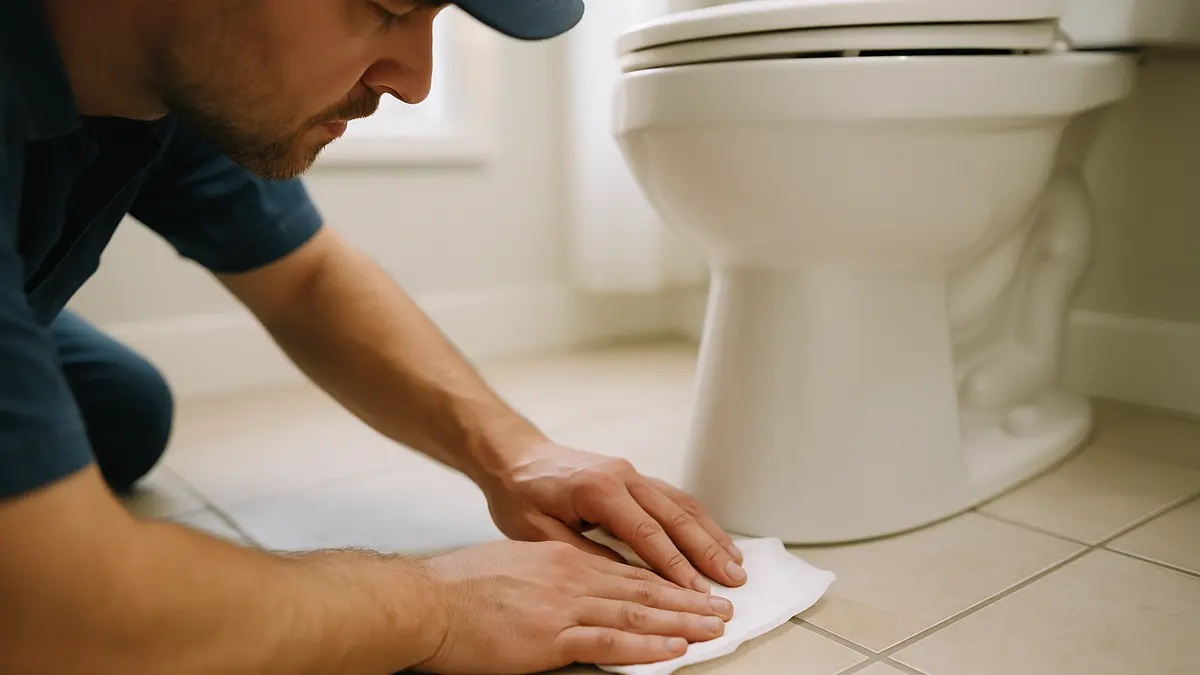
Water pooling around the bottom of your toilet does not always mean the toilet itself is cracked. A toilet leaking at the base can come from a worn wax ring, a loose toilet, a damaged flange, a leaking supply connection, or even condensation. Water often travels along the base before you notice it, so the real source can be harder to pinpoint than it looks. Finding it quickly matters, since moisture that sits too long can quietly damage the flooring or subfloor.
How to Tell Where the Toilet Leak Is Coming From
Water tends to run down the outside of the bowl and pool at the floor, so a toilet leak from bottom can look like it started right underneath even when the source is higher up. To narrow it down:
- Dry the toilet and surrounding floor, then check back in an hour.
- Note whether water appears only after flushing, or even when the toilet is not in use.
- Inspect the supply line and shutoff valve for drips.
- Look at the tank to bowl connection for moisture.
- Gently check whether the toilet rocks.
- Look for hairline cracks near the base.
- Consider condensation if the bathroom is humid.
If water appears mainly after flushing, the seal underneath is the likely cause. If it shows up without flushing, check the supply line, tank, or condensation first.
Common Causes of a Toilet Leaking at the Base
Several problems can create water around the toilet base, and they are not all equally serious.
1. Failed or Damaged Wax Ring
The toilet wax ring creates a seal between the toilet and the drain flange to prevent water from leaking during a flush. Over time, the seal can dry out, shift, or wear down, especially when the toilet moves or rocks. If the seal fails, water may collect around the base after flushing. Replacing the wax ring can usually address the leak, while proper drain cleaning services can help keep the connected drain line clear and reduce the risk of drainage problems.
2. Loose Toilet or Closet Bolts
Closet bolts anchor the toilet to the floor. When they loosen, the toilet can rock slightly, and that movement can slowly break the seal underneath. It is tempting to tighten the bolts as far as they will go, but porcelain can crack under too much pressure, so snug is enough. If it still rocks afterward, the problem is likely elsewhere.
3. Damaged or Improperly Positioned Toilet Flange
The toilet flange connects the toilet to the drain pipe, and it is what the wax ring seals against. A cracked, corroded, uneven, or recessed flange can prevent a proper seal no matter how many wax rings you replace. Correct flange placement during any toilet installation makes a real difference, covered in our toilet installation guide. A leak that keeps returning after a new seal points to the flange, not the wax ring.
4. Cracked Toilet Bowl or Base
A crack in the porcelain, even a hairline one, can let water escape from inside the toilet, and it may appear even without a recent flush. Look for thin lines or damp patches that keep reappearing after drying. A significantly cracked toilet usually needs replacement, since porcelain cannot be sealed reliably.
5. Water From the Supply Line or Tank
Not every base leak comes from underneath the toilet. Water can run down the outside from a loose supply line, a leaking shutoff valve, or a poor tank to bowl connection, then collect at the floor and look like a seal failure. A toilet tank leak is usually easier to spot, since you can see moisture on the tank itself.
6. Condensation
On humid days, cold water inside the tank can form moisture on the outside, like a cold glass of water, and drip down onto the base. This is minor but worth ruling out first.
What to Do When Your Toilet Is Leaking at the Base
- Stop and dry the area, wiping up standing water and drying the floor and base completely.
- Check the water supply, and shut off the valve if it is actively dripping.
- Test after flushing, watching the base closely to note where water first appears.
- Check for toilet movement by gently pressing on it, without overtightening the bolts.
- Consider the wax ring or seal, since replacing it means removing the toilet.
Can You Fix a Toilet Leak at the Base Yourself?
DIY may be reasonable when the source is easy to identify, the toilet and flange are in good condition, and the fix is a straightforward seal replacement. Call a professional instead if the flange is damaged, the floor feels soft, there is visible water damage, the leak returns after a new seal, the toilet is cracked, or you cannot pinpoint the source. Hidden water under a toilet can damage the subfloor before it becomes obvious, so an ongoing leak should not be covered up.
What Happens If You Ignore a Toilet Leak?
Ignoring a toilet leaking at the base can lead to water damaged flooring, a weakened subfloor, staining, mold in damp areas, sewer odors, and pricier repairs once the cause spreads. Even a minor, occasional leak deserves attention, since bathroom floor leak damage is often worse than what shows on the surface.
How to Prevent Future Toilet Leaks
Do not ignore a rocking toilet, check visible connections occasionally, avoid overtightening bolts, address small leaks early, watch for unexplained moisture, have an older or repeatedly leaking toilet inspected, and recheck the base a few flushes after any repair.
When Should You Call a Plumber?
If your toilet leaks after every flush, rocks when you sit on it, has a damaged flange, or leaves the floor feeling soft, it is best to have the problem checked by a professional. A sewer smell, visible crack, or leak that continues after replacing the wax ring also needs attention. If you cannot find where the water is coming from, professional help can prevent the problem from getting worse.
If you are dealing with a leaking toilet and need help finding the cause, professional plumbing repair services can help identify the issue and recommend the right solution. Contact FKRIV Plumbing & Heating Inc. to schedule service and protect your bathroom from further water damage.
FKRIV Plumbing and Heating also helps homeowners with toilet leak repair throughout the surrounding area, including Bensalem, Holland, Doylestown, Warminster, and Jamison.
Frequently Asked Questions
Why is my toilet leaking at the base?
Usually a worn wax ring, a loose toilet that rocks, a damaged flange, or water from the supply line or tank.
Can a toilet leak from the bottom without being cracked?
Yes. A failed seal or damaged flange can let water escape even when the porcelain is intact.
How do I know if the toilet wax ring is leaking?
If water appears mainly during or right after a flush, a failed seal is likely.
Is a toilet leaking at the base an emergency?
Active water flow, a sewage smell, soft flooring, or visible damage call for prompt attention, while a small drip can be assessed calmly first.
Can I fix a leaking toilet base myself?
Some homeowners can replace a simple wax ring, but flange damage, floor damage, cracks, or a returning leak are better left to a professional.
Should I keep using a toilet that is leaking at the base?
Continued use lets more water reach the subfloor, so find the source and repair it soon.