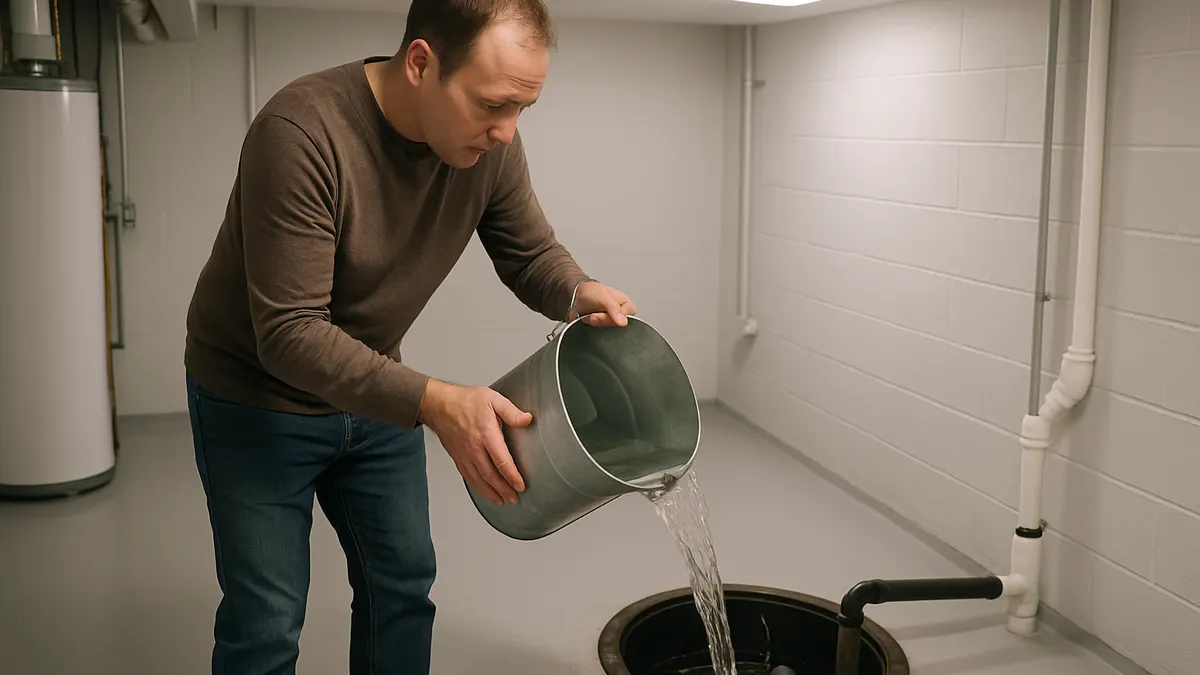
You can check if a sump pump is working by slowly adding water to the sump pit and watching whether the pump turns on automatically, removes the water through the discharge pipe, and shuts off once the water level drops. If the pump does not start, drains slowly, runs continuously, or makes unusual noises, it may need inspection or repair.
Why You Should Test Your Sump Pump
A sump pump can sit quietly for months, and that is exactly the problem. It only earns its keep when heavy rain or rising groundwater sends water into the sump pit, and it needs to switch on without hesitation. Wait until a storm to find out whether it works, and you may already have water in the basement.
Testing your pump ahead of a wet season is one of the easiest ways to catch a problem early. If you are wondering how to check if sump pump is working, there are a few simple tests you can do at home in about ten minutes.
How Do You Know If a Sump Pump Is Working?
A healthy sump pump turns on once the water level rises high enough, pumps water out through the discharge pipe, moves it away from your foundation, shuts off on its own once the level drops, and does all of this without grinding, rattling, or repeated short cycling. If your pump skips a step or makes odd noises, it is worth a closer look before you need it during a real storm.
How to Check If Sump Pump Is Working Step by Step
1. Check the Power Supply
Make sure the pump is plugged into a working outlet, the outlet has power, and the breaker has not tripped. If you have a battery backup sump pump, confirm the battery is charged and connected. Never touch electrical connections while standing in water or with wet hands, and call a professional if anything near the pump looks damaged.
2. Inspect the Sump Pit
Look inside the sump basin for dirt, gravel, or sediment that could block the intake or jam the float switch. A reasonably clean pit lets the pump and float move the way they should.
3. Check the Float Switch
The float switch tells the pump when to turn on. As water rises, the float rises with it, and at a certain point it triggers the pump, much like the float in a toilet tank. Gently lift it by hand, without touching any wiring, and check whether it moves freely and the pump responds. A stuck float is a common reason a pump fails to turn on.
4. Add Water to the Sump Pit
This is the real test. Using a bucket, slowly pour clean water into the pit, watch the level rise toward the activation point, and listen for the motor to kick on, usually a low, steady hum. Check that water is moving out through the discharge pipe, and confirm the pump shuts off once the level drops.
Do not run the pump dry just to see it work longer, since that can wear on the motor. A few gallons is enough to confirm the float and motor are actually working together.
What Should a Working Sump Pump Look and Sound Like?
A properly functioning pump starts as soon as the float reaches its activation level, moves water out at a steady pace, and shuts off cleanly once the level drops. A soft hum or whirring while it runs is normal, while loud grinding, sharp rattling, repeated clicking, or noticeable vibration usually point to a pump that needs attention.
Signs Your Sump Pump May Not Be Working Properly
Watch for these warning signs of a failing sump pump:
- The pump does not turn on when water rises.
- The pump runs but does not remove water.
- Water level in the pit keeps climbing anyway.
- The pump runs constantly or cycles on and off repeatedly.
- You hear grinding, rattling, or other unusual noise.
- The float switch appears stuck.
- The discharge pipe is not carrying water away from the house.
- Water remains in the pit after the pump has run.
- Basement water shows up even though the pump ran.
One of these alone may be minor, but a few together usually call for closer sump pump troubleshooting.
What to Check If Your Sump Pump Doesn't Turn On
If the pump stays silent as water rises, work back through the basics: confirm it is plugged in and the breaker has not tripped, then make sure the float moves freely with nothing in the pit blocking it. A blocked, frozen, or improperly angled discharge pipe can also stop water from leaving even when the motor runs fine. Avoid forcing anything open or attempting repairs yourself.
When Should You Call a Professional?
Call a professional plumber if:
- The sump pump does not turn on after checking the power and float.
- The pump runs but does not remove water from the pit.
- The pump makes grinding, rattling, or other unusual noises.
- The breaker keeps tripping when the pump runs.
- The discharge pipe is blocked or damaged.
- Water continues to collect in the basement even when the pump is running.
- The pump is old, unreliable, or showing repeated problems.
- You are uncomfortable handling electrical equipment near standing water.
How Often Should You Test a Sump Pump?
There is no single rule for every home, but testing a few times a year is a reasonable habit, especially before heavy rain, before spring storms, after the pump has sat unused for a while, whenever it runs oddly, and when you move into a home with an existing sump pump. This kind of check is also a standard part of seasonal plumbing maintenance, so it is easy to fold into a routine you are already doing.
What If Your Sump Pump Keeps Failing?
Repeated problems often mean the pump is aging, undersized, damaged internally, or working against a discharge line that will not drain properly. A professional inspection can identify what is really going on, and the fix might be a repair, a full sump pump replacement, or a battery backup sump pump for protection when the power goes out.
If your system keeps letting you down, our team offers sump pump installation that can evaluate your setup and recommend the right fix.
Keep Your Sump Pump Ready
Testing your sump pump only takes a few minutes, but it can help you catch problems before heavy rain puts your basement at risk. Check that the pump has power, the float moves properly, and the system turns on and removes water as expected. If you notice unusual noises, poor drainage, frequent cycling, or a pump that does not start, it is best to have the issue checked before the next storm. FKRIV Plumbing & Heating Inc. can inspect your sump pump, identify the problem, and provide the right repair to help keep your basement protected.
Proudly serving homeowners in Bensalem, Feasterville, Doylestown, Warminster, and Jamison.
Frequently Asked Questions
How can I tell if my sump pump is working?
Pour water into the pit and watch. If the float rises, the pump turns on, and water drains out through the discharge pipe before shutting off, it is working correctly.
How do I test a sump pump manually?
Add water gradually with a bucket, watch the level rise, and confirm the pump activates, removes the water, and shuts off once the pit is empty.
Why is my sump pump running but not pumping water?
This often points to a clogged or frozen discharge pipe, a failing check valve, or worn internal parts. A professional inspection is the safest next step if basic checks do not resolve it.
How often should I test my sump pump?
A few times a year, with extra attention before heavy rain and spring storms and after long stretches when the pump has not run.
What are the signs of a failing sump pump?
Unusual noise, the pump not turning on, constant running without removing water, and basement water despite the pump running.
What should I do if my sump pump stops working during heavy rain?
Stay safe first, avoid standing water near electrical components, and call a professional plumber if you cannot resolve it quickly and safely on your own.