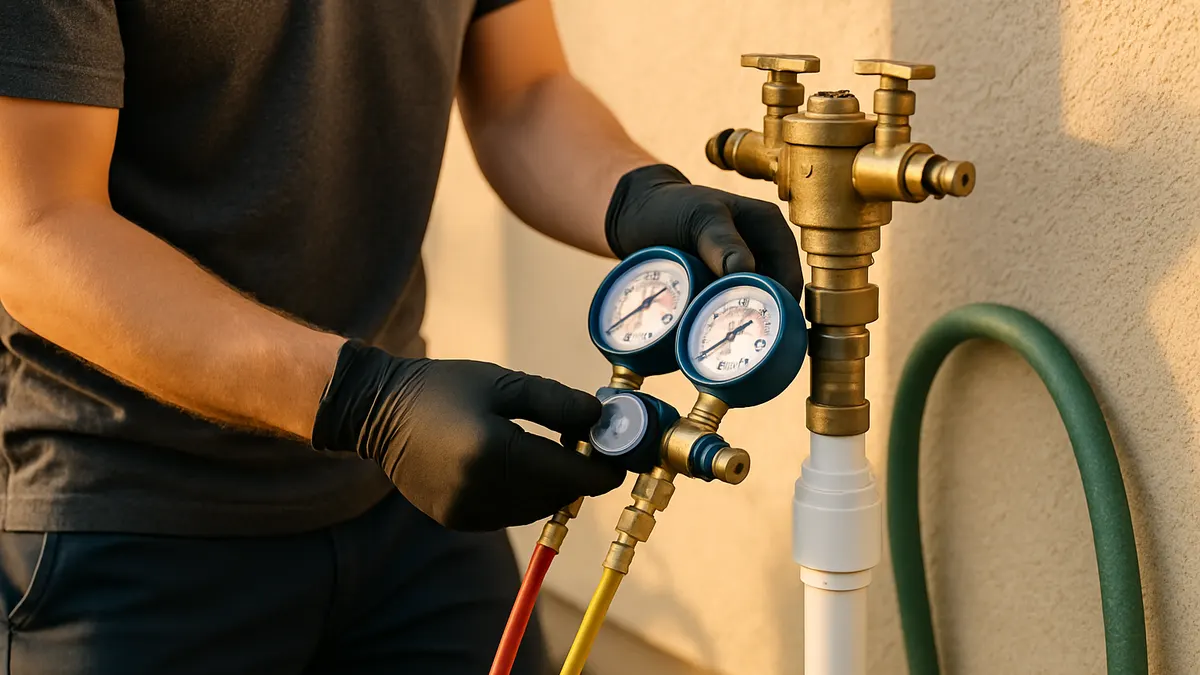
Imagine your drinking water flowing the wrong way. When water pressure drops or shifts, water from a hose, sprinkler line, or piece of equipment can move backward into the clean supply. That’s backflow, and it’s why backflow testing matters. Testing confirms that the device guarding your plumbing still works. This guide explains how backflow happens, which properties may need testing, what a technician does, and what to do if a device fails. You’ll also learn how to confirm your local deadline.
What Is Backflow Testing?
Backflow testing is a professional check that a backflow prevention assembly still does its job. The assembly is the device installed on your water line. The test is the procedure a certified technician uses to confirm it works. Think of the device as a one-way gate: it lets water flow toward your fixtures and blocks it from reversing. That gate protects your potable water supply, which simply means water intended for drinking. Seals wear and debris collects over time, and a device can look fine from the outside while failing to hold. Only a proper test shows how it performs.
How Does Backflow Happen?
Backflow needs two things: a cross-connection and a pressure change. A cross-connection is any point where drinking water could meet a non-drinking source. Commercial buildings often have several, which is why cross-connection problems come up so often in commercial plumbing. Backflow then happens in one of two ways.
Back-siphonage
A sudden drop in supply pressure, such as during a water main break, can pull water backward like a drinking straw. Picture a garden hose left sitting in a bucket of fertilizer mix. If supply pressure falls, that liquid can be drawn into the line.
Backpressure
Here, pressure on your property side rises above the incoming pressure and pushes water the wrong way. Boilers, pumps, and elevated tanks can cause this. The difference is simple: back-siphonage pulls water backward, while backpressure pushes it.
Why Does Your Property Need Backflow Testing?
Testing earns its place for four practical reasons:
- It protects drinking water. A test confirms the barrier between clean water and possible contaminants is holding.
- It finds failing parts. Seals, springs, and check valves wear out, and debris can keep valves from seating properly.
- It supports compliance. Many local plumbing codes and water authorities require testing, and yours may too.
- It catches repairs early. A worn seal is a small job. A neglected device can turn into a full replacement.
Keep in mind that a device can look fine and still fail, and warning signs aren’t guaranteed. Risk also varies. Not every property faces the same hazard, and the point isn’t to alarm anyone. It’s to confirm that protection is working. Regular testing belongs in any plan for commercial plumbing upkeep, right alongside drain and water heater service.
Which Properties May Need Backflow Testing?
Requirements depend on the connection, the potential hazard, the plumbing layout, and local rules. Common examples include:
- Homes with irrigation systems or swimming pools, where lawn chemicals or pool water could reach the supply
- Restaurants and commercial kitchens with dishwashers, mop sinks, and food equipment
- Office buildings and retail properties with large, complex plumbing
- Healthcare facilities with specialized equipment
- Buildings with fire sprinkler systems
- Properties with industrial equipment or other cross-connections
No single device or schedule applies everywhere. Your local water authority decides what your property needs, and the right device for a lawn sprinkler may differ from one for a commercial kitchen.
What Happens During a Backflow Test?
The exact steps vary with the assembly type and local requirements. In general, the process looks like this:
- The technician identifies the assembly and checks its condition, looking for wear, damage, or problems with how it was installed.
- Calibrated test equipment is connected to the device.
- The technician follows the procedure for that device type and takes the required pressure readings.
- The readings are compared with the applicable performance criteria.
- The technician records the results and explains whether repairs or other action are needed.
- Results are submitted to the relevant authority when required.
Water may be shut off temporarily during testing, so confirm arrangements with the technician beforehand. This isn’t a DIY job, and a quick visual check can’t replace a proper test.
How Often Should Backflow Testing Be Done?
Annual backflow testing is common and required in many places, but schedules differ from one jurisdiction to the next. Testing may also be needed after a new installation, a repair, or when a device is moved, depending on the rules that apply to you. Don’t assume one schedule fits everywhere. Check your water provider’s requirements, testing notices, and deadlines. If you can’t find them, call your local water authority and ask what applies to your address. Then put the due date on your calendar.
What Happens If a Backflow Preventer Fails?
A failed test doesn’t automatically mean replacing the whole device. A qualified professional should find the cause and decide whether a repair, component replacement, rebuild, or full replacement makes sense. Backflow preventer repair is often simpler when problems are caught early, which is another reason annual checks pay off. Follow-up testing may be required once the work is done. Keep the passing test report, or submit it if your water authority asks for it. Act promptly after a failure, especially when a compliance deadline is close.
How Can You Prepare for a Backflow Test?
A little preparation keeps the appointment short and smooth:
- Locate the backflow prevention assembly if you can. It’s often near the water meter or irrigation connection.
- Make sure the technician has clear access to the device.
- Gather previous test reports and official notices.
- Ask whether water service will be interrupted, and for how long.
- Confirm the deadline, reporting procedure, and any required follow-up.
Schedule Professional Backflow Testing
Routine backflow testing helps catch device problems early and supports water-supply protection. Homeowners and property managers can contact FKRIV Plumbing & Heating Inc. about testing, inspection, or repair through our certified backflow services. We serve Yardley, Doylestown, Fairless Hills, Horsham, and Levittown.
Frequently Asked Questions About Backflow Testing
What is the purpose of backflow testing?
Backflow testing verifies that a backflow prevention assembly works properly, helping protect the potable water supply from reverse flow.
How often should a backflow preventer be tested?
Annual testing is common, but your local water authority and applicable regulations set the required schedule. Check your notice or contact the authority.
Who can perform a backflow test?
Use a tester who holds the certification or authorization your jurisdiction requires. Ask for proof of backflow certification before booking.
How long does backflow testing take?
It depends on the device, site access, system complexity, and whether repairs are needed. A technician can give an estimate after seeing your setup.
What happens if a backflow test fails?
The device needs professional evaluation, any necessary repair or replacement, and follow-up testing when required. Act quickly if a deadline applies.
Do residential properties need backflow testing?
Some homes do, because of irrigation systems, pools, or other cross-connections. Requirements depend on local rules and your property’s plumbing setup.