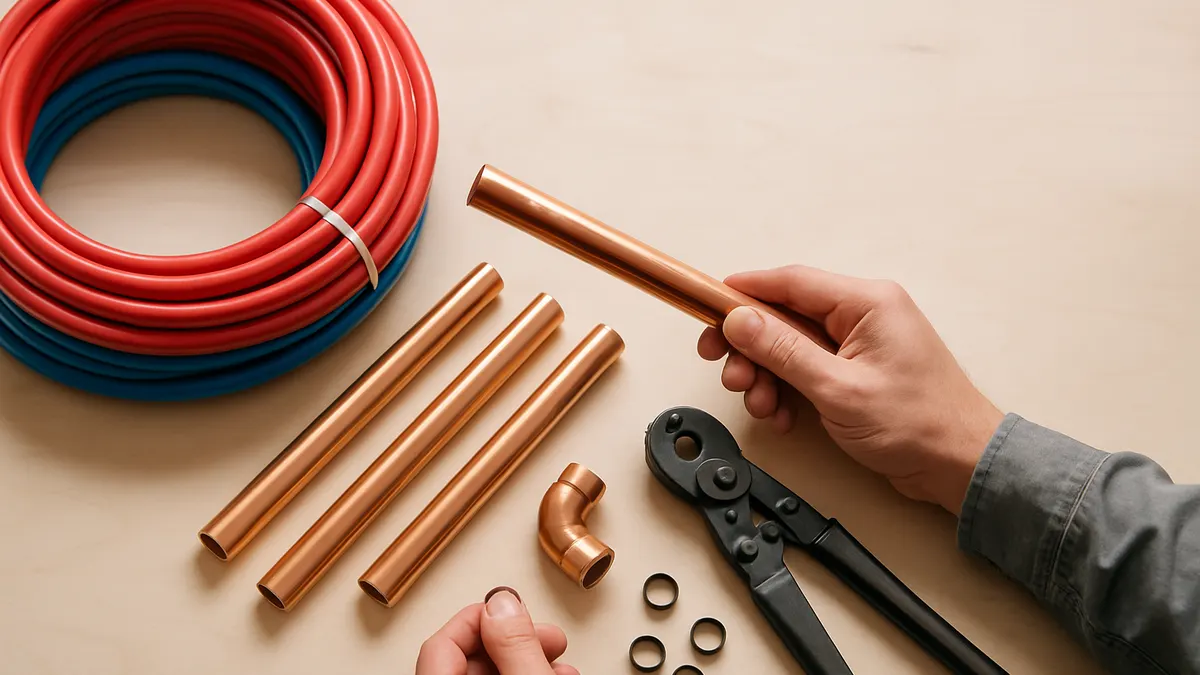
| Copper pipe is the more durable, rigid choice, often lasting 50 years or more, resisting UV damage, and holding up well next to boilers and water heaters. PEX pipe is flexible, resistant to freeze-related bursts, and easier to route through finished walls, making it the more practical choice for repiping older homes and additions. Most Bucks County homes end up with a mix of both, using copper near heat sources and PEX for long runs through tight framing. |
Homeowners across Jamison, Yardley, Levittown, Willow Grove, and Bristol ask the same question every time a repipe or renovation comes up: should the new lines be copper or PEX? Both materials meet current plumbing code, but they behave very differently once installed. Many comparison guides stop at cost and installation speed. This guide goes further, covering how each material holds up against Pennsylvania's freeze-thaw winters, older Bucks County water chemistry, and the code considerations worth understanding before choosing either one.
What Is Copper Pipe?
Copper pipe is a rigid metal tubing that has supplied residential and commercial water lines for more than seventy years. It comes in straight lengths and is joined with soldered or press-fit connections at every turn, which is why installation typically requires a licensed plumber rather than a weekend DIY project.
Copper is naturally bacteriostatic, meaning bacteria struggle to grow inside the pipe walls, and it holds up well against UV exposure, making it a common choice for exposed exterior lines. Type L copper is the standard for interior water supply lines, while Type M is often used in less demanding applications.
What Is PEX Pipe?
PEX, short for cross-linked polyethylene, is a flexible plastic tubing that has become the default choice for new construction and repiping projects across the country. It ships in long coils, snakes through wall cavities and floor joists much like electrical wire, and connects with crimp, clamp, or push-fit fittings instead of a torch.
There are three manufacturing types on the market: PEX-A, known for the highest flexibility and best resistance to kinking; PEX-B, the most common and budget-friendly option; and PEX-C, which is stiffer and less common in residential work. All three are certified to NSF/ANSI 61 standards for safe drinking water when properly installed.
Copper vs. PEX at a Glance
The table below summarizes how the two materials compare across the factors that matter most for a residential repipe or renovation.
| Factor | Copper Pipe | PEX Pipe |
| Material | Rigid copper metal | Flexible cross-linked polyethylene |
| Typical lifespan | 50+ years | 30–50 years |
| Flexibility | Rigid; needs fittings at every turn | Highly flexible; snakes through cavities |
| Installation method | Soldered or press-fit joints | Crimp, clamp, or push-fit fittings |
| Corrosion resistance | Resistant, but can pit in acidic water | Not affected by corrosion |
| Freeze/burst resistance | Prone to splitting when frozen | More resistant; expands with ice |
| Heat tolerance | Excellent; ideal near boilers and water heaters | Good for hot water; keep away from direct heat sources |
| UV exposure | Resistant; safe for exposed exterior runs | Degrades with prolonged UV exposure |
| Recyclability | Fully recyclable, retains scrap value | Not widely recycled; petroleum-based |
Durability and Expected Lifespan
Copper pipe has the longest track record. Well-installed copper lines routinely last 50 years or more, and many homes built before 1980 are still running on their original copper supply lines. The trade-off is that copper is more vulnerable to pinhole leaks over time, particularly where water chemistry is acidic or flux residue was left behind during the original soldering work.
Homeowners dealing with a small, isolated leak often want to know whether patching a pinhole in copper pipe makes sense before a full section replacement.
PEX pipe has a shorter documented history, since it has only been widely used in the United States since the 1990s, but manufacturers typically rate it for 30 to 50 years of service. It does not corrode and is not affected by the mineral buildup that gradually narrows copper's interior diameter, so flow rate tends to stay more consistent over the pipe's lifespan.
Installation, Flexibility, and Renovation Impact
This is where PEX pulls ahead for most repiping and remodeling work. Because PEX is flexible, it can run through existing wall cavities and around obstacles with far fewer fittings than rigid copper requires. Fewer joints means fewer potential leak points and less drywall opened and patched during a whole-house repipe.
Copper's rigidity is not automatically a drawback. In new construction, where walls are still open, copper can be run in clean, logical straight lines, and its stiffness helps it hold shape near fixtures such as shower valves and under-sink shutoffs, where a wobbly connection would be a problem. For a finished home, though, PEX generally means faster installation, less demolition, and less disruption to daily life while the work is underway.
Corrosion Resistance and Water Quality
Copper is generally corrosion-resistant, but not immune to it. Homes with acidic water, high chlorine levels, or aggressive water chemistry can see copper pipes develop pinhole leaks well before the material's expected lifespan is up. If more than one small leak shows up in the same section of copper line, that pattern usually points to a broader corrosion issue rather than a one-time defect, and it is worth having a plumber evaluate the rest of the system rather than patching leaks one at a time.
PEX is not affected by acidic water or chlorine in the same way, since it is a plastic rather than a metal. That resistance is a major reason PEX has become the standard recommendation for homes on well water or in areas with known corrosive water chemistry. PEX is not indestructible, however; it can be damaged by rodents chewing through exposed sections and degrades with prolonged direct UV exposure, so it is not recommended for outdoor runs.
Freeze Resistance in Pennsylvania Winters
Cold snaps are where the two materials diverge the most. Rigid copper pipe has very little give, so when the water inside freezes and expands, the pipe wall is prone to cracking or splitting, often in a spot that is hard to see until it thaws and starts leaking. PEX tubing can expand slightly with the ice inside it and contract again once temperatures rise, which makes it meaningfully less likely to burst under the same conditions.
Neither material is truly freeze-proof, and both still need proper insulation in unheated crawl spaces, garages, and exterior walls. Homeowners who want a head start heading into a hard freeze can review the steps to protect pipes during cold weather, which apply to copper and PEX supply lines alike.
Heat Tolerance Near Boilers and Water Heaters
Copper handles sustained high heat better than PEX does, which is why most licensed plumbers still default to copper for the first few feet of pipe connected directly to a boiler, water heater, or other heat source. PEX is rated for typical residential hot water temperatures, but manufacturers generally recommend keeping it a safe distance from an open flame or a component that could exceed its rated temperature ceiling.
In practice, this means many repiping projects end up using both materials strategically: copper immediately at the heat source, transitioning to PEX for the long runs out to fixtures throughout the rest of the house.
Environmental Impact and Recyclability
Copper is fully recyclable and retains scrap value at the end of its service life, which appeals to homeowners weighing the long-term footprint of a repiping project. It is also a naturally occurring metal rather than a petroleum-based product.
PEX, as a plastic, is not currently recycled at the same scale and is manufactured from polyethylene resin. Its lighter weight reduces transportation-related emissions compared to copper, and its lower rate of pinhole leaks can mean less water waste over the pipe's service life.
How to Decide: Repair, Repipe, or a Mix of Both?
Most Bucks County homes do not need an all-or-nothing decision. A licensed plumber will typically look at three things before recommending a direction: the age and material of your existing lines, the water chemistry in your specific neighborhood, and how much of the wall or ceiling is already open for other renovation work.
If your home is already showing a sudden, unexplained drop in water pressure, that can be a sign of corroded galvanized or copper lines narrowing internally, and it is worth having the cause diagnosed before choosing a replacement material. Homes with recurring pinhole leaks or visible corrosion at fittings are also strong candidates for a full or partial repipe rather than repeated spot repairs.
For homeowners who are unsure whether they are dealing with an isolated leak or a system-wide problem, the methods professional plumbers use to detect hidden water leaks in homes can clarify what a proper inspection actually involves before any wall gets opened.
A full breakdown of available repair and installation options is available on FKRIV's plumbing services page, which covers both copper and PEX repiping alongside routine repair work.
Signs Your Existing Pipes May Need Attention
A few warning signs tend to show up before a pipe fails outright, regardless of which material is behind the wall:
- Discolored water, particularly a blue-green or rusty tint, right after the tap has been off for a few hours
- A noticeable, unexplained increase in the water bill without a change in household usage
- Visible corrosion, pitting, or greenish buildup at exposed joints and fittings
- Low water pressure that developed gradually rather than all at once
- Damp spots, warped flooring, or a musty smell near a wall that contains supply lines
Older homes with cast iron, galvanized steel, or aging copper lines are also more likely to show common signs of underground pipe damage, especially where tree roots or shifting soil have been a long-term issue on the property.
Choosing the Right Pipe for Your Home
Neither copper nor PEX is universally “better” — the right choice depends on where the pipe runs, the water chemistry in your neighborhood, and whether the walls are already open for other work. A licensed plumber can walk through your specific system and recommend a solution that balances durability and long-term reliability rather than defaulting to one material out of habit.
FKRIV Plumbing & Heating Inc. has been diagnosing and repiping homes throughout Bucks and Montgomery County since 1999, led by a fourth-generation master plumber who understands how local water conditions and older housing stock affect both copper and PEX systems. Homeowners in Yardley, Levittown, Willow Grove, Bristol, and Warminster Heights can request an inspection to find out which piping approach fits their home best.
Frequently Asked Questions
What is the main difference between copper and PEX piping?
Copper is a rigid metal pipe joined with soldered or press-fit connections, while PEX is a flexible plastic tubing joined with crimp or push-fit fittings. Copper is more heat-tolerant and time-tested; PEX is more flexible, freeze-resistant, and faster to install.
Which lasts longer, copper or PEX?
Copper generally has the longer proven lifespan, often 50 years or more with proper installation, compared to a typical 30- to 50-year manufacturer rating for PEX. Actual lifespan for either material depends heavily on local water chemistry.
Is PEX pipe safe for drinking water?
Yes. PEX tubing sold for residential plumbing is certified to NSF/ANSI 61 standards for safe drinking water, the same standard that applies to copper and other approved plumbing materials.
Can copper and PEX be used together in the same house?
Yes, and it is common practice. Many homes use copper near water heaters or boilers, where heat tolerance matters most, and PEX for the longer runs to fixtures throughout the rest of the house, connected with approved transition fittings.
Does PEX pipe freeze and burst the way copper does?
PEX is less prone to bursting in a freeze because it can expand slightly as ice forms inside it. It is not freeze-proof, though, and unprotected PEX in an unheated space can still be damaged by a hard, sustained freeze.
Which piping material is easier to install in an existing home?
PEX is generally easier to install in a finished home because its flexibility allows it to be routed through existing wall and floor cavities with far less demolition than rigid copper requires.
Is copper pipe better for water heaters and boilers?
Copper handles sustained high heat more reliably than PEX, which is why it is typically used for the pipe sections closest to a boiler or water heater, even in homes that use PEX throughout the rest of the system.
How do I know if my home needs repiping instead of a repair?
Recurring pinhole leaks, aging galvanized or corroded copper lines, a gradual drop in water pressure, or discolored water are all signs worth having evaluated by a licensed plumber to determine whether a targeted repair or a broader repipe makes more sense.