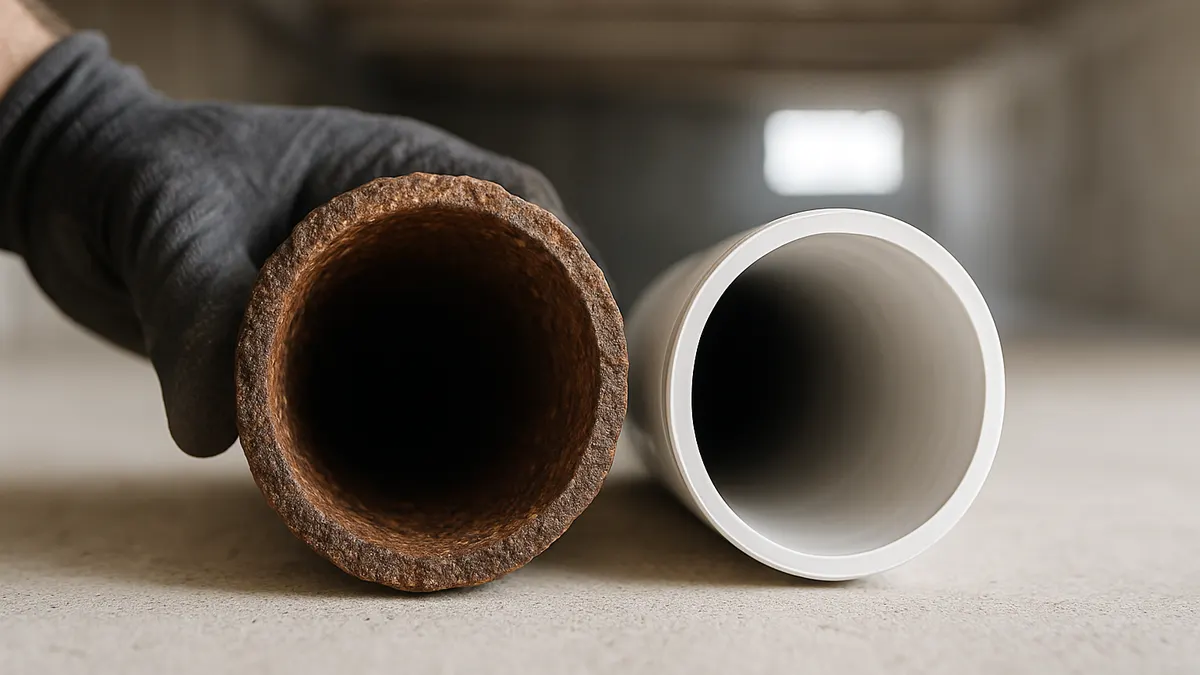
Cast iron pipes are heavy, excellent at dampening drain noise, and can last 50 to 80 years, but they eventually rust and corrode from the inside out. PVC pipes are lightweight, resist corrosion, install faster, and often last 100 years or more, though they carry more sound. Most homeowners today choose PVC for repairs and full replacements, while original cast iron drain lines are still common in homes built before the 1970s.
Anyone who has owned a home built before 1975 has likely run into this exact question. A slow drain, a rusty stain on the basement ceiling, or a routine inspection turns up aging cast iron, and suddenly a homeowner has to decide whether to patch what is there or switch to something newer. This guide breaks down how the two materials actually differ, what warning signs point to a failing system, what typically drives repair versus replacement costs, and how to think through that decision without any guesswork.
What Are Cast Iron Pipes?
Cast iron pipe has been part of American plumbing since the 1800s, and it became the standard for drain, waste, and vent (DWV) lines in homes built through the mid-20th century. It is made by pouring molten iron into a mold, which produces a thick-walled pipe with real mass. That mass is exactly what gave cast iron its reputation: dense metal absorbs vibration, so water rushing through a cast iron stack sounds like a distant murmur rather than a rush overhead.
Builders leaned on cast iron for main drain lines, vertical stacks, and underground sewer laterals because it could handle decades of daily use without flexing or cracking under normal conditions. Two coating methods were common at the time of installation: some sections were coated in coal-tar enamel for extra corrosion resistance, while others were left with a bare interior that wears down faster. A plumber can often estimate a system's remaining lifespan just by knowing which method the original builder used.
The tradeoff shows up later in a pipe's life. Cast iron is porous enough that hydrogen sulfide gas and standing moisture slowly eat away at the interior walls, a process plumbers call scaling or tuberculation, until the pipe narrows, weakens, or eventually splits along its seam.
What Is PVC Pipe?
PVC, or polyvinyl chloride, is a rigid plastic pipe that entered mainstream residential plumbing in the 1960s and has been the default choice for new construction and replacement work ever since. Sections are joined with solvent cement rather than mechanical bands, which creates a permanent, watertight seal along the entire drain-waste-vent system without relying on gaskets that can loosen over time.
Because PVC will not rust, pit, or corrode, its interior stays smooth for the life of the pipe, which keeps water and waste flowing at a consistent rate rather than slowing as scale builds up. It weighs a fraction of what cast iron weighs, so a two-person crew can typically move and set sections that would otherwise require heavy equipment and additional bracing.
The main compromise is acoustics. Without extra insulation, PVC transmits the sound of moving water more readily than cast iron does, which is why some builders wrap vertical stacks near living spaces in sound-dampening material during installation.
PVC vs. Cast Iron Pipes: Key Differences at a Glance
| Factor | Cast Iron | PVC |
| Typical lifespan | 50–80 years | 100+ years |
| Noise level | Very quiet, dampens sound | Louder, carries sound unless insulated |
| Corrosion resistance | Rusts and scales over time | Will not rust or corrode |
| Weight and handling | Heavy, needs extra labor and bracing | Lightweight, easier to maneuver |
| Installation method | Mechanical couplings, more labor-intensive | Solvent-welded joints, faster to install |
| Common in | Homes built before the 1970s | New construction and modern repiping |
| Fire resistance | Naturally fire-resistant | Can soften under extreme heat |
| Environmental footprint | Recyclable as scrap metal | Recyclable through specialized programs |
| Maintenance needs | Periodic camera inspection recommended | Minimal, mostly visual checks |
Both materials remain code-approved for residential drain and sewer applications in most jurisdictions, so the decision usually comes down to the condition of the existing system, the age of the home, and how much noise dampening matters in a particular layout. Labor is typically the larger factor in overall project cost rather than the material itself, since cast iron's weight and mechanical joints demand more time on site than solvent-welded PVC.
Cost Factors Homeowners Should Understand
Every plumbing quote depends on the specifics of a given home, so exact figures are never useful outside of an on-site assessment. That said, a few factors consistently drive the difference between a repair estimate and a full replacement estimate regardless of which material is involved.
Accessibility matters more than material. A section of pipe behind an open basement ceiling costs far less to reach than one buried beneath a finished floor or a concrete slab. Labor hours typically outweigh material costs on any job, which is part of why cast iron work tends to run higher than comparable PVC work: mechanical couplings, cutting through dense metal, and the extra bracing cast iron requires all add time on site. The scope of the job matters just as much, since a single spot repair is a different project entirely from a full-stack replacement.
Signs Your Cast Iron Pipes May Be Failing
Cast iron rarely fails all at once. It tends to send warning signs for months or years before a section actually gives out, and catching those signs early is what keeps a repair small rather than an emergency. Watch for:
- Rust-colored or discolored water, especially after the plumbing has sat unused for several hours
- Slow-draining sinks, tubs, or toilets on multiple fixtures at once, which often points to a main line issue rather than a single clog
- A persistent sewage odor in the basement or crawl space
- Visible flaking, pitting, or a chalky white residue on exposed sections of pipe
- Soft, soggy, or sunken patches in the yard above where a sewer lateral runs
- A noticeable increase in water bills without a clear explanation
Some of these clues show up as hidden signs of plumbing damage inside the home long before a pipe actually bursts, which is why an early inspection tends to cost far less than an emergency call after a section fails outright.
Other warning signs are harder to spot from indoors. Soft spots or unexplained depressions in the lawn, for example, point to underground pipe damage that a visual walkthrough alone cannot confirm, which is where camera inspection equipment becomes useful.
Repairing vs. Replacing: What Homeowners Should Weigh
Not every aging cast iron system needs a full teardown, and not every PVC upgrade requires ripping out an entire home's plumbing. The right call usually comes down to how widespread the deterioration is:
- Isolated damage. A single cracked joint or a short corroded section can often be cut out and replaced with a PVC patch connected through rubber no-hub couplings, blending the two materials without disturbing the rest of the line.
- Recurring problems. If the same section keeps backing up or a camera inspection shows scaling throughout the stack, patching one spot only delays the next call. A full repipe of that line becomes the more practical long-term move, since repeated service visits add up over a few years.
- Whole-home age. In a house where the original drain system is nearing 60 to 70 years old, replacing it proactively during a renovation is usually simpler than reopening finished walls and floors again in a few years.
A camera inspection paired with professional leak detection methods gives a clear picture of what is actually happening inside the walls before any decision gets made, rather than guessing based on symptoms alone.
It is also worth remembering that not every plumbing complaint involves the drain system at all. A small pinhole leak in a copper supply pipe is usually a quick, targeted fix rather than a sign that the whole system needs an overhaul, so it helps to know which category a given problem actually falls into before assuming the worst.
Which Pipe Material Fits Your Home?
For most homeowners weighing a repair or a remodel today, PVC is the practical default. It resists the corrosion that eventually dooms cast iron, costs less in labor to install, and holds up well for a century or more with almost no maintenance. Homes undergoing a full repipe, new construction, and bathroom or kitchen remodels typically move forward with PVC drain lines without a second thought.
Cast iron still earns a place in specific situations. Homeowners in multi-story buildings or homes where a stack runs directly behind a bedroom or home office sometimes request cast iron replacement sections purely for the noise dampening, even though PVC can approximate that quiet with added sound-insulating wrap. Historic home restorations occasionally call for cast iron to preserve the original character of a plumbing system as well.
A conversation with a licensed plumber in Bristol or a similarly experienced local contractor can help weigh those tradeoffs against the specific layout, budget, and age of a given property before any work begins.
Sustainability is worth a mention too, since it rarely comes up in this comparison. Cast iron pulled from an old system is fully recyclable as scrap metal, and salvage yards accept it readily. PVC can also be recycled, though it requires a specialized facility rather than a standard scrap yard, so a plumber removing old sections will typically know which disposal route is available locally.
Local Considerations for Bucks and Montgomery County Homes
Housing stock across Bristol, Levittown, Yardley, Willow Grove, Warminster Heights, and Newtown spans several eras of plumbing standards, from postwar cast iron drain systems to newer PVC installations in recently built additions. Homes from the Levittown development era, in particular, still commonly run original cast iron beneath the slab, which means periodic inspection matters more here than in newer subdivisions further out.
Freeze-thaw cycles through a typical Pennsylvania winter also add stress to any pipe with existing weak points, since ground movement and shifting soil can widen small cracks that were otherwise stable for years. A professional plumbing repair assessment before winter sets in catches those vulnerable spots while a fix is still simple and affordable.
Homeowners dealing with recurring drain backups rather than a single isolated clog can also look into drain cleaning services as a lower-cost first step before assuming a full pipe replacement is the only option.
When in Doubt, Get a Professional Inspection First
Whether a home still runs on its original cast iron drain lines or has already been upgraded to PVC, the safest approach is a professional inspection before small warning signs turn into a bigger repair. FKRIV Plumbing & Heating Inc has spent years helping homeowners across Bristol, Yardley, Levittown, Willow Grove, Warminster Heights, and Newtown make sense of exactly this kind of decision, from a single patched joint to a full system replacement.
Frequently Asked Questions
Is PVC pipe better than cast iron pipe?
PVC is generally the better choice for most modern homes because it resists corrosion, weighs less, and installs faster. Cast iron still has an edge in sound dampening, which matters more in specific layouts than others.
How long do cast iron pipes typically last before they need replacement?
Most cast iron drain systems last between 50 and 80 years before corrosion and scaling reach the point where replacement makes more sense than continued spot repairs.
Can cast iron and PVC pipes be connected in the same system?
Yes. Rubber no-hub couplings with stainless steel bands create a secure, code-compliant transition between cast iron and PVC, which is common when only part of a system needs replacement.
Why does PVC pipe sound louder than cast iron?
PVC is lighter and thinner-walled than cast iron, so it does not absorb vibration the same way. Wrapping vertical PVC stacks in sound-insulating material closes most of that gap.
Does homeowners insurance cover cast iron pipe failure?
Coverage varies by policy and provider. Many policies cover sudden pipe bursts but exclude gradual deterioration, so it is worth reviewing a policy's language on wear-and-tear exclusions before assuming a claim will be approved.
How can a homeowner tell if a drain problem is isolated or system-wide?
Multiple slow drains across different fixtures, especially on the lowest floor, usually point to a main line issue rather than a single clog. A camera inspection confirms the scope before any repair begins.
Is it worth replacing cast iron pipes before selling a home?
It depends on the pipe's condition. A home inspection that flags visible corrosion or a history of backups can slow down a sale, so addressing known issues ahead of time often avoids last-minute negotiations at closing.