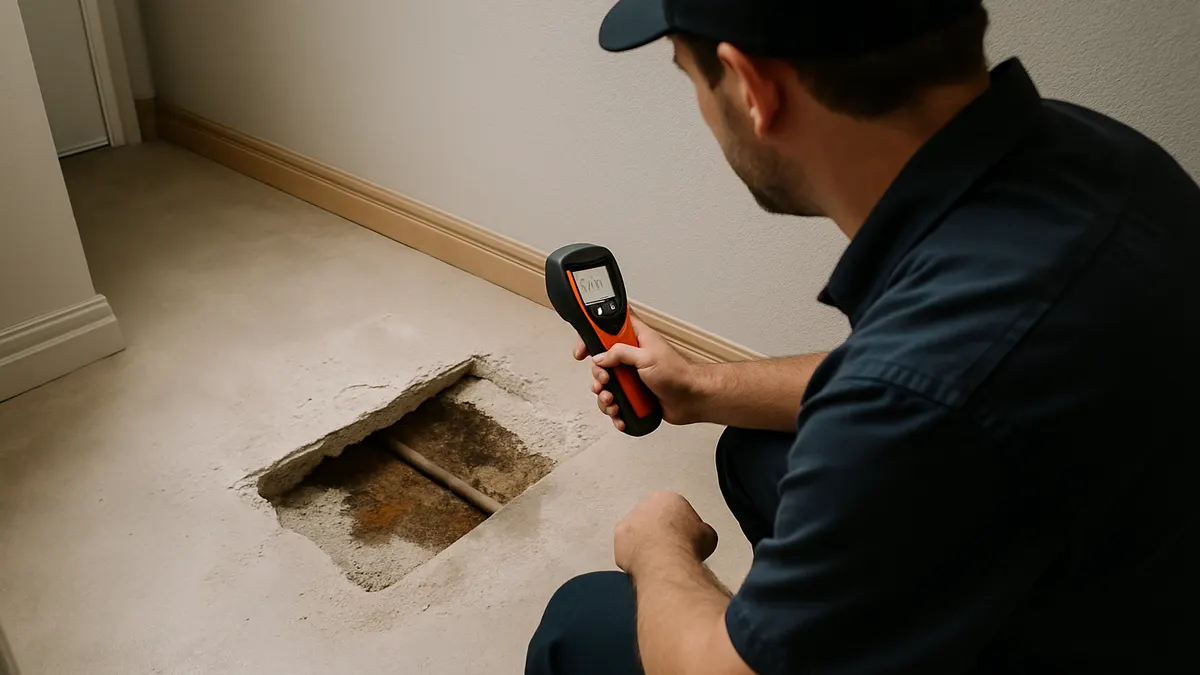
A water bill that climbs for no clear reason is frustrating. So is a patch of floor that feels warm when the heat is off. Both can point to a slab leak, which is a leak in a pipe that runs in or beneath the concrete floor of your home. Because the pipe is hidden, the clues often show up first as small changes you can see, hear, or feel. This guide explains the signs of a slab leak, what usually causes one, how plumbers find the problem, and which repair options exist. It also covers what to do next.
What Is a Slab Leak?
A slab leak is a leak in a pipe that sits inside or under the concrete slab your home is built on. Plumbing lines are often laid before the concrete is poured, which makes them hard to reach later. Two kinds of lines can run there. Pressurized water supply lines bring clean water to your taps, fixtures, and appliances. Drain and sewer lines carry used water away and rely on gravity instead of pressure. A supply line leak may raise your water bill or lower pressure. A drain line leak may cause odors, slow drains, or damp soil. Knowing which line is involved helps a plumber choose the right test.
Common Signs of a Slab Leak
Slab leak symptoms are easy to mix up with other plumbing issues. Treat each one as a clue, not a diagnosis.
An Unexpected Increase in Your Water Bill
A bill that rises while your habits stay the same may mean water is escaping somewhere. A running toilet, a dripping faucet, or a sprinkler line can cause the same jump, so compare several months of bills first.
Warm or Damp Spots on the Floor
A warm patch can appear when a hot water line leaks below the floor, and damp flooring may suggest moisture rising from beneath. Sunlight or in-floor heating can look similar, so one spot proves little.
Running-Water Sounds When Taps Are Off
A faint hiss or trickle when every fixture is closed can point to a leaking pressurized line. Check appliances, ice makers, and water softeners first, since they can make similar noises.
Low Water Pressure or Musty Odors
Pressure may drop when water escapes before reaching your fixtures, and trapped moisture can create a musty smell. Clogged aerators, a failing pressure regulator, or humidity can do the same.
Cracks or Changes Around Floors and Walls
Cracks, lifting tile, or warped flooring can be linked to moisture or ground movement, but many cracks are normal settling. When they appear alongside other signs, it is worth reading about underground pipe damage and asking a plumber to take a look.
What Causes a Slab Leak?
Several factors can wear down a pipe over time. Pipe corrosion is common in older metal lines, where water can attack the pipe from the inside. Aging plumbing may also develop weak or damaged joints. Shifting or settling soil can strain pipes, and poor installation may leave them stressed or poorly supported. Pipes can also rub against concrete or gravel as they expand and contract, and that abrasion can thin the pipe wall. Excessive water pressure adds strain to fittings and connections over the years, and mineral-heavy water can speed up wear. The actual cause depends on the pipe material, installation, ground conditions, and plumbing history, which is why a plumber looks at the whole picture instead of assuming one reason.
How Do Plumbers Detect a Slab Leak?
A plumber usually starts with a visual inspection and questions about your symptoms. The next step depends on the suspected leak. Professionals use several tools for hidden leak detection. A plumbing pressure test shows whether a supply line holds pressure. Acoustic leak detection listens for escaping water. Thermal imaging can reveal temperature differences from a hot water leak. For suspected drain or sewer problems, a camera inspection shows the inside of the pipe.
You can try a simple meter check at home. Turn off all faucets and water-using appliances, then watch the water meter. If it keeps moving, water may be leaking somewhere in the system. That does not identify a slab leak by itself.
Slab Leak Repair Options
The right slab leak repair depends on the leak's location, the pipe's condition, how easy it is to reach, and the plumber's assessment. No single method fits every home.
Direct Access Through the Concrete
The plumber pinpoints the leak, opens the concrete above it, and repairs or replaces the damaged section. It may suit a leak that is clearly located and easy to reach, because the repair stays focused on one spot. The main consideration is disruption, since flooring and concrete must be removed and restored afterward.
Pipe Rerouting
Instead of repairing the pipe under the slab, a plumber installs a new line through walls or the attic and retires the old one. It may suit aging pipes, repeated leaks, or spots that are hard to reach. The main consideration is that new lines must be run through finished spaces, so some wall or ceiling work may be needed.
Under-Slab Tunneling
Crews dig a tunnel beneath the foundation to reach the pipe without opening the floor. It may help when protecting expensive flooring is a priority. The main consideration is that access, soil conditions, and leak location decide whether it is practical, and it is not an option for every home.
What Should You Do If You Suspect a Slab Leak?
Turn off the main water supply if it is safe to do so. Stay away from wet areas near outlets, appliances, or other electrical equipment. Take photos of visible damage and note your meter readings and recent water bills. Then contact a qualified plumber. Seek urgent help for active flooding or water near electrical systems. If water damage has occurred, review your homeowners insurance policy and ask your insurer what it covers.
Get Professional Help for Plumbing Leaks
If you notice unexplained water loss, damp flooring, or other signs of a possible slab leak, a qualified plumber can assess the situation and explain your options. FKRIV offers professional plumbing repair for homeowners dealing with leaks. FKRIV also serve Feasterville, Doylestown, Fairless Hills, Horsham, and Levittown.
Frequently Asked Questions
What are the first signs of a slab leak?
The first signs are often an unexplained rise in your water bill, warm or damp spots on the floor, or the sound of running water when every tap is off. One sign alone does not confirm a leak.
Can a slab leak cause foundation damage?
It can, but not every slab leak does. Persistent moisture can affect flooring, soil, and other materials, so a plumber's assessment matters.
How do plumbers find a leak under a concrete slab?
Plumbers combine tests, such as pressure testing, acoustic listening, and thermal imaging, to narrow down the location before opening any concrete.
Can a slab leak be repaired without breaking the floor?
Sometimes. Rerouting pipes or tunneling under the slab can avoid cutting the floor, but it depends on the leak, the pipe, and access.
Is a slab leak covered by homeowners insurance?
It depends on your policy and the cause of the leak. Some policies address resulting water damage differently from the pipe repair itself, so review your policy and ask your insurer.
What should I do if I suspect a slab leak?
Turn off the water if it is safe, avoid wet areas near electrical equipment, document the damage, and call a qualified plumber.