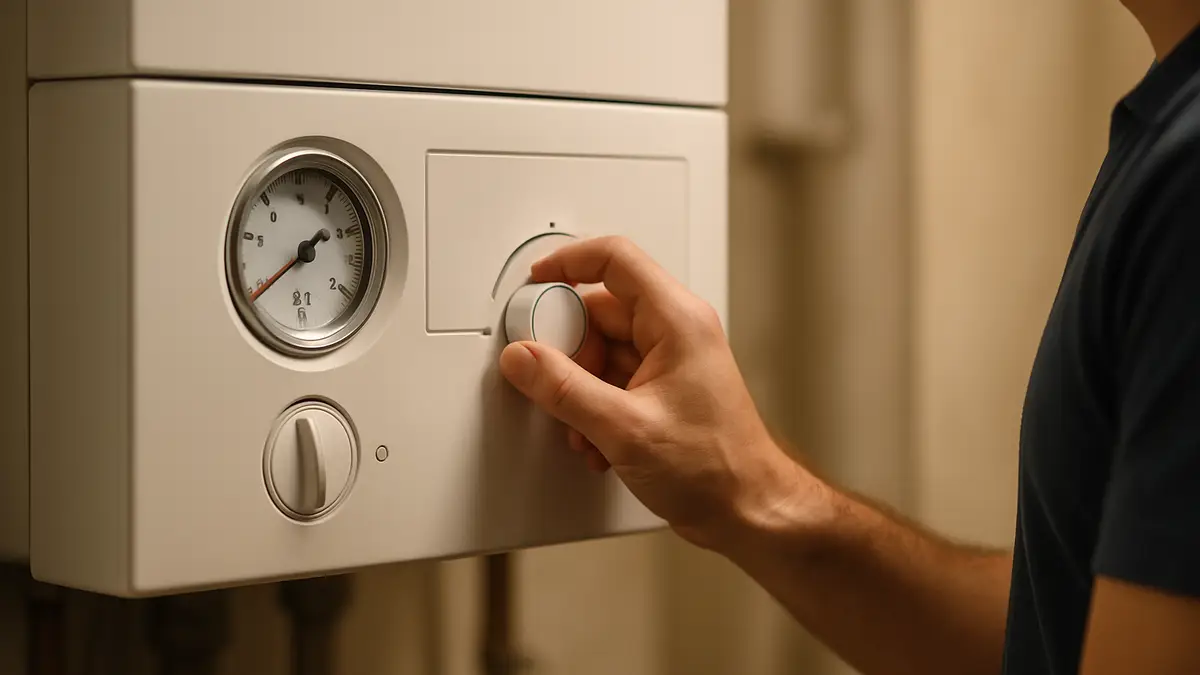
A boiler that is overworking usually shows a handful of clear warning signs: climbing energy bills, longer heating cycles, banging or gurgling noises, uneven room temperatures, and frequent short cycling. These symptoms typically trace back to limescale buildup, sediment, an aging heat exchanger, or a system that was never sized correctly for the home. Catching an overworked boiler early can mean the difference between a simple service call and a full system replacement. This guide walks through the warning signs, the causes behind them, and the steps homeowners can take to bring their boiler back to normal operation.
What Does It Mean When a Boiler Is Working Too Hard?
An overworked boiler is one that has to burn more fuel, run longer, and push its components harder than it should to produce the same amount of heat it once delivered with ease. Boilers are built to reach a target temperature efficiently and then cycle off until heat is needed again. When something inside the system is restricting flow, reducing heat transfer, or forcing the unit to compensate for lost efficiency, the boiler ends up compensating by working overtime. Over months and years, that extra strain shows up as higher utility bills, faster wear on internal parts, and a shorter overall lifespan for the unit.
Key Signs Your Boiler Is Overworked
Homeowners often notice a combination of the following symptoms before a boiler fully breaks down:
- Rising energy bills without a change in usage habits
- Heating cycles that take noticeably longer to reach the set temperature
- Kettling, banging, or gurgling noises coming from the unit
- Uneven heat distribution between rooms or floors
- The boiler turning on and off repeatedly in short bursts
- A pilot light or flame that looks weak, yellow, or inconsistent
- An older unit that seems to run far more often than it used to
Each of these deserves a closer look, since the underlying cause often determines whether a simple service visit will fix the issue or whether more extensive repair work is needed.
Your Energy Bills Keep Climbing
A sudden or gradual increase in heating costs is one of the most reliable indicators that a boiler is not operating efficiently. When internal components are coated in scale or sediment, the boiler needs more fuel and more time to transfer the same amount of heat into your home. If your bills are trending upward even though the weather and your household habits have not changed, it is worth having the system inspected before the inefficiency gets worse.
Heating Cycles Take Longer Than Usual
A healthy boiler reaches its target temperature within a predictable window and then shuts off until the next call for heat. If cycles are stretching longer than they used to, the burner or heat exchanger may be struggling to transfer heat effectively, often because of buildup on internal surfaces.
You're Hearing Kettling, Banging, or Gurgling Noises
A knocking or rumbling sound, sometimes called kettling, is one of the clearest signs of limescale buildup in boiler heat exchangers. As mineral deposits accumulate on the metal surfaces, water struggles to circulate properly and can boil in isolated pockets, producing the kettle-like noise. This is especially common in homes with hard water, where mineral-rich supply lines gradually coat every component the water touches.
Rooms Heat Unevenly
If some rooms feel warm while others stay cool no matter how long the system runs, the boiler may be compensating for restricted flow somewhere in the system, whether from a partially blocked pipe, a failing pump, or trapped air in the radiators.
The Boiler Short-Cycles (Turns On and Off Repeatedly)
Short cycling forces the boiler to restart far more often than it should, which wastes fuel and adds mechanical stress to the ignition system, pump, and controls. This pattern is frequently linked to a unit that is oversized, undersized, or struggling with a buildup-related airflow or heat transfer problem.
The Pilot Light or Flame Looks Off
A flame that burns yellow instead of blue, flickers unpredictably, or produces soot suggests incomplete combustion. This forces the boiler to burn more fuel to generate the same heat output and can eventually point to a ventilation or gas supply issue that needs a licensed technician's attention.
Your Boiler Is Aging and Working Overtime
Boilers typically last between 15 and 20 years with proper maintenance. As a unit approaches the end of that range, internal components naturally lose efficiency, and the boiler compensates by running longer and more frequently just to keep up with normal demand.
What Causes a Boiler to Work Harder Than It Should?
Several factors contribute to boiler efficiency loss over time, and most of them build up gradually rather than appearing overnight.
Hard Water and Mineral Buildup
Hard water is one of the leading contributors to reduced boiler performance. As calcium and magnesium minerals pass through the system, they settle on internal surfaces and insulate the metal from the water it is meant to heat. This forces the burner to work harder to reach the same temperature. Homeowners dealing with mineral-heavy supply lines can learn more about how hard water damage to boiler and hot water systems develops and what it means for long-term performance.
Sediment and Corrosion
Similar to how sediment buildup in a water heater tank reduces efficiency and stresses internal components, sediment inside a boiler's heat exchanger insulates surfaces and forces the burner to compensate. Corrosion from old piping or untreated water can compound the problem over time.
Incorrect System Sizing
A boiler that is too small for the home will run constantly trying to meet demand, while an oversized unit short-cycles and wears out its components faster. Either scenario places unnecessary strain on the system.
Deferred Maintenance
Skipping annual inspections allows small issues, such as a dirty burner or a failing pump, to grow into larger problems that force the entire system to work harder.
Thermostat or Control Issues
A miscalibrated thermostat can cause a boiler to run longer than necessary or cycle inconsistently, mimicking the symptoms of a mechanical problem even when the unit itself is functioning normally.
Step-by-Step: What to Do If You Suspect Boiler Overwork
- Review recent energy bills and compare them to the same period last year to confirm a genuine increase.
- Listen for unusual noises during a heating cycle and note when they occur.
- Check radiators throughout the home for cold spots, which can indicate trapped air or blocked flow.
- Inspect the flame through the viewing window, if your model has one, for color and consistency.
- Schedule a professional inspection to pinpoint the cause before the issue leads to a breakdown.
How to Prevent an Overworked Boiler
Regular maintenance is the most effective way to protect a boiler from unnecessary strain. The table below outlines the core tasks that keep a system running efficiently.
| Maintenance Task | Recommended Frequency | Why It Matters |
| Professional boiler inspection | Annually | Catches early buildup, wear, and control issues before they force the system to overwork. |
| Descaling or flushing the system | Every 1-2 years | Removes mineral deposits that insulate the heat exchanger and reduce efficiency. |
| Bleeding radiators | Twice a year | Releases trapped air that causes cold spots and uneven heating. |
| Checking water pressure | Monthly | Low or fluctuating pressure forces the system to compensate and run longer. |
| Testing the thermostat and controls | Annually | Prevents miscalibration from causing longer or inconsistent cycles. |
Watch for Related Plumbing Issues That Add Strain
A boiler does not operate in isolation, and problems elsewhere in the plumbing system can make it work harder than necessary. Reduced water pressure from underground pipe damage can affect how efficiently hot water reaches fixtures, while hidden water leaks quietly waste energy and water pressure long before they become visible. Addressing these issues promptly helps the entire heating and plumbing system run the way it was designed to.
When to Call a Professional
Most of the signs covered above can be diagnosed accurately only with hands-on inspection. If your boiler is showing two or more of these symptoms, especially unusual noises, rising bills, or short cycling, it is time to bring in a licensed technician. A professional boiler repair and maintenance service can flush the system, inspect the heat exchanger, test the controls, and recommend whether a repair or a full replacement makes the most financial sense. If the problem turns out to be tied to your hot water system rather than the boiler itself, a water heater repair service can rule out or resolve that possibility. Waiting too long often turns a manageable repair into an emergency replacement.
Final Thoughts: Catch the Signs Early
An overworked boiler rarely fixes itself. Left alone, minor inefficiencies like limescale buildup, sediment, or a stuck thermostat tend to compound, quietly driving up energy bills until a manageable issue turns into a costly breakdown. The good news is that most of these problems are preventable with routine care and easy to catch once you know what to listen and look for. If your system is showing any of the warning signs covered here, don't wait for a full shutdown to act. FKRIV Plumbing & Heating Inc brings four generations of hands-on experience to every boiler inspection, tune-up, and repair, helping homeowners restore efficient, reliable heat before a small strain becomes a major expense.
Frequently Asked Questions
What are the first signs of an overworked boiler?
The earliest signs are usually a gradual rise in energy bills and heating cycles that take longer than they used to. These changes often appear before any unusual noise or visible malfunction.
Why does my boiler make a banging or knocking noise?
Banging or kettling noises typically come from limescale or sediment buildup inside the heat exchanger, which disrupts water flow and causes localized boiling.
Can hard water really damage a boiler?
Yes. Hard water leaves mineral deposits on internal components, insulating them from the water and forcing the system to burn more fuel to reach the same temperature over time.
How often should a boiler be serviced?
Most manufacturers and technicians recommend an annual inspection to catch buildup, wear, and control issues before they force the system to overwork.
Is it normal for a boiler to run constantly in cold weather?
Some increase in run time during colder months is expected, but a boiler that never seems to shut off, even after reaching the target temperature, usually signals an underlying efficiency problem.
Does short cycling damage a boiler?
Yes. Frequent on-and-off cycling adds mechanical stress to the ignition system, pump, and controls, and it can shorten the overall lifespan of the unit.
How much does it cost to repair an overworked boiler?
Costs vary widely depending on the cause, ranging from an affordable descaling and tune-up to a more significant repair if a component has failed. A professional inspection is the only reliable way to get an accurate estimate.
Should I repair or replace an aging boiler?
If the unit is older than 15 years, repairs are becoming frequent, or efficiency losses are significant, replacement often makes more financial sense than continuing to repair a system that keeps working harder each year.