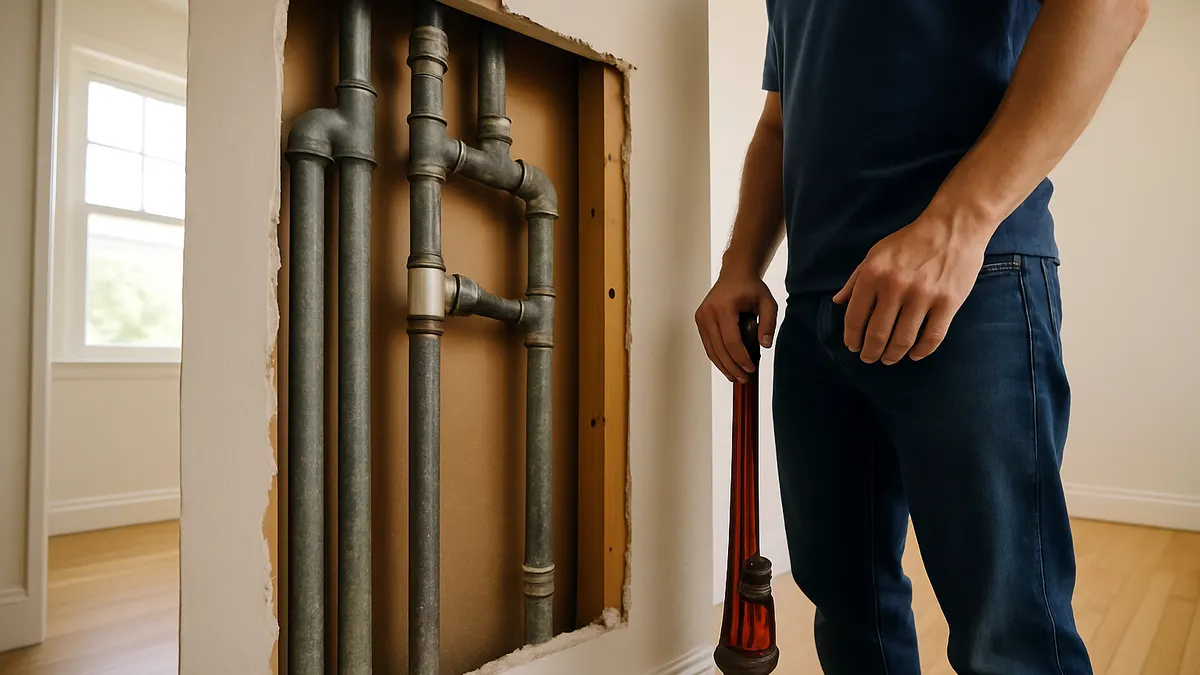
Every plumbing system sends warning signs before it fails outright, and the hard part is knowing whether a problem is confined to one pipe or has spread through the whole house. Homeowners in older properties across Bucks and Montgomery County usually start asking this question after the third or fourth service call in a single year. This guide covers the signs that separate a routine repair from a project that calls for full repiping, and what the process actually involves.
When a Repipe Beats Another Repair
A home typically needs a full repipe rather than a single repair when problems show up in more than one place at once: recurring leaks in different rooms, rusty or discolored water from multiple fixtures, pressure that has dropped throughout the house, or supply lines made from outdated materials such as galvanized steel or polybutylene. A single leak in an otherwise sound pipe is usually a spot repair. A pattern of failures across the system, especially in a home more than 40 years old, points toward a repipe.
- Leaks appearing in more than one location within months of each other
- Rusty, discolored, or metallic-tasting water at multiple fixtures
- Water pressure that has dropped house-wide rather than at a single tap
- Visible corrosion, pitting, or pinhole leaks on exposed pipe
- Galvanized steel, polybutylene, or lead supply lines still in service
- Banging, rattling, or whistling noise coming from inside the walls
- A plumbing system original to a home built decades ago
- Repeated repair calls that all seem to trace back to the same problem
What Repiping Actually Means
Repiping is the process of removing and replacing the water supply lines that run through a home's walls, floors, and ceilings, and in some cases the drain lines as well. It differs from a typical repair, which addresses a single failure point, such as a burst section under a sink or a leaking valve behind a washing machine. A licensed plumbing team evaluates the whole system before recommending either option, because opening a wall to fix one leak only makes sense if the surrounding pipe is still in reasonably good shape. When the surrounding pipe is the same age and material as the section that just failed, patching one spot is often only a temporary fix.
Repair or Repipe? How to Tell the Difference
The clearest way to separate the two is to look at whether the problem is isolated or systemic. A single leak with a clear, one-time cause, like an accidental impact on an exposed pipe, is usually worth repairing on its own. A leak alongside low pressure, discoloration, or a second unrelated leak elsewhere in the house suggests the pipe material itself is breaking down. The table below summarizes the pattern plumbers look for.
| Points Toward a Spot Repair | Points Toward a Full Repipe |
| A single leak in an otherwise sound line | Leaks appearing in multiple rooms or floors |
| Pipe material still within its expected service life | Galvanized steel, polybutylene, or lead pipe still active |
| Water pressure and clarity normal elsewhere in the house | Pressure loss or discoloration affecting most or all fixtures |
| An isolated incident with an identifiable cause | Recurring calls for seemingly unrelated problems in the same year |
8 Signs Your Plumbing System Needs a Full Repipe
Not every one of these signs on its own means a repipe is necessary, but two or three showing up together is a strong indicator that the pipe material has reached the end of its useful life rather than just having a bad section.
1. Leaks Showing Up in More Than One Location
When a leak gets repaired and a second, unrelated leak turns up elsewhere in the house within a few months, that pattern usually points to the pipe material rather than a single bad joint. Hidden leaks behind walls or under a slab can go unnoticed for a long stretch, and by the time a stain or soft flooring appears, meaningful damage has often already happened. Hidden leak detection methods such as camera inspection and pressure testing help confirm whether an issue is isolated or systemic before any wall gets opened.
2. Rusty, Discolored, or Metallic-Tasting Water
Water that runs brown or reddish for a moment when a faucet is first turned on, then clears up, is often just sediment settling in the water heater tank. Water that stays discolored across several fixtures, or carries a metallic taste from the cold line, points to corrosion inside the supply pipes. This shows up most in homes still running on original galvanized steel, where rust flakes off the interior pipe wall into the water supply. A technician can usually rule the tank in or out during a routine water heater repair service visit, which narrows down whether the problem lives in the heater or the pipes feeding it.
3. Water Pressure That Has Dropped Throughout the House
Weak pressure at one shower usually means a clogged aerator or a partially closed valve nearby. Weak pressure at every fixture, including outdoor spigots, is different: mineral scale and corrosion narrowing the inside of the pipes over years, until the whole system moves less water no matter what gets cleaned or replaced at the fixture end. Flushing a water heater or swapping an aerator will not fix pressure loss happening inside the pipe walls themselves.
4. Visible Corrosion, Pitting, or Pinhole Leaks on Exposed Pipe
Basements, crawl spaces, and utility closets usually have a stretch of exposed pipe, and that visible section tells a plumber a lot about what is likely hidden behind the walls. Greenish staining on copper, flaking rust on steel, or small pinhole leaks appearing out of nowhere are signs the pipe material is reaching the end of its life system-wide, not just at that one spot. Underground pipe damage warning signs like soggy patches in the yard or an unexplained jump in the water bill often surface around the same time, since an aging system tends to fail in more than one place at once.
5. Outdated or High-Risk Pipe Materials
Homes built before the late 1980s may still run on galvanized steel, and homes built between the late 1970s and mid-1990s sometimes have polybutylene piping, a plastic material prone to cracking from the inside out that most plumbers no longer trust. Some older homes may also still have lead service lines. None of these materials improve with age, and insurers have grown more cautious about homes where they remain in active use. A simple way to check is asking during any routine plumbing inspection what material the supply lines are actually made from.
6. Noisy Pipes: Banging, Rattling, or Whistling
A single bang when a washing machine valve shuts off is usually water hammer, fixable with an arrestor. Pipes that rattle inside the walls every time water runs, or that whistle under normal pressure, often mean fittings have loosened or scale buildup is restricting flow enough to change how water moves through the line. On its own, noise is not reason enough to repipe a house. Paired with any of the other signs on this list, it adds weight to the case.
7. A Plumbing System Original to an Older Home
Copper supply lines typically last 50 to 70 years under reasonable water conditions, PEX is generally rated for 40 to 50 years, and galvanized steel tends to run into serious trouble well before the 50-year mark. A home that has never been repiped and is approaching those windows is working on borrowed time even if nothing has failed yet. Waiting for total system failure, a burst main line, for instance, usually means dealing with an emergency plumbing response and water damage cleanup instead of a planned, controlled project.
8. Repeated Repair Calls for What Feels Like the Same Problem
Calling a plumber three or four times a year for issues that all trace back to old, deteriorating pipe is a pattern worth stepping back from. Each repair opens a section of wall and fixes exactly one spot while leaving the rest of the same-age pipe to fail next. A professional drain cleaning service can clear a clogged line, but if the same clogs keep returning in old galvanized or cast-iron drain pipe, cleaning alone will not resolve what is really a pipe-condition problem underneath.
Why Pipe Material Matters for the Repipe Decision
Once a repipe is the right call, the next decision is what material replaces the old pipe. PEX has become the most common choice for whole-house repipes because it resists corrosion, tolerates freezing better than rigid pipe, and installs with fewer joints and less demolition than metal piping. Copper remains a strong, well-proven option with a long service history, though it involves more labor and is more vulnerable to a hard freeze. Galvanized steel and polybutylene are not recommended as replacement materials, and insurers increasingly flag or decline coverage for homes where polybutylene is still active, which turns replacing it from a preference into a practical necessity for anyone planning to sell or renew a policy.
What a Full Repipe Actually Involves
A full repipe is more contained than most homeowners expect, especially with modern materials and techniques. The general sequence looks like this:
- A whole-system inspection, often including a camera, to map every fixture and confirm which lines need replacement
- Planning access points, typically small, targeted openings in walls or ceilings rather than large-scale demolition
- Running new supply lines to each fixture while temporary water service stays available where possible
- Pressure-testing the new system thoroughly before anything gets closed back up
- Patching and finishing every access point
- A final walkthrough confirming pressure, temperature, and water clarity at every fixture in the home
For homes that also deal with basement water intrusion, pairing a repipe project with backup sump pump protection addresses two common sources of water damage in a single visit.
Why a Full Repipe Pays Off Beyond the Immediate Fix
Pipe condition affects more than leaks and pressure. Deteriorating pipe and aging fittings are also a common source of persistent sewer odor issues that drain cleaning alone will not resolve, since the smell comes from the pipe joints rather than the drain itself. A repipe also restores consistent water quality and pressure at every fixture at once, rather than fixture by fixture over several visits, and it removes a common concern raised during a home inspection when a property goes up for sale. Homeowners weighing a repair against a repipe can review the full list of service areas to confirm coverage before scheduling an inspection.
Making the Right Call: Repair or Repipe?
Recognizing these signs early gives homeowners the choice between a planned repipe and an emergency response after a pipe fails outright. FKRIV Plumbing & Heating Inc brings four generations of hands-on plumbing experience to every inspection, helping homeowners across Bristol, Willow Grove and Yardley decide with confidence whether a repair or a full repipe is the right next step.
Frequently Asked Questions
How long does a full house repipe take?
Most residential repipes are completed in a few days to about a week, depending on the size of the home and how accessible the existing pipes are, with water service typically restored at the end of each working day.
Can a home be repiped without tearing out entire walls?
Some drywall access is usually unavoidable, but modern techniques limit the openings to small, targeted cuts rather than full wall removal, and those openings are patched and ready for paint once the plumbing work is finished.
Is PEX pipe safe for drinking water?
Yes. PEX is certified for potable water use under national plumbing codes and is widely used in new construction and whole-house repipes across the country.
Does a repipe include the drain lines as well as the supply lines?
A repipe project typically focuses on the pressurized supply lines, but drain lines made of old cast iron or clay can be evaluated and included if a camera inspection shows they have deteriorated.
What is the difference between a partial repipe and a full repipe?
A partial repipe replaces the pipe serving one section of the home, such as a single bathroom, while a full repipe replaces the supply lines throughout the entire house. If the untouched sections are the same age and material, they often fail on a similar timeline anyway.
How can a homeowner tell if their pipes are galvanized steel?
Galvanized pipe is gray, metallic, and reacts to a magnet test, and it is commonly found in homes built before the late 1980s. A plumber can confirm the material by inspecting exposed sections in a basement or crawl space.
Does homeowners insurance cover repiping?
Coverage varies by policy and by the cause of the damage. Insurance is more likely to apply to repiping tied to a sudden pipe failure than to gradual wear, so it is worth reviewing a policy's plumbing-related terms directly with the insurer.
Will a repipe fix low water pressure for good?
In most cases, yes. Replacing corroded or scaled pipe with clean, full-diameter lines restores the pressure that was being lost inside the old pipe walls, assuming the pressure regulator and municipal supply are otherwise functioning normally.